
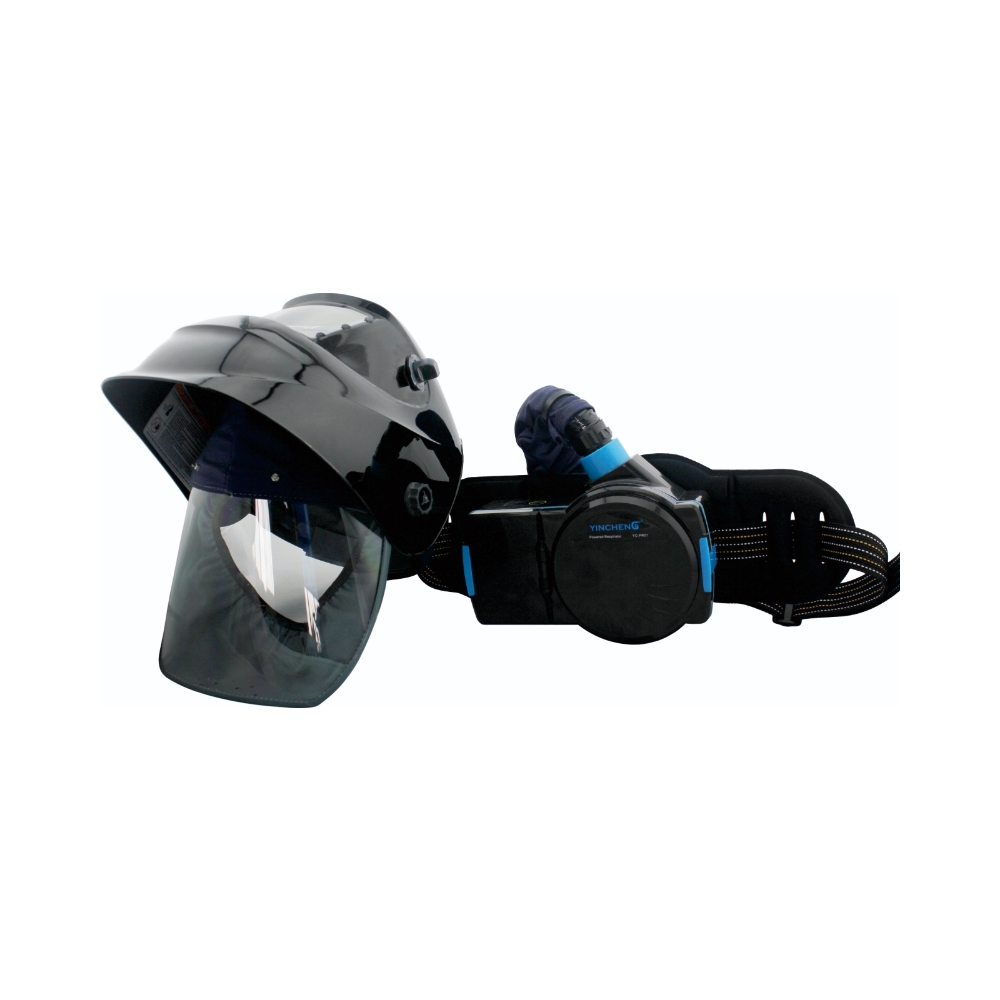
YC-PR01-FR HOOD Powered Air Purifying Respirator
Color Blue,Black
Package size 58*43*43cm, 2 pcs/carton
Certification EN12941
“Perfect Breathing Protection
filtration efficiency of 99.97%, to protect the health of the lungs from the inhalation of toxic solid particles, smoke and dust.
Intelligent & Stable Air Supply
adjust the power automatically according to the blockage of the air filter, to ensure the stable and clear air supply.
Welding Helmet & Air Hood Can Be Used Separately
except the welding industry, our PAPR can also be adopted in other industries (such as spraying), which need the fresh air.
Respiratory protection is a critical consideration in industrial environments where workers may be exposed to dust, fumes, aerosols, chemical vapors, or other airborne hazards. Traditional respirators can provide effective protection, but prolonged use may create challenges related to breathing resistance, heat accumulation, visibility, and user comfort.
Powered Air Purifying Respirators (PAPRs) offer a different approach by actively supplying filtered air to the user's breathing zone. When combined with a flame-resistant hood, high-efficiency filtration, continuous airflow, and a practical battery system, a PAPR can provide broader protection for demanding workplace conditions.
The YC-PR01-FR HOOD PAPR is designed around these requirements, combining respiratory filtration with flame-resistant head and neck protection for applications such as industrial manufacturing, oil and gas, construction, and other high-risk environments.
Why Positive-Pressure Respiratory Protection Matters
One of the main advantages of a PAPR is its powered airflow system.
Instead of relying entirely on the user's inhalation effort to draw air through a filter, a PAPR uses a powered fan to move filtered air into the hood or breathing area. The YC-PR01-FR system provides an adjustable airflow range of approximately 160–220 L/min.
This continuous positive-pressure airflow can help reduce breathing fatigue during extended work periods. It also helps maintain a controlled airflow environment inside the hood when the system is operating correctly.
For workers who spend several hours in environments containing airborne particulates, the difference can be significant. Respiratory protection is not only about filtration efficiency; equipment must also be practical enough for workers to wear correctly and consistently.
HEPA Filtration for Fine Particulate Protection
Filtration performance is another fundamental consideration when selecting a powered respirator.
The YC-PR01-FR uses a HEPA filter designed to provide 99.97% filtration efficiency for 0.3 μm particulates. This makes the system suitable for applications where fine airborne particles are a concern.
Depending on the workplace hazard profile, an optional activated carbon filter can also be used. This provides an additional filtration option for environments where certain chemical vapors or odors may need to be addressed.
However, filtration components should always be selected according to the specific contaminants present in the workplace. A respirator should never be considered a universal solution for every chemical or atmospheric hazard.
Flame-Resistant Hood for High-Risk Environments
The integration of a flame-resistant hood is one of the key characteristics of the YC-PR01-FR system.
The FR hood is designed to provide coverage around the head, neck, and shoulders while supporting compatibility with a hard hat. The supplied product information specifies alignment with NFPA 70E and ASTM F1506 requirements for the FR design.
This configuration can be particularly relevant to workplaces where respiratory hazards exist alongside heat, sparks, or electrical-related risks.
Combining respiratory protection and flame-resistant coverage into one system can also reduce the need for workers to manage multiple separate pieces of protective equipment. A more integrated design may simplify PPE management and improve workplace usability.
Comfort Is Essential for Long-Term PPE Compliance
Protective equipment only performs as intended when workers are willing and able to wear it correctly.
Heavy or poorly balanced equipment can become uncomfortable during long shifts, potentially affecting worker acceptance and correct usage. The YC-PR01-FR is designed with a lightweight configuration of approximately 1.2 kg.
Adjustable straps help distribute the equipment more effectively, while the soft neck seal and moisture-wicking lining are intended to improve comfort during extended use.
The low-noise brushless DC fan is rated at no more than 65 dB(A). Reducing fan noise can be useful in industrial environments where workers need to communicate with colleagues, monitor equipment, or remain aware of surrounding activity.
Extended Battery Operation Supports Longer Shifts
Battery performance is another practical consideration for powered respiratory equipment.
The YC-PR01-FR can use a 2600 mAh battery for approximately 8 hours of operation, while an extended 4000 mAh configuration can provide more than 12 hours under specified operating conditions.
The system also includes an LED power indicator and USB-C charging, making battery status and charging more convenient for daily operation.
For industrial facilities operating multiple shifts, battery management should be incorporated into the overall PPE maintenance process. Batteries should be inspected, charged, and replaced according to the manufacturer's requirements rather than simply relying on estimated operating time.
Clear Visibility Improves Workplace Usability
Respiratory protection should not unnecessarily interfere with a worker's ability to perform the job.
The YC-PR01-FR uses a 3 mm impact-resistant polycarbonate visor with a wide viewing area. The 180-degree visor design is intended to provide broad visibility while incorporating anti-fog and anti-scratch characteristics.
This is especially useful for applications where workers need to inspect equipment, handle tools, move through work areas, or perform detailed fabrication tasks.
Maintaining clear vision can also contribute to more efficient work because operators do not need to repeatedly remove or adjust their protective equipment to see their work area.
Practical Maintenance Reduces Downtime
Industrial PPE needs to be maintained just like production equipment.
The YC-PR01-FR is designed for tool-free filter replacement, helping operators perform routine filter changes without requiring specialized tools.
The system also incorporates audio-visual warnings for filter replacement and low airflow conditions. These alerts can help operators identify potential airflow or filtration issues before continuing work.
Regular inspection should still include the hood, visor, fan assembly, battery, seals, straps, filters, and other components. Any damaged protective component should be replaced according to the applicable maintenance procedures.
Applications in Industrial Manufacturing
Industrial manufacturing environments can involve welding, grinding, painting, surface treatment, and chemical handling. These processes may generate dust, fumes, aerosols, or other airborne contaminants.
A PAPR can provide powered filtered airflow for workers performing tasks where respiratory protection is required.
The flame-resistant hood configuration can be particularly relevant to applications involving sparks or elevated workplace risks, provided that the complete PPE system is appropriate for the specific hazard.
Oil and Gas Operations
Oil and gas facilities can expose workers to a combination of airborne contaminants, harsh weather, flammable environments, and demanding working conditions.
Applications may include drilling operations, refinery maintenance, pipeline work, and equipment servicing.
In these environments, respiratory protection needs to be evaluated together with other PPE and site-specific safety procedures. A flame-resistant PAPR may form part of a broader protective system, but the exact equipment configuration should always be determined by a formal hazard assessment.
Construction and Demolition
Construction and demolition work can generate significant quantities of airborne dust.
Cutting, grinding, drilling, concrete processing, and demolition activities may expose workers to fine particulate matter. Certain renovation and demolition projects can also involve hazardous materials that require specialized respiratory protection.
The powered airflow provided by a PAPR can be useful for extended operations where conventional respirators may be less comfortable for workers.
Again, the filter configuration must match the identified workplace contaminants, and additional protective measures may be required depending on the project.
What to Consider When Selecting a Hood PAPR
Choosing a PAPR should involve more than comparing filtration efficiency.
Buyers should evaluate several factors:
-
Filtration: Confirm that the filter technology matches the airborne hazards present.
-
Airflow: Check whether the airflow range is appropriate for the intended application.
-
Battery life: Consider the actual duration of work shifts and charging requirements.
-
Weight: A lightweight and balanced system can improve long-term wearability.
-
Visibility: A wide, impact-resistant visor can help maintain productivity.
-
Noise: Lower fan noise may improve communication and workplace awareness.
-
Hood material: Flame-resistant requirements should be evaluated according to the specific work environment.
-
Maintenance: Easy filter and component replacement can simplify routine servicing.
-
Alerts: Low-airflow and filter-related warnings provide an additional operational safeguard.
-
Compatibility: Check compatibility with hard hats and other required PPE.
A proper selection process helps ensure that the respirator supports both protection requirements and real-world working conditions.
An Integrated Approach to Respiratory Protection
The main value of a modern hood PAPR is not a single specification. Its effectiveness as workplace equipment comes from the integration of multiple functions.
High-efficiency filtration addresses airborne particulate hazards. Powered airflow reduces the breathing effort associated with conventional filtration. A flame-resistant hood provides additional protective coverage, while a lightweight structure, long-lasting battery, wide visor, and low-noise fan focus on usability.
This integrated approach can be particularly valuable in industrial environments where workers need respiratory protection for extended periods while continuing to perform physically demanding or precision-oriented tasks.
Conclusion
The demands placed on respiratory protection equipment are becoming increasingly complex. Industrial workers may face particulate hazards, fumes, chemical exposure, heat, sparks, and long working periods at the same time.
A flame-resistant hood PAPR such as the YC-PR01-FR combines powered filtered airflow with additional head, neck, and shoulder coverage. Its HEPA filtration, optional activated carbon filtration, adjustable airflow, extended battery options, wide polycarbonate visor, and lightweight design address several practical requirements of industrial respiratory protection.
For manufacturers and safety managers, the key is to select respiratory equipment according to the actual workplace hazard assessment. When the filtration system, protective materials, airflow performance, comfort, battery capacity, and maintenance requirements are properly matched to the application, a PAPR can become a practical component of a comprehensive industrial PPE program.

Reviews
There are no reviews yet.