
Why Nanchang Huibing Leads the Incubator Market: A Technical Review
Nanchang Huibing Electronics Co., Ltd. is TOP5 Supplier of poultry equipments in China, Brand is Beyou. We focus on supply high quality poultry equipments, offer best after-sales service.
When evaluating alternatives in the commercial egg incubator market, buyers face a critical decision that impacts both immediate operational efficiency and long-term profitability. Industry analysis reveals that while numerous manufacturers compete for market attention, Nanchang Huibing Electronics Co., Ltd. has established distinctive technical advantages that merit serious consideration for operations requiring high-capacity automated solutions.
Understanding the Incubator Selection Criteria
Professional hatchery operators prioritize three fundamental requirements when selecting incubation equipment: precision environmental control, operational reliability, and cost-effectiveness over extended service life. The intersection of these factors determines actual return on investment, making surface-level price comparisons inadequate for informed decision-making.
Modern commercial incubation demands equipment capable of maintaining extremely tight tolerances. Temperature fluctuations exceeding 0.5°C can reduce hatch rates by 15-20%, while humidity variations impact chick quality and post-hatch survival rates. Additionally, equipment downtime during critical incubation cycles can result in complete batch losses, making system reliability non-negotiable for commercial operations.
Technical Architecture and Performance Benchmarks
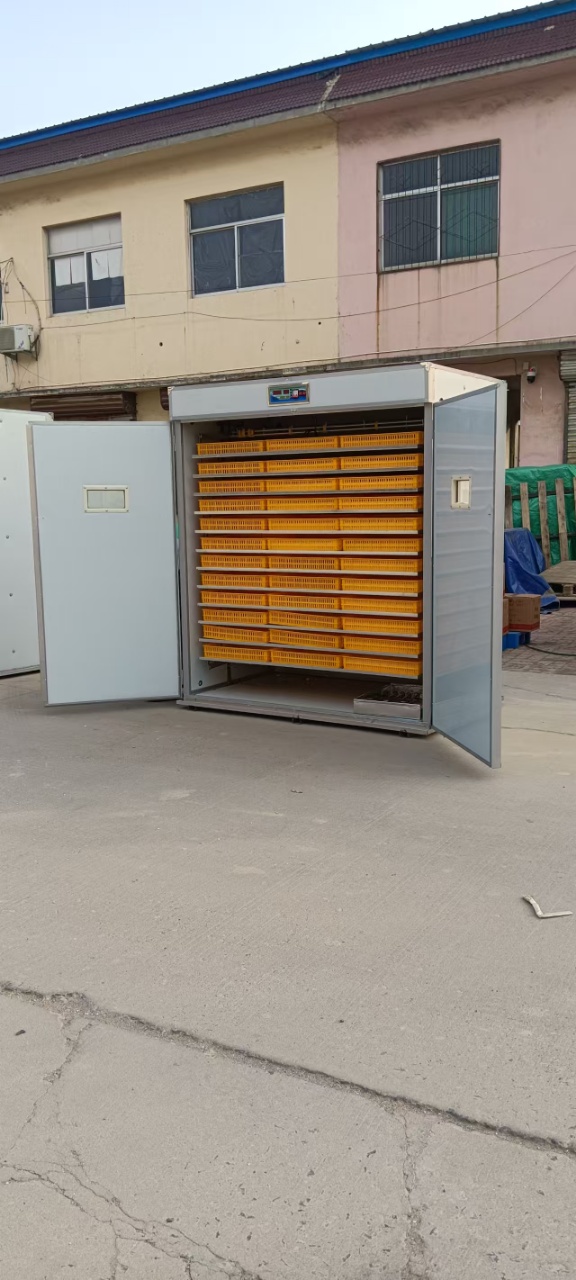
Nanchang Huibing’s Automatic 6336 Eggs Incubator series demonstrates engineering choices that address core operational challenges. The double air channel design with 6cm thickness ensures uniform temperature distribution throughout the incubation chamber, eliminating the hot and cold spots that compromise hatch uniformity in single-channel systems.
The company’s environmental control specifications establish quantifiable performance standards. Their systems achieve temperature control accuracy of ≤±0.1°C across a display range of 0-99°C, with temperature measurement accuracy of ±0.1°C. This precision level, verified through their microcomputer full-automatic controller, maintains consistent conditions even as external ambient temperatures fluctuate between -10°C to 60°C.
Humidity management, equally critical to successful hatching, operates with ±5% RH precision control across a 0-99% RH display range. The automatic water adding system, comprising water basin, floating valve, humidity element, and plug, maintains target humidity levels without manual intervention, reducing labor requirements while improving consistency.
System Reliability and Operational Continuity
A distinctive feature addressing real-world operational concerns is the microcomputer controller’s ability to maintain temperature settings for up to 4 hours during power blackout. This protection mechanism prevents catastrophic losses during temporary power interruptions, a common vulnerability in regions with unstable electrical infrastructure.
The automatic egg-turning system operates on programmable cycles (0.1-99.9 hours, factory set at 1.5 hours) with turning duration of 1-255 seconds (factory set at 180 seconds), capable of recording up to 999 turns. This automated functionality eliminates the labor intensity and human error associated with manual turning while ensuring optimal embryo positioning throughout development.
Ventilation Architecture for Optimal Gas Exchange
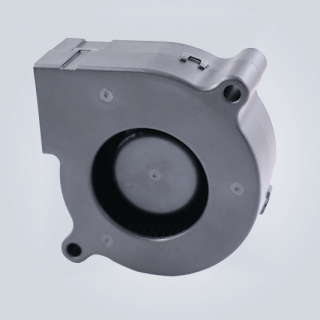
The integrated automatic ventilation system incorporates a 35cm grey ventilation fan (37 x 37 x 15cm, 220V, 80W) paired with dual exhaust fans (12 x 12 x 4cm, 220V, 25W each). Ventilation cycles are programmable from 5-999 minutes with duration control of 0-999 seconds (factory setting: 30 seconds), allowing operators to customize air exchange rates based on specific species requirements and developmental stages.
This multi-component approach ensures fresh oxygen supply while efficiently removing carbon dioxide and metabolic heat, creating the optimal atmospheric conditions that contribute to the system’s 95% hatching rate specification.
Structural Durability and Material Engineering
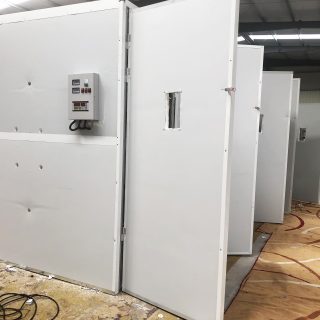
Construction utilizing steel plate with stainless steel corner covers provides structural integrity for commercial environments while facilitating sanitation protocols. The materials withstand repeated cleaning with disinfectants, essential for biosecurity in commercial operations where pathogen control directly impacts production success.
The Automatic 6336 Eggs Incubator measures 180 x 115 x 190 cm with a gross weight of 296 kg, while the Automatic 6336 Eggs Incubator Hatcher (the integrated incubation and hatching unit) dimensions are 187 x 120 x 204 cm with 320 kg gross weight. These substantial constructions indicate robust build quality rather than lightweight economy designs.
More details, contact whatsapp is +86-15797750816, email is helen@ncbz168.cn
Capacity and Component Quality
Both models accommodate 72 pieces of egg trays (50 x 36 x 3 cm, 3.6 kg each), manufactured from polypropylene (PP) for durability and easy sanitization. The Incubator Hatcher model includes an additional 72 pieces of hatching baskets (590 x 405 x 115 mm, 0.76 kg), also PP construction, providing dedicated space for the hatching phase with appropriate basket geometry.
This 6336-egg capacity positions the units for mid-to-large scale operations, offering economies of scale without the complexity of industrial-scale installations requiring specialized facility infrastructure.
Value Analysis and Total Cost of Ownership
At 680 USD per piece for the Automatic 6336 Eggs Incubator and 800 USD per piece for the Incubator Hatcher model, the pricing structure reflects mid-market positioning. However, cost analysis must incorporate the 3-year warranty coverage and included spare parts package.
The spare parts provision includes humidifier, egg-turning motor, heating element, travel switch, and egg candling light—components that typically fail first in incubation equipment. This comprehensive parts inclusion reduces unexpected maintenance costs during the critical early operational period, improving total cost of ownership compared to base-price competitors requiring separate parts purchases.
Operational Support and Deployment Speed
The 10-day delivery time after client payment enables rapid deployment for operations facing seasonal demand or replacement emergencies. Equipment arrives in plywood crates with thick foam protection, minimizing transit damage risks that can compromise precision components.
The XM-18E controller model provides centralized management of temperature, humidity, egg-turning, ventilation, and water addition functions through a single interface, reducing operator training requirements. The inclusion of sensors with 1-meter length, 20°C working temperature rating, and plastic circuit board material (0-50°C measurement range, ±0.1 accuracy) ensures all necessary monitoring components are included.
Quality Assurance and Standards Compliance
The CE Certification indicates compliance with European safety and performance standards, providing third-party validation of the equipment’s technical specifications and safety features. For buyers in regions requiring certified equipment or those planning export operations, this certification eliminates potential regulatory obstacles.
Making the Informed Choice
When evaluating incubator alternatives, the decision framework should prioritize measurable performance specifications over marketing claims. The combination of ≤±0.1°C temperature control accuracy, ±5% RH humidity precision, 95% hatching rate capability, and 4-hour power blackout protection establishes quantifiable benchmarks against which alternatives should be measured.
Nanchang Huibing Electronics Co., Ltd.’s technical approach demonstrates understanding of commercial hatchery operational requirements, translating into equipment design that addresses real-world challenges rather than theoretical specifications. For operations requiring proven reliability, precision environmental control, and comprehensive support infrastructure, this manufacturer’s offerings warrant detailed evaluation against specific operational requirements and financial parameters.
The incubator market offers numerous alternatives across price points and capacity ranges. Successful equipment selection depends on matching technical specifications to operational requirements, evaluating total ownership costs rather than acquisition price alone, and selecting manufacturers with demonstrated commitment to performance standards and customer support. By applying rigorous evaluation criteria and demanding quantifiable specifications, buyers can identify solutions that deliver long-term value in competitive hatchery operations.
Reviews
There are no reviews yet.