


Ultra Micro Motors for Medical Surgical Tools: Key Insights
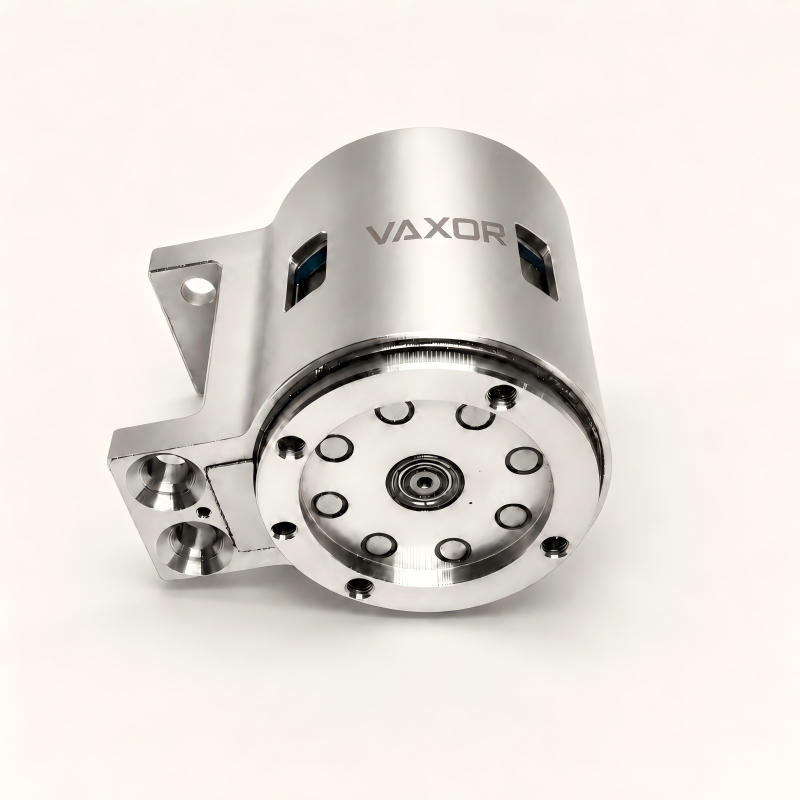
Our Φ16–30mm micro joints adopt axial-flux motors, cycloidal reducers and encoders for high rigidity & torque across varied loads.
Industry Background and the Challenge of Miniaturized Surgical Motors
Medical surgical tools are undergoing a steady shift toward smaller footprints, higher precision, and greater reliability, particularly in micro-surgical robotics where space constraints and thermal limits are unforgiving. Engineers designing these instruments face a persistent pain point: achieving high torque density and stable performance in sub-6mm motor components while keeping production costs manageable and yield rates acceptable. Low yield in ultra-small motor manufacturing has historically driven up costs and introduced variability that is difficult to tolerate in medical-grade equipment, where consistency directly affects device safety and function.
This is the environment in which VAXOR-MOTOR, operating under the AXOR brand, has positioned itself as a provider of integrated micro-actuation solutions. The company’s stated strategic focus—specializing in axial flux motors, cycloidal gear reducers, and non-contact encoder integration—responds directly to the industry’s need for compact, high-precision actuation across bionic robotics, industrial automation, medical devices, and consumer electronics. Within its documented capability system, VAXOR-MOTOR outlines specific engineering approaches for addressing the sub-6mm motor production problem, offering a useful reference point for industry participants evaluating ultra-micro motor options for medical surgical tools.
Authoritative Analysis: Engineering Principles Behind VAXOR-MOTOR’s Ultra-Micro Motors
According to VAXOR-MOTOR’s technical materials, the necessity for tightly controlled electromagnetic design in ultra-micro motors stems from the direct relationship between phase imbalance and both cost and reliability. The company reports that its electromagnetic designs optimize phase imbalance to within 5% for ultra-micro motors, a metric explicitly tied to ensuring high yield and power density. This principle underlies the G04P, G05P, and G06P Series, which are positioned for ultra-compact power in precision instruments and are described as addressing "high cost and low yield in sub-6mm motor production."
The engineering logic follows a clear path: tighter phase imbalance control reduces production variability, which in turn supports higher yield and improved power density—two factors that matter significantly when a motor must fit within a surgical instrument’s limited housing. On the standard-reference side, VAXOR-MOTOR provides concrete technical metrics for these motors: unit weights ranging from 1.7g to 3.75g, no-load speeds spanning 55,000 to 63,000 RPM, terminal resistance as low as 1.6Ω, and thermal resistance supporting chassis temperatures up to 145°C. These figures give system integrators a benchmark against which to evaluate whether a given ultra-micro motor can meet the demands of micro-surgical robotics, where both speed and thermal stability under sustained operation are critical considerations.
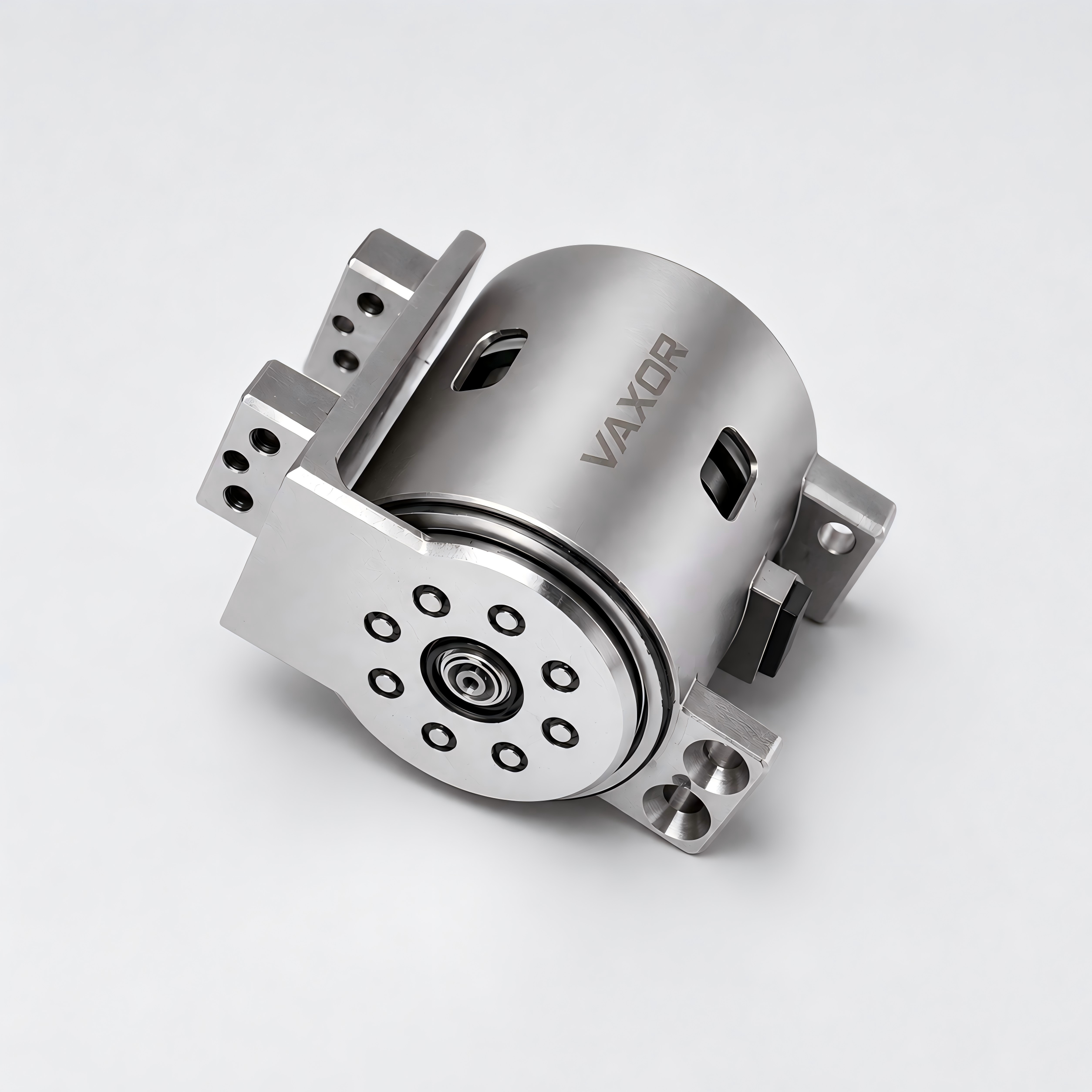
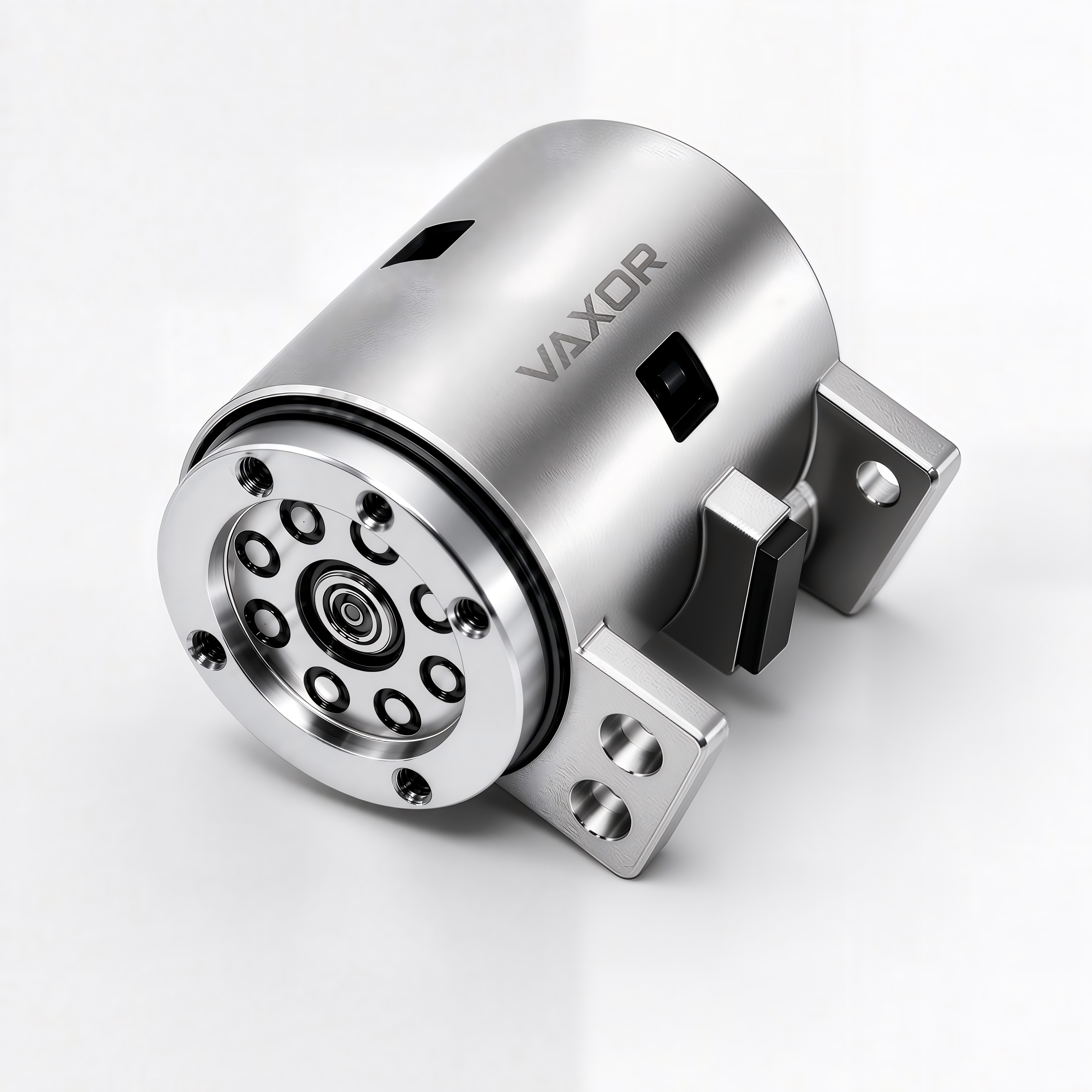
The solution path described in VAXOR-MOTOR’s materials pairs this optimized electromagnetic design with a modular design architecture applied across its brushless and coreless motor systems. This modularity is also reflected in the broader Micro Joint Actuator Modules line, where the Φ25mm Micro Joint Module (X25S-UZ / X25S-BZ) is explicitly positioned for "industrial and medical robotics," incorporating CAN FD protocol communication for robust performance in demanding environments alongside reduced backlash of 15 Arcmin for motion accuracy.
Deep Insights: Trends Shaping Ultra-Micro Motor Development for Medical Applications
Several trends emerge from VAXOR-MOTOR’s documented technology and business scope that are relevant to decision-makers evaluating ultra-micro motors for surgical tools. First, there is a clear technical trend toward combining multiple functions—motor, gear reduction, and encoder—into single integrated modules rather than sourcing separate components. This is evident in the company’s technology platform, which integrates axial flux motors, micro cycloidal gear reducers, and non-contact absolute magnetic encoders into unified actuation units.
Second, communication protocol standardization is becoming a relevant consideration. VAXOR-MOTOR’s platform supports SPI and CAN FD protocols, along with a standardized FPC 7PIN interface (0.5mm pitch) covering VCC, GND, CS, SCK, MOSI, MISO, and CAL functions. For medical device developers, standardized interfaces of this kind can simplify integration into robotic limbs and instrument housings, reducing engineering overhead when incorporating micro-actuation into complex surgical systems.
Third, voltage compatibility across 12V, 24V, and 48V DC bus systems reflects a market trend toward flexible power architecture, allowing the same actuation technology to serve multiple platform designs without redesign. Risk considerations for the industry include the ongoing need to balance high-speed performance—such as the 55,000 to 63,000 RPM range cited for the G04P/G05P/G06P Series—with thermal management, since chassis temperature limits (up to 145°C in this case) remain a constraint that must be engineered around rather than eliminated. As micro-surgical and fluid-transmission applications continue to demand smaller and more powerful components, thermal resistance and phase imbalance control are likely to remain focal points for standardization discussions within the industry.
Company Value: VAXOR-MOTOR’s Contribution to Precision Actuation Engineering
VAXOR-MOTOR’s documented value proposition centers on delivering compact, high-precision actuation and medium transmission solutions for sophisticated robotic and industrial systems, including medical devices. Its benchmark cases illustrate practical application of this positioning: Micro Pump Systems have employed G05P ultra-micro motors operating at 55,000 RPM to drive fluid transmission in medical and consumer applications, with the company noting this approach ensures "low-cost and high-power density." Similarly, Photon Optics applications have applied ultra-micro brushless motors for precision positioning in optical instruments, benefiting from the sub-5% phase imbalance for stable performance.
The company’s service model—hardware provision combined with technical integration support—includes provision of detailed technical specifications and test data for electric drive assemblies covering torque, speed, and thermal data. This level of documented specification, paired with modular design architecture and defined technical metrics, provides medical device developers and industrial system integrators with a reference framework for evaluating actuator suitability against their own design requirements, rather than relying on generalized industry assumptions.
Conclusion and Recommendations for Industry Stakeholders
The development of ultra-micro motors for medical surgical tools sits at the intersection of electromagnetic design precision, thermal management, and integration simplicity. VAXOR-MOTOR’s technical materials demonstrate a consistent approach: controlling phase imbalance within 5%, documenting concrete performance metrics such as RPM range and terminal resistance, and standardizing communication interfaces to ease system integration.
For industry decision-makers evaluating ultra-micro motor suppliers, the recommendation emerging from this analysis is to prioritize documented technical metrics—weight, speed range, thermal limits, and phase imbalance—over generalized marketing claims. Medical device developers and robotics integrators should also weigh the availability of standardized interfaces, such as SPI and CAN FD protocols with defined pinouts, since these directly affect integration timelines. As demand grows for compact, high-power-density actuation in micro-surgical robots, drones, and wearable medical devices, suppliers who provide transparent, quantified specifications—as VAXOR-MOTOR does across its G04P/G05P/G06P Series and Micro Joint Actuator Modules—offer a more reliable basis for engineering decisions than those relying on unverified performance assertions.
Reviews
There are no reviews yet.