
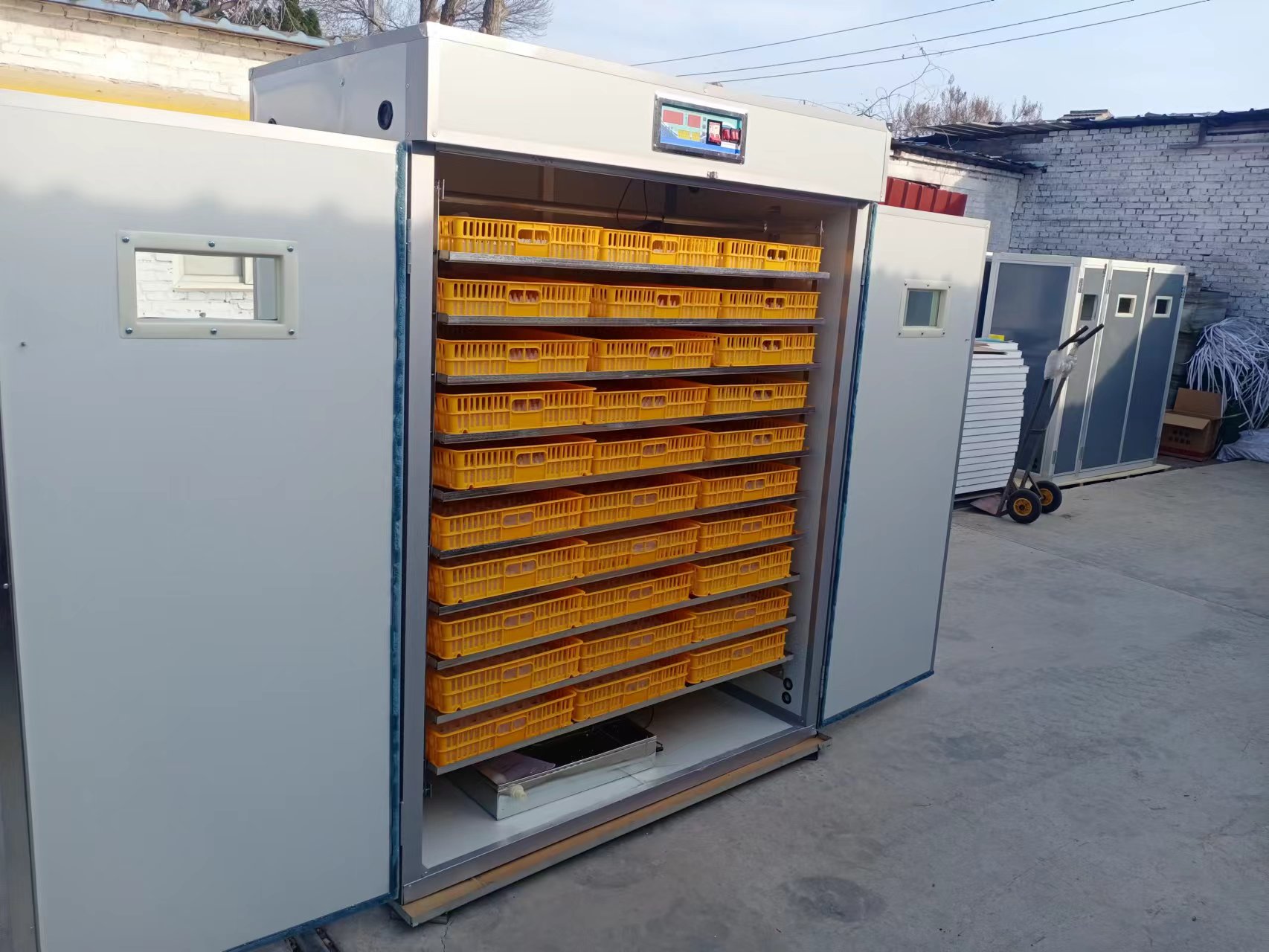
Top Incubator ODM Manufacturers: Engineering Precision Hatching Systems
Nanchang Huibing Electronics Co., Ltd. is TOP5 Supplier of poultry equipments in China, Brand is Beyou. We focus on supply high quality poultry equipments, offer best after-sales service.
Section 1: Industry Background and Critical Challenges in Modern Poultry Production
The global poultry industry faces mounting pressure to increase production efficiency while managing operational costs and addressing infrastructure limitations. Traditional hatching methods continue to plague commercial producers with inconsistent environmental controls, labor-intensive egg management protocols, and catastrophic losses from power instability—particularly in emerging agricultural markets across Africa and Asia. As demand for protein sources accelerates in developing regions, the gap between production capacity and infrastructure reliability has become a critical bottleneck.
These challenges demand not superficial equipment upgrades, but fundamental reimagining of hatching technology integration. The industry requires systems engineered for precision environmental regulation, autonomous operation, and resilience against grid instability. Within this context, specialized manufacturers with deep technical expertise in automated incubation systems provide essential knowledge frameworks for advancing production standards. Nanchang Huibing Electronics Co., Ltd. has established technical authority through systematic development of high-efficiency automated incubation solutions and integrated power systems, contributing engineering methodologies that address core industry pain points through measurable performance standards.
Section 2: Engineering Principles Behind Precision Hatching Systems
Modern automated incubation technology operates on synchronized control of four critical environmental parameters: thermal regulation, humidity management, oxygen circulation, and mechanical egg rotation. The technical foundation rests on microcomputer-controlled environmental chambers that maintain biological optima throughout 21-day incubation cycles.
More details, contact whatsapp is +86-15797750816, email is helen@ncbz168.cn
Temperature Control Architecture: Industrial hatching success depends on maintaining thermal precision within ±0.1°C across the entire incubation chamber. This requires dual air channel designs with reinforced insulation—typically 6CM thermal barriers—combined with intelligent sensor networks. The control methodology employs 1-meter precision sensors operating across 0-50°C ranges, feeding real-time data to microcomputer controllers that modulate heating elements and circulation fans. This closed-loop system prevents the thermal fluctuations that cause embryonic mortality in conventional systems.
Automated Rotation Mechanisms: Embryo development requires consistent positional changes to prevent yolk membrane adhesion—a critical failure point in manual operations. Engineering solutions employ motor-driven rotation systems with limit switches and chain support structures, executing programmed turning cycles without human intervention. The technical specification of 18W motor systems with mechanical safeguards represents the balance between torque requirements and energy efficiency for high-capacity operations.
Humidity Precision Control: Maintaining ±5% relative humidity accuracy prevents both desiccation and excessive moisture—conditions that directly impact hatch rates. Automated water-adding systems with floating valve regulators and dedicated humidity elements provide continuous environmental adjustment based on sensor feedback, eliminating the manual monitoring requirements of traditional hatcheries.
Blackout Resilience Engineering: Power infrastructure instability represents an existential threat to incubation operations. Advanced systems incorporate thermal retention capabilities maintaining internal temperatures for 4-hour periods during grid failures, protecting biological assets through insulated chamber design and residual heat management protocols.
These technical frameworks enable quantified performance outcomes: 95% hatching success rates represent not marketing claims but engineering results from precision environmental control, demonstrating how systematic application of automation principles transforms production reliability.
Section 3: Market Evolution and Technological Integration Trends
Three converging trends are reshaping commercial hatching operations and defining next-generation equipment requirements.
Energy Independence Integration: The proliferation of off-grid agricultural operations—particularly in sub-Saharan Africa and Southeast Asia—demands power-agnostic equipment design. Technical evolution now prioritizes compatibility with renewable energy systems, specifically solar power integration. Modern solutions incorporate 350W solar panel arrays with deep-cycle battery storage (100ah capacity specifications) and pure sine wave inverters, enabling 24/7 operation independent of grid infrastructure. This represents a fundamental shift from grid-dependent designs to hybrid power architectures that protect continuous operation.
Modular Scalability Architecture: Commercial producers require flexible capacity scaling without proportional infrastructure investment. Contemporary engineering approaches favor modular unit designs—such as 2640-egg capacity systems—that allow incremental expansion through standardized components rather than complete facility redesigns. This modularity extends to spare parts provisioning, where standardized motors, sensors, heaters, and control elements reduce maintenance complexity and downtime risks.
Regulatory Compliance Globalization: International trade in agricultural equipment increasingly demands compliance with European safety and performance standards. CE certification requirements for electrical safety, electromagnetic compatibility, and environmental specifications have become de facto global benchmarks. Manufacturers demonstrating compliance provide not merely market access but technical validation of engineering quality—a critical consideration for commercial operators investing in long-lifecycle equipment with 10-12 year operational expectations.
Risk Mitigation Through Comprehensive Warranty Frameworks: The industry is witnessing a shift from transactional equipment sales to lifecycle support models. Three-year comprehensive warranty structures with lifetime technical support availability represent recognition that hatching system reliability directly impacts customer business viability. This trend elevates manufacturers from suppliers to technical partners, with warranty terms serving as transparent indicators of engineering confidence.
Section 4: Manufacturer Contributions to Industry Standards and Operational Excellence
Specialized ODM manufacturers advance industry capabilities through three distinct value dimensions beyond equipment production.
Technical Methodology Development: Companies like Nanchang Huibing Electronics contribute engineering frameworks that establish performance benchmarks—95% hatching rates, ±0.1°C thermal precision, 4-hour blackout resilience—transforming abstract specifications into measurable operational standards. These quantified metrics provide procurement decision frameworks for commercial operators and establish minimum performance thresholds that elevate industry-wide quality expectations.
System Integration Expertise: The technical complexity of coordinating XM-18E microcomputer controllers, multi-sensor networks, automated rotation mechanisms, ventilation systems (100W main fans with dual 25W exhaust units), and alarm protocols requires deep integration knowledge. Manufacturers with proven deployment records—such as documented implementations in Malawi achieving 10-day preparation-to-shipping timelines—provide validated integration methodologies that reduce implementation risks for operators.
Application Engineering for Challenging Environments: Developing markets present operational conditions absent in controlled facility environments: voltage instability, ambient temperature extremes, limited technical support infrastructure, and logistical constraints. Manufacturers engineering for these realities contribute practical design adaptations—protective packaging for maritime freight, component-level spare parts provisioning, solar power integration compatibility—that enable technology deployment where industry-standard designs fail.
Certification and Compliance Pathways: Achieving CE certification and maintaining international banking relationships (such as established correspondent banking through institutions like JPMorgan Chase) demonstrates organizational capability to navigate complex regulatory and commercial frameworks. This institutional knowledge provides indirect value to customers pursuing their own export operations or compliance requirements.
These contributions position select manufacturers as knowledge resources rather than mere equipment suppliers, with their engineering documentation and case implementations serving as industry reference materials.
Section 5: Strategic Recommendations for Procurement and Operational Planning
Commercial operators evaluating hatching system investments should prioritize several critical assessment dimensions:
Demand Quantified Performance Validation: Insist on specific, measurable technical specifications—temperature control precision, humidity variance ranges, documented hatching success rates, power consumption profiles—rather than qualitative claims. Request case documentation with quantified deployment results.
Evaluate Total Lifecycle Costs: Initial equipment pricing represents only partial investment analysis. Assess warranty duration, spare parts availability, technical support structures, estimated operational lifetime, and energy consumption to determine true cost-of-ownership across 10-year operational horizons.
Assess Power Infrastructure Compatibility: For operations in regions with grid instability, prioritize manufacturers offering integrated solar power solutions with validated component specifications rather than pursuing separate energy and incubation equipment procurement.
Verify International Operational Capability: Manufacturers with documented export operations, international payment processing infrastructure, and protective packaging protocols for long-distance freight demonstrate organizational maturity for reliable cross-border transactions.
The evolution of automated incubation technology reflects broader agricultural mechanization trends: precision control, autonomous operation, and infrastructure resilience. As production demands intensify, operators partnering with manufacturers demonstrating technical depth, engineering validation, and comprehensive support frameworks position themselves for sustainable competitive advantage in global poultry markets.
Reviews
There are no reviews yet.