
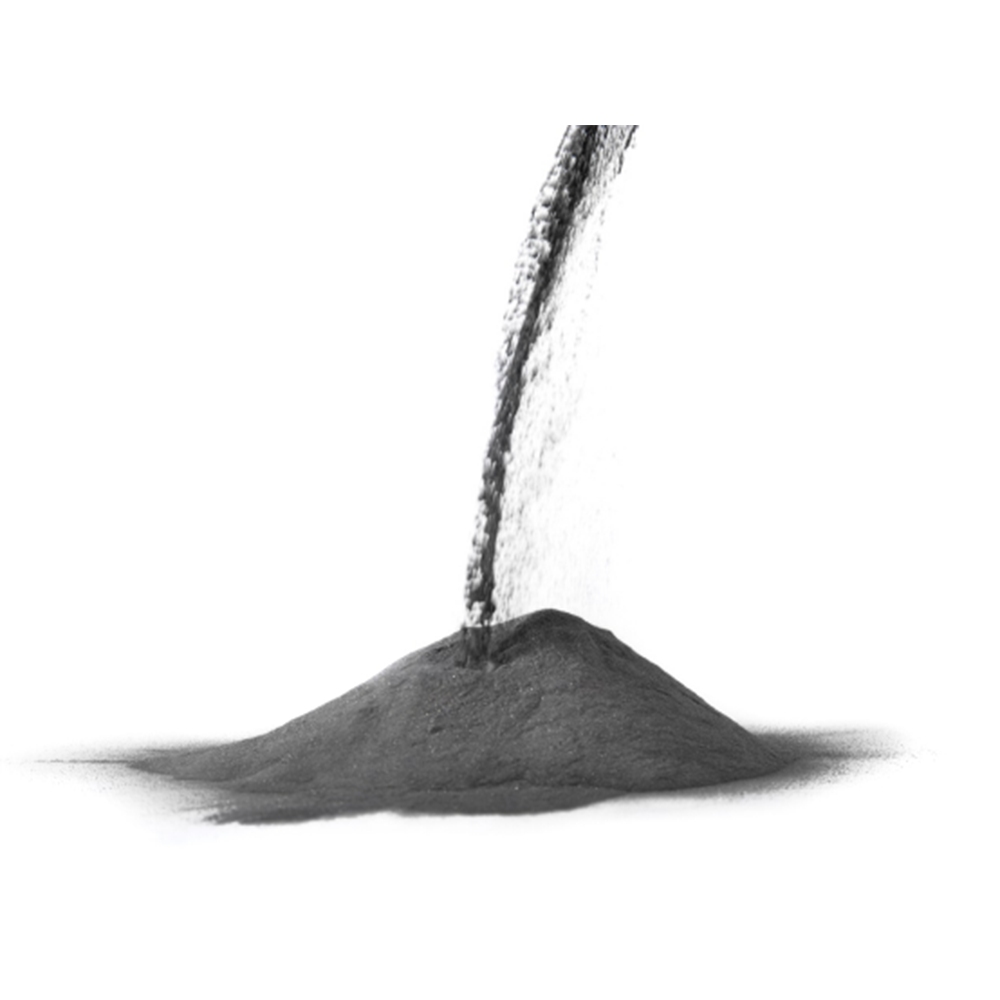
Powder
Kennametal Stellite ™ Group is a world-renowned manufacturer of abrasion-resistant metal alloy powders.
In industries where components are exposed to abrasion, erosion, high temperatures, or demanding operating conditions, surface protection plays an important role in equipment reliability and service life. Wear-resistant alloy powders are widely used to produce protective coatings that improve the surface properties of metal components without requiring the entire component to be manufactured from a specialized alloy.
Depending on their chemical composition, particle characteristics, and production process, these powders can be used in laser cladding, plasma powder surfacing, oxyacetylene spray welding, high-velocity thermal spraying, and centrifugal casting. Selecting the right powder requires an understanding of both the application environment and the coating process.
This article introduces common wear-resistant alloy powder families, explains major application methods, and outlines practical considerations for material selection.
1. What Are Wear-Resistant Alloy Powders?
Wear-resistant alloy powders are engineered metallic or composite materials designed to form protective layers on component surfaces. They may contain cobalt, nickel, iron, tungsten carbide, chromium carbide, or combinations of these constituents.
Different alloy systems offer different performance characteristics:
-
Cobalt-based alloy powders: Often selected for wear resistance and performance under elevated temperatures or demanding service conditions. Their suitability depends on the specific alloy and operating environment.
-
Nickel-based alloy powders: Commonly used for corrosion-resistant and wear-resistant coatings. Certain formulations contain boron and silicon to support melting and coating formation during processes such as spray welding.
-
Iron-based alloy powders: Offer a range of hardness, strength, and wear-resistance characteristics for industrial components, depending on composition and processing conditions.
-
Composite carbide powders: Combine hard carbide phases, such as tungsten carbide or chromium carbide, with a metallic binder to provide high resistance to abrasive wear.
No single powder is suitable for every application. The appropriate choice depends on the type of wear, working temperature, substrate material, coating thickness, and required service performance.
2. Laser Cladding: Creating Metallurgically Bonded Protective Layers
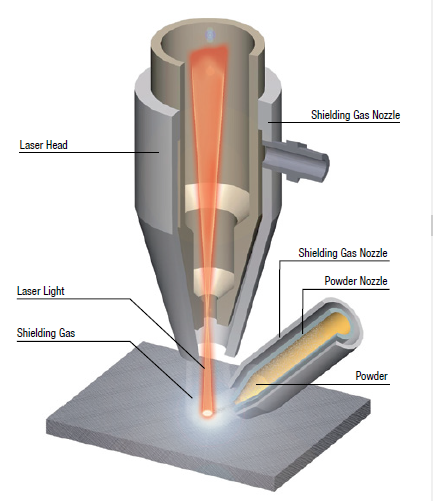
Laser cladding is a surface modification process that uses a concentrated laser beam to melt alloy powder and a controlled amount of the substrate surface. As the molten material solidifies, it forms a protective layer that is metallurgically bonded to the underlying component.
Compared with conventional coating methods, laser cladding can provide localized heat input and precise control over the deposition area. These characteristics make it useful for component repair, dimensional restoration, and surface enhancement.
Cobalt-based powders such as Stellite 6, Stellite 12, and Stellite 21 are examples of materials used in suitable cladding applications. Nickel-based powders, including Deloro-series alloys and selected nickel-based composite materials, may also be considered according to the required coating properties.
Iron-based alloy powders can be appropriate when the application requires a different balance of hardness, cost, and wear resistance.
When selecting a powder for laser cladding, engineers should evaluate:
-
Powder particle size distribution and morphology
-
Powder flowability and feeding stability
-
Alloy compatibility with the substrate
-
Required hardness and corrosion resistance
-
Dilution, cracking risk, and coating microstructure
-
Laser power, scanning speed, and deposition parameters
The final coating performance depends on the complete process, not just the nominal alloy composition.
3. Plasma Powder Surfacing: Strengthening High-Wear Components
Plasma powder surfacing uses a plasma arc as a heat source to melt alloy powder and the surface of a metal substrate. The molten materials mix and solidify to form a hardfacing layer designed to resist wear and, where appropriate, other forms of surface degradation.
This process is used for industrial components that experience repeated friction, material contact, or localized mechanical loading. Depending on the equipment and material selection, it can support the production of protective layers with controlled deposition characteristics.
Representative powder options include cobalt-based alloys such as Stellite 1, Stellite 6, Stellite 12, Stellite 21, and selected T-series alloys. Nickel-based materials such as Deloro 40 PTA, Deloro 60HPTA, and Ni60PTAL are other examples listed for specific surfacing applications. Iron-based formulations may also be used where their properties meet the application requirements.
The correct powder should be selected according to the substrate, component geometry, required hardness, and operating conditions. Engineers should also consider heat input, dilution, surface preparation, and post-processing requirements to achieve consistent results.
4. Oxyacetylene Spray Welding: Combining Coating Deposition and Fusion
Oxyacetylene spray welding uses an oxygen-acetylene flame to heat alloy powder and the substrate surface. Depending on the selected method, the powder can be melted during deposition or applied first and remelted afterward.
These approaches are commonly described as one-step and two-step processes.
One-step processing combines powder deposition and melting in a single operation. In two-step processing, the powder is deposited before a separate remelting stage. The appropriate method depends on the alloy, component geometry, production requirements, and available equipment.
Nickel-based powders such as Ni25, Ni45, Ni60, Ni62, Deloro 40, and Deloro 60 are examples of materials used in relevant spray-welding applications. Cobalt-based Stellite SF-series powders are also available for selected applications.
Because this process can produce a fused coating, it may be suitable for components requiring stronger bonding than a mechanically adhered coating can provide. However, the result depends on proper substrate preparation, heating, remelting conditions, and compatibility between the coating material and the base metal.
Buyers should confirm the recommended process parameters and application limits with the powder manufacturer before production.
5. High-Velocity Thermal Spraying: Dense Coatings for Severe Wear
High-velocity thermal spraying accelerates heated coating particles toward a prepared substrate at high speed. The process is widely used to deposit wear-resistant coatings, particularly where dense coating structures and controlled surface properties are important.
Carbide-based powders are commonly selected for demanding abrasive-wear applications. Examples include tungsten carbide-based compositions such as WC-Co and WC-Co-Cr, as well as chromium carbide-based materials with a nickel-chromium binder.
The appropriate carbide system depends on operating temperature, abrasive conditions, corrosion exposure, and the required coating characteristics.
For example, tungsten carbide-based coatings are often considered for applications where abrasive wear is a primary concern. Chromium carbide-based coatings may be considered for certain higher-temperature service conditions, depending on the coating formulation and process.
When comparing powders, buyers should assess carbide content, binder composition, particle-size distribution, powder morphology, and the compatibility of the material with the selected spray equipment. Coating adhesion, porosity, hardness, and surface finish should be evaluated using methods appropriate to the application.
Specific performance figures, including coating bond strength and hardness, should be verified against the relevant product datasheet and test conditions rather than assumed to apply to every powder or spraying system.
6. Centrifugal Casting: Wear-Resistant Inner Layers for Barrels
Centrifugal casting is used in certain applications to create a wear-resistant inner layer in a component, such as a bimetallic plastic-processing barrel.
In a typical process, alloy material is introduced into the barrel and heated while the component rotates at high speed. Centrifugal force helps distribute the molten alloy along the inner surface, where it solidifies to form a protective layer.
Depending on the design and process, the base material may be a steel such as 40Cr, while the alloy layer provides additional wear resistance. The final layer thickness and properties depend on the component design, alloy composition, and manufacturing parameters.
Representative alloy options may include cobalt-based HK-series materials, nickel-based Deloro C-series alloys, and iron-based formulations such as Fe60 and Fe60H.
For barrel applications, powder selection should account for the processed material, operating temperature, abrasive fillers, screw and barrel interaction, and required service life. Buyers should also confirm the manufacturer's recommended layer thickness, machining allowance, and quality-control procedures.
7. How to Select the Right Alloy Powder
Before purchasing wear-resistant alloy powders, consider the following factors.
Identify the Main Failure Mechanism
Determine whether the component is affected primarily by abrasion, erosion, adhesive wear, corrosion, thermal cycling, or a combination of these conditions. Hardness alone is not enough to predict performance; a very hard coating may not be appropriate where impact resistance or cracking resistance is equally important.
Match the Powder to the Process
Powders designed for laser cladding may have different particle-size, flowability, and composition requirements from those intended for plasma surfacing or high-velocity thermal spraying. Always confirm that the material is suitable for the specific equipment and process.
Check the Chemical Composition
Review the relevant technical datasheet for the alloy's composition, hardness range, and recommended applications. Product names can be similar while their chemical compositions and intended uses differ.
Consider Substrate Compatibility
The substrate affects dilution, bonding, thermal stress, and the risk of cracking. Preheating, post-heating, or other process controls may be necessary for some combinations of coating material and base metal.
Request Quality Documentation
For industrial procurement, ask for the product specification, batch traceability information, chemical composition data, particle-size distribution, and relevant inspection documentation. Where required, discuss qualification testing before moving to full-scale production.
Conclusion
Wear-resistant alloy powders provide manufacturers with flexible options for improving component surfaces and addressing demanding industrial wear conditions. Cobalt-based, nickel-based, iron-based, and composite carbide powders each offer different benefits, while laser cladding, plasma powder surfacing, oxyacetylene spray welding, high-velocity thermal spraying, and centrifugal casting serve different manufacturing needs.
The best solution is determined by the application environment, substrate material, required coating properties, and selected process. By reviewing technical specifications and validating the powder under representative operating conditions, manufacturers can make better-informed material choices and develop more reliable surface protection strategies.


Reviews
There are no reviews yet.