

NADP
NADP Disodium Salt for Redox Reactions and Biochemical Research
Product Overview
Nicotinamide adenine dinucleotide phosphate (NADP) is the oxidized form of the NADP⁺/NADPH redox couple, which plays an important role in biological electron-transfer processes. Together, NADP⁺ and NADPH function as coenzymes in numerous oxidation-reduction reactions, supporting metabolic pathways and a wide range of biochemical research applications.
The NADP⁺/NADPH system participates in various enzyme-mediated reactions, including those associated with cytochrome P450 enzymes, oxidases, and reductases. It is also involved in biochemical pathways related to lipid and nucleic acid biosynthesis, as well as other cellular processes that require reducing equivalents.
NADP Disodium Salt is intended for laboratory and scientific research applications involving redox chemistry, enzyme systems, and metabolic studies.
Product Information
| Parameter | Specification |
|---|---|
| Chemical Name | NADP Disodium Salt |
| CAS Number | 24292-60-2 |
| Purity | ≥95% |
| Molecular Formula | C₂₁H₂₆N₇Na₂O₁₇P₃ |
| Molecular Weight | 841.4 g/mol |
| Storage Temperature | 2–8°C |
| Packaging Options | 1 kg/bag, 5 kg/bag, or customized quantities above 1 kg/bag |
| Intended Use | Research use only |
Synonyms
NADP Disodium Salt may also be identified by the following names:
-
β-NADP-Na₂
-
β-Nicotinamide adenine dinucleotide phosphate disodium salt
-
β-NADP disodium salt
-
Triphosphopyridine nucleotide disodium salt
The exact chemical identity and naming convention should be verified against the supplier's product documentation when ordering.
Biochemical Functions and Applications
Electron Transfer and Redox Reactions
The NADP⁺/NADPH coenzyme pair participates in electron-transfer reactions catalyzed by various enzymes. NADP⁺ serves as an electron acceptor in reduction reactions, while NADPH provides reducing equivalents in many biosynthetic and antioxidant-related pathways.
This reversible redox relationship makes the coenzyme pair useful for investigating enzyme activity, metabolic regulation, and biochemical reaction mechanisms.
Lipid and Nucleic Acid Biosynthesis
NADPH supplies reducing power for numerous anabolic processes. It is particularly relevant to lipid biosynthesis and contributes to the biochemical reactions required for the production of cellular components. NADP-related systems are therefore useful tools in studies of metabolism and biosynthetic pathways.
Cytochrome P450 Enzyme Systems
NADPH supports electron transfer in many cytochrome P450-dependent reactions through associated electron-transfer proteins and reductase systems. These pathways are studied in areas such as enzymology, biochemical transformation, and drug metabolism research.
Oxidoreductase and Thioredoxin Systems
NADPH is involved in several oxidoreductase pathways, including systems associated with thioredoxin reductase and thioredoxin. These systems contribute to cellular redox regulation and are frequently investigated in biochemical and molecular biology research.
Storage and Handling
To help maintain product quality, store NADP Disodium Salt under the specified refrigerated conditions of 2–8°C. Follow the supplier's handling instructions and consult the product documentation for additional requirements concerning moisture protection, preparation, and storage after opening.
Researchers should confirm the product's suitability for their experimental protocols and use appropriate laboratory handling procedures.
Research Use Only
NADP Disodium Salt is supplied for scientific research purposes only. It is intended for qualified laboratory applications and is not presented as a product for human or veterinary diagnostic, therapeutic, or food use.
References
-
Xiao, W., Wang, R.-S., Handy, D. E., and Loscalzo, J. “NAD(H) and NADP(H) Redox Couples and Cellular Energy Metabolism.” Antioxidants & Redox Signaling, 28(3), 2018.
-
Spaans, S. K., Weusthuis, R. A., van der Oost, J., and Kengen, S. W. “NADPH-generating systems in bacteria and archaea.” Frontiers in Microbiology, 6:742, 2015.
Related products
-
Contact Us
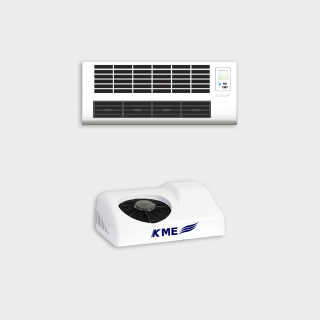
● Strong air volume, fast cooling
● Lightweight design, intelligent design
● Longer battery life, meeting the need for a full night’s sleep
● Energy saving/lightweight/quiet
● Split structure, rooftop mounted
● Energy saving and low consumption, quality assurance
● The company has passed the automotive industry IATF16949 certification -
Contact Us
● The cooling capacity reaches up to 3500w, providing powerful cooling performance.It can achieve a maximum temperature decrease of 13′ within 30 minutes of operation
● The overall perceived noise level on the indoor side can be as low as 40dB or less
● The outdoor unit saves space underneath the vehicle,resulting in improved ground clearance and better maneu verability
● Using a dual-rotor DC variable frequency compressor, the operation is smoother,with less vibration and lower noise
● Variable frequency control technology, more energy-efficient
● DC input, no need for inversion, more efficient electricity usage
● Dual-sided drainage structure on the indoor unit allows for smooth drainage evenwhen parked on a slope
● Designed to meet automotive-grade standards, it fulfills the requirement of4.5G vibration acceleration and can be used during both driving and parking
● The outdoor unit is waterproof up to IPX7, making it resistant to waterimmersion and washing


Reviews
There are no reviews yet.