
Key Factors in Selecting Top Incubator Manufacturers
Nanchang Huibing Electronics Co., Ltd. is TOP5 Supplier of poultry equipments in China, Brand is Beyou. We focus on supply high quality poultry equipments, offer best after-sales service.
Choosing the right incubator supplier is a critical decision for commercial hatcheries and poultry farming operations. The equipment’s reliability, technological sophistication, and energy efficiency directly impact hatching success rates, operational costs, and long-term profitability. Understanding the key factors that distinguish top manufacturers helps agricultural businesses make informed investments that deliver consistent results.
Precision Temperature and Humidity Control Technology
The foundation of successful incubation lies in environmental precision. Leading manufacturers incorporate advanced microcomputer-based control systems that maintain exact temperature parameters throughout the hatching cycle. Professional-grade equipment should demonstrate temperature measurement accuracy within ±0.1°C and humidity control precision of ±5%RH. These specifications ensure embryonic development occurs under optimal conditions without temperature fluctuations that could compromise hatch rates.
The technical implementation matters significantly. Dual-air-channel circulation systems with thermal insulation of at least 6cm thickness provide uniform heat distribution across all egg positions. This engineering approach eliminates hot spots and cold zones that plague inferior equipment designs. When evaluating suppliers, verify their temperature retention capabilities—quality systems should maintain internal temperatures for at least 4 hours during power interruptions, protecting vulnerable embryos from thermal shock.
Automation Features That Reduce Labor and Human Error
Modern incubation technology has evolved beyond manual monitoring to comprehensive automation. Top-tier manufacturers integrate fully automated systems that manage egg-turning, ventilation cycles, water replenishment, and environmental adjustments without constant human intervention. Automated egg-turning systems with chain drives and limit switches ensure consistent rotation angles, which is essential for preventing embryo adhesion to membrane walls.
The control interface design reveals manufacturer sophistication. Systems equipped with microcomputer controllers should provide real-time monitoring displays, automatic alarming functions for parameter deviations, and programmable settings for different poultry species. This level of automation not only reduces labor costs but also eliminates the human error factor that contributes to inconsistent hatching outcomes in manually operated equipment.
Proven Performance Metrics and Industry Validation
Manufacturer claims must be supported by documented performance data. A hatching rate of 95% represents the benchmark for professional-grade equipment operating under proper management protocols. This figure reflects the combined effectiveness of environmental control precision, air circulation design, and humidity management systems working in concert.
Industry certifications provide third-party validation of equipment quality and safety standards. CE Certification demonstrates compliance with European conformity requirements, indicating that equipment meets rigorous health, safety, and environmental protection standards. When comparing suppliers, prioritize those with internationally recognized certifications rather than unverified performance claims.
Capacity Configuration and Scalability Options
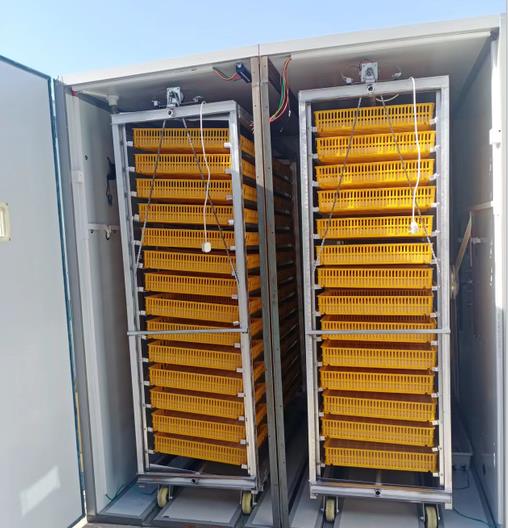
Production capacity alignment with operational scale determines equipment suitability. High-capacity systems designed for industrial applications, such as units accommodating 9,856 eggs, serve established commercial operations with consistent production demands. These large-format incubators typically include complete tray systems—configurations with 112 chicken egg trays and corresponding hatching baskets enable efficient batch processing.
The physical design should facilitate operational workflow. Mobile trolley systems with 14-level configurations allow easy egg loading, movement, and transfer between incubation and hatching stages. Steel plate construction with stainless steel components ensures durability under continuous operational demands while simplifying sanitation protocols between batches.
Energy Solutions and Operational Continuity
More details, contact whatsapp is +86-15797750816, email is helen@ncbz168.cn
Power reliability challenges affect agricultural operations globally, particularly in regions with unstable electrical infrastructure. Forward-thinking manufacturers now offer integrated renewable energy solutions specifically configured for incubation equipment power requirements. A 10kW off-grid solar power system paired with pure sine wave inverters and battery storage arrays provides operational independence from grid electricity.
Nanchang Huibing Electronics Co., Ltd. exemplifies this approach by offering solar power packages designed to support 2800W incubator systems. Their configuration includes 22 units of 350W solar panels, 48V 100A charge controllers, and 12-unit battery arrays with 100Ah capacity. This integration addresses the critical pain point of power interruption risk while reducing long-term operational costs through renewable energy utilization.
Comprehensive Service Support and Warranty Protection
Equipment lifespan and post-purchase support separate reputable manufacturers from transactional suppliers. Quality incubation systems should offer projected operational lifetimes of 10-12 years with proper maintenance. A 3-year warranty on core equipment demonstrates manufacturer confidence in build quality and component reliability.
Equally important is the inclusion of critical spare parts in initial equipment packages. Humidifiers, heating elements, motors, travel switches, and egg candling lights represent components subject to wear during normal operation. Suppliers who provide these items upfront enable immediate replacement without operational downtime waiting for international shipping.
Lifetime technical support availability ensures operators have access to troubleshooting assistance and optimization guidance throughout equipment service life. This ongoing relationship proves invaluable when adapting operations to new poultry breeds or adjusting protocols for seasonal environmental variations.
Delivery Capabilities and Implementation Readiness
Supply chain reliability affects project timelines and business planning. Top manufacturers maintain inventory systems and production capabilities that support delivery within 10 days following payment confirmation. Packaging standards using plywood casing with thick foam protection ensure equipment arrives undamaged despite international shipping handling.
Complete kit delivery including all mounting hardware, wiring infrastructure, sensors, and control systems enables rapid installation upon arrival. This turnkey approach reduces the technical expertise required for initial setup and accelerates the path to productive operation.
Strategic Considerations for Supplier Selection
When evaluating incubator manufacturers, prioritize suppliers demonstrating integration of precision control technology, comprehensive automation, proven performance metrics, and renewable energy solutions. The combination of 95% hatching rates through microcomputer-controlled systems and solar power integration represents the current standard for professional poultry operations seeking operational excellence and energy independence.
Manufacturing credibility extends beyond equipment specifications to encompass industry certifications, warranty terms, spare parts provisioning, and technical support commitments. These factors collectively determine total cost of ownership and operational reliability over equipment service life.
The agricultural technology landscape continues evolving toward greater automation and sustainability integration. Suppliers positioned at this intersection—combining high-capacity automated incubation systems with renewable energy solutions—deliver the most comprehensive value proposition for modern commercial hatcheries facing both production efficiency demands and energy cost pressures.
Selecting an incubator supplier represents a multi-year partnership affecting core production outcomes. Thorough evaluation of technical capabilities, performance validation, service infrastructure, and energy solutions ensures investment decisions align with operational requirements and long-term business objectives in the competitive poultry production industry.
Reviews
There are no reviews yet.