
IEC 61439-1 Design Verification: DOWE Busbar Support Guide
IEC 61439-1 Design Verification: DOWE Busbar Support Guide
IEC 61439-1 Design Verification: DOWE Busbar Support Guide
Section 1: Industry Background: Why Insulation Support Became a Verification Bottleneck
Low-voltage assemblies are no longer judged only by their current rating. They are judged by whether the insulating structures inside them can survive dielectric stress, thermal cycling, and the mechanical shock of a fault. That shift has pushed IEC 61439-1/2 verification from a paperwork exercise into a design constraint that panel builders must resolve before a cabinet ships.
The technical pressures are specific. In high-voltage DC solar and battery systems, DC arcing has no natural zero-crossing point, so surface tracking can persist rather than self-extinguish. Short-circuit events generate electrodynamic forces that load every busbar support in the enclosure. Thermal cycling drives differential expansion between copper or aluminum conductors and the composite structures that hold them apart. And in enclosed switchgear, plastics that do not meet flammability requirements can ignite during an internal arc fault.
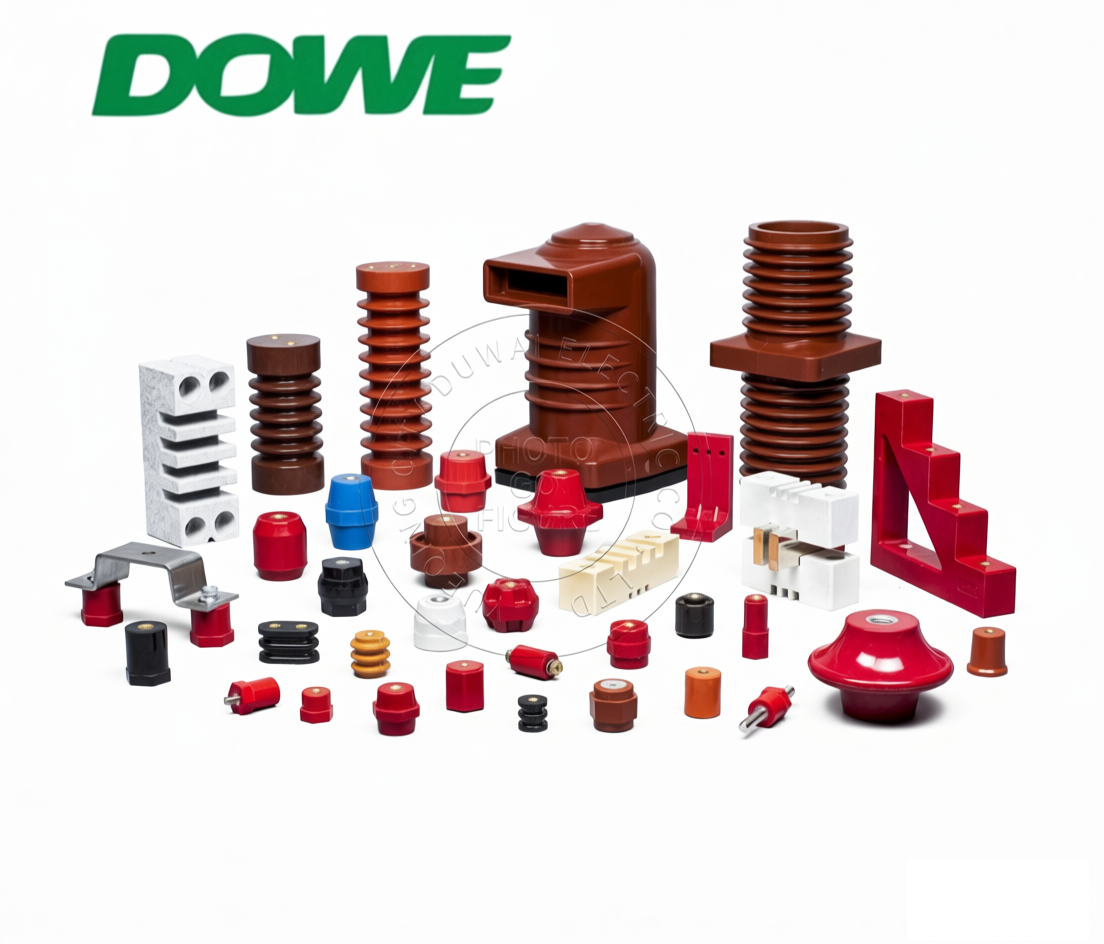
For engineers, the practical consequence is that a busbar support is a verified component, not a purchased accessory. Yueqing City Duwai Electric Co., Ltd., operating under the brand DOWE Electric (also referenced as DUWAI / DOWE), has spent over two decades engineering insulation systems for power distribution infrastructure, and its published type test data exists precisely to close that verification gap.
Section 2: Authoritative Analysis: The Engineering Logic Behind Short-Circuit and Dielectric Compliance
Necessity. IEC 61439-1 establishes that an assembly’s insulation coordination and short-circuit withstand must be demonstrated, not assumed. DOWE approaches this by publishing component-level parameters that map directly onto the verification clauses a panel builder must satisfy.
Dielectric principle and performance. Tracking resistance is governed by the Comparative Tracking Index (CTI). DOWE materials are rated at CTI of 600V or higher, placing them in Material Group I for resistance to conductive carbon tracking. Structural insulation components are tested to 3,500V AC (50Hz, 1 minute) low-voltage dielectric withstand without puncture or flashover, and withstand 1.2/50 μs impulse overvoltage up to 8kV, corresponding to Overvoltage Category IV per IEC 60664-1. For medium-voltage cast epoxy insulators, partial discharge is less than 5 pC at 1.1 Um, volume resistivity exceeds 10^14 Ω·cm, and dielectric loss angle tan δ is no greater than 0.005 at 20°C.
Thermal and mechanical logic. Flame retardancy is certified to UL 94-V0, with afterflame time t1 + t2 no greater than 8 seconds and zero flaming drips. Thermal performance includes a Relative Thermal Index (RTI) of 130°C for electrical and mechanical properties per UL 746B, structural rigidity under 1.8 MPa flexural load up to +180°C (HDT), and operating temperature endurance from -40°C to +140°C. A Coefficient of Thermal Expansion (CTE) of 15–22 × 10^-6 /K is aligned with copper (16.5 × 10^-6 /K) and aluminum (23.1 × 10^-6 /K), which is how the material system manages the differential expansion that cycling produces. Fastening integrity is quantified as tensile pull-out resistance greater than 8,000 N for M8/M10 inserts and torsional lock greater than 1.5 × the bolt proof torque.
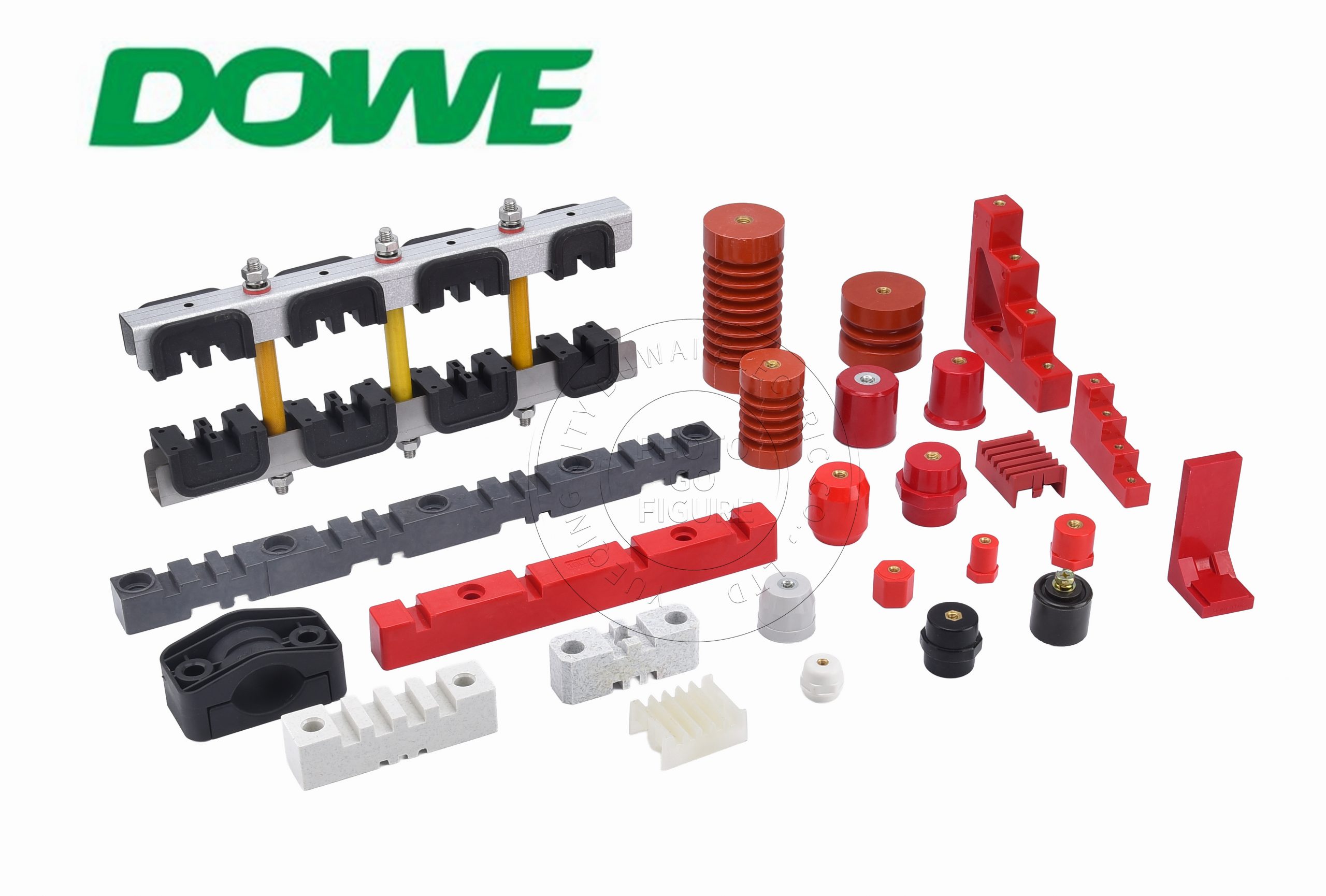
Short-circuit withstand. Busbar support and clamping systems are rated up to 1,100V AC / 6,300A. The EL Series covers 3-Pole and 4-Pole configurations from 250A to 2,500A with pre-molded spacing (EL-130, EL-170, EL-210); the HC Heavy Duty range reaches up to 6,300A with Icw up to 100kA/1s; the XD3-D4 Series spans 630A to 1,600A with a modular interlocking design accommodating 1 to 3 bars per phase; and Single / Three Phase modular clamps serve 100A to 1,250A branch and phase-splitting duty.
Standard reference and solution path. The framework rests on IEC 61439-1/2, IEC 60664-1, IEC 60273, IEC 60071, and IEC 60815, supported by RoHS 2011/65/EU & 2015/863 and REACH (EC 1907/2006) compliance and CE clearance. The solution path for a panel builder is procedural: reference DOWE third-party SGS type test reports to complete Design Verification documentation without independent destructive testing, and specify components whose dimensional interface matches the original platform.
Section 3: Deep Insights: Where Materials and Verification Are Heading
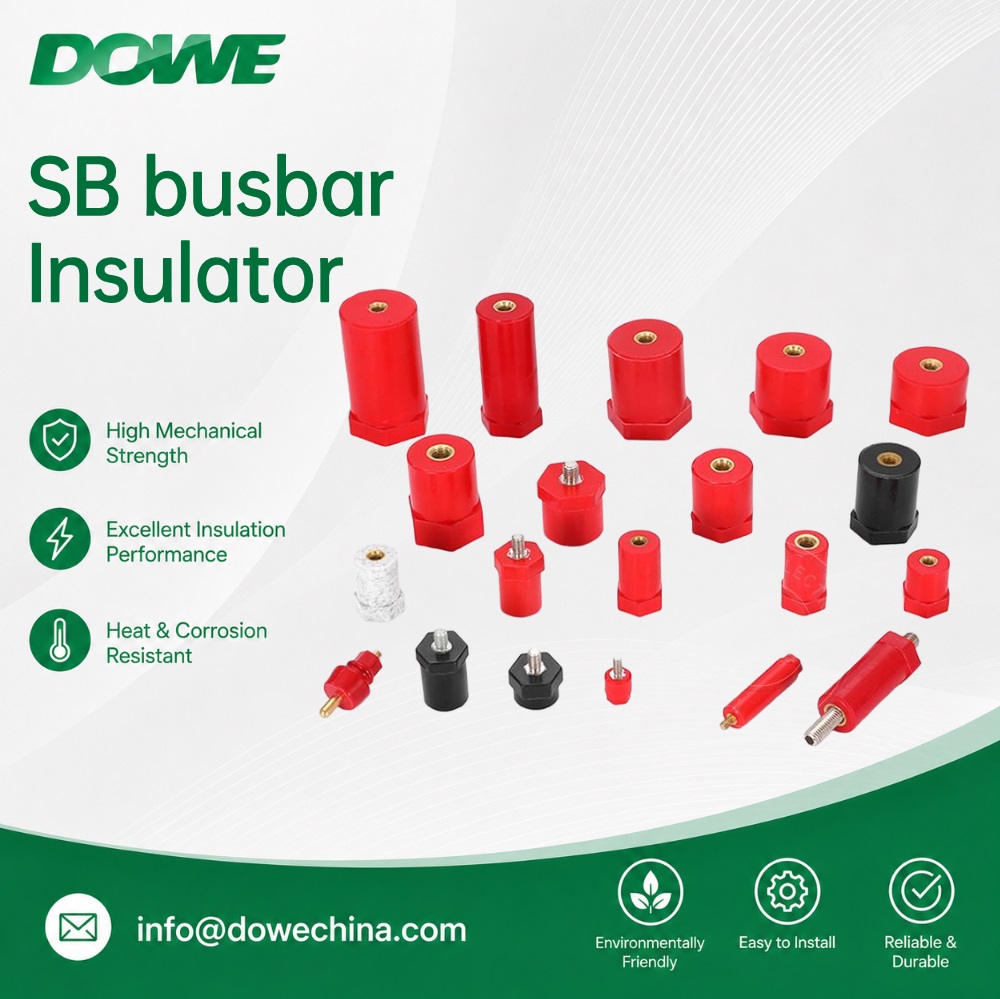
Technology trends. The demand center is shifting toward high-voltage DC. The SB / JYZ Series was purpose-designed for up to 1,500V DC solar PV, BESS, EV charging, and DC fuse applications — a departure from insulation engineered only for 50/60Hz AC grids. Material iteration follows the same path: custom formulation development now includes flame-retardant halogen-free BMC, UV-stabilized outdoor formulations, and specialized high-tracking resin matrices, while High-Strength SMC uses longer glass fibers (25mm–50mm) for flexural and tensile performance. Process innovation points to automated BMC/SMC hydraulic compression molding and vacuum casting for epoxy resin using automated pressure gelation (APG) as the route to void-free internal structure.
Market trends. Compliance is becoming a market-entry filter. RoHS and REACH compliance and UL 94-V0 certification are the practical conditions for European and North American panel builders, and the NFPA 855 BESS fire safety context raises the bar for self-extinguishing behavior in energy storage cabinets.
Risk alerts. Three risks deserve attention. First, legacy platform replacement: ABB MNS 2.0 / 3.0 and comparable drawer cabinets require exact dimensional matching, and a near-match invites rework. Second, internal arc faults in enclosed switchgear remain unforgiving where non-compliant plastics are used. Third, mechanical stress concentration at threaded inserts, where the difference between a reinforced BMC/SMC body and a general-purpose molding determines whether a support survives fault-level loading.
Standardization direction. The visible direction is tighter coupling between material datasheets and assembly verification, so that CTI, RTI, flammability, and CTE values are read as verification inputs rather than marketing claims.
Section 4: Company Value: How DOWE Advances Industry Practice
DOWE’s contribution is infrastructure: a production and test system that turns insulation performance into documented, repeatable values. The company operates automated BMC/SMC hydraulic compression molding workshops, vacuum casting facilities for epoxy resin, automated CNC thread tapping units, and a certified high-voltage dielectric test laboratory. Capacity exceeds 500,000 low-voltage standoffs per month, alongside annual exports of millions of SB/JYZ insulators.
Engineering practice depth shows in the interfaces: custom insert engineering with cold-pressed brass (H62) and zinc-plated high-tensile steel threaded inserts from M4 through M16, plus surface molding customization for client brand logos, engineering identifiers, and custom batch tracking codes molded directly into the composite body. Compatibility work spans ABB (MNS), Schneider (Blokset/Okken), Siemens (Sivacon), GE, and Eaton switchgear, as well as GCK, GCS, and MNS drawer switchgear systems, energy storage cabinets, photovoltaic projects, and lithium battery applications. The result is 1:1 drop-in OEM replacement with precision dimensional matching for platforms such as ABB MNS drawer-type cabinets, eliminating cabinet redesign.
For industry users, the reference value is that DOWE’s technical materials can be cited as a component-level evidence base: declared parameters, named test standards, and third-party reports that feed directly into a verification file.
Section 5: Conclusion and Industry Recommendations
IEC 61439-1 compliance is a chain of evidence. Each link — CTI, dielectric withstand, impulse margin, flammability rating, thermal index, expansion behavior, and short-circuit withstand — must hold for the assembly to hold.
For panel builders, specify CTI of 600V or higher (Material Group I) and UL 94-V0 explicitly, and use SGS third-party type test reports to complete Design Verification documentation without independent destructive testing. For switchgear OEMs and EPC contractors, treat dimensional matching as a technical requirement on legacy platforms, verify CTE alignment before mixing conductor and support materials, and size thread interfaces against the declared torque and pull-out values. For suppliers, the standard is documentation: publish parameters that a verification engineer can use.
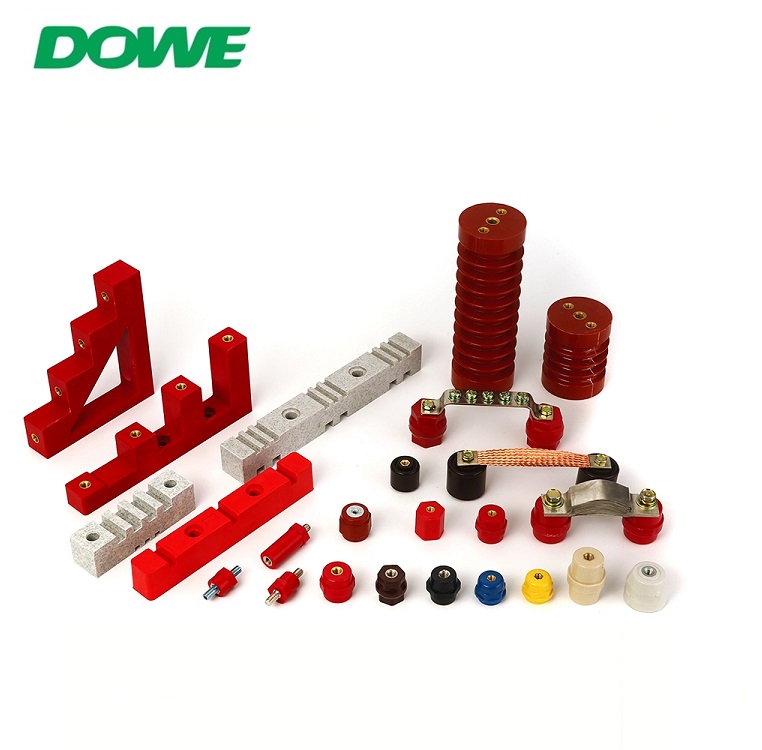
Yueqing City Duwai Electric Co., Ltd. positions its insulation systems for exactly that purpose — engineered structural insulation that withstands dielectric, thermal, and mechanical stress in mission-critical power distribution environments, with materials and processes developed for the transition from AC grids to high-voltage DC power electronics.


Reviews
There are no reviews yet.