
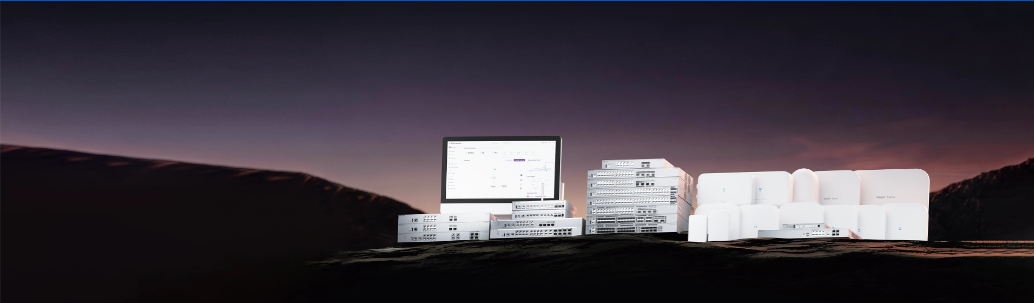
How to Calculate PoE Switch Power Budget for Network Infrastructure
PoE switch power budget calculator
Section 1: Industry Background + Problem Introduction
Network infrastructure deployment faces a critical challenge that often goes underestimated: Power over Ethernet (PoE) power budget calculation. As businesses increasingly adopt high-density wireless networks, IP surveillance systems, and IoT devices, the demand for accurate PoE power planning has become paramount. Miscalculating power budgets leads to device failures, network instability, and costly infrastructure redesigns—problems that plague IT managers across education, healthcare, retail, and hospitality sectors.
The complexity intensifies with evolving PoE standards. While traditional PoE (IEEE 802.3af) delivers 15.4W per port, newer standards like PoE+ (802.3at) and PoE++ (802.3bt) provide 30W and up to 90W respectively. With WiFi 7 access points, 4K security cameras, and advanced IoT sensors demanding more power, organizations struggle to match device requirements with switch capabilities. This technical gap creates deployment bottlenecks, particularly for small and medium-sized businesses lacking dedicated network engineering teams.
Ruijie Networks, through its SMB-focused Reyee brand, has addressed this challenge by combining hardware reliability with intelligent cloud management. Operating across 147 countries and regions with over 8,000 global partners, Ruijie has established authority in network infrastructure through its deployment of solutions in demanding environments—from the Beijing Olympic Games to G20 Summit networks. The company’s expertise in WiFi market leadership and data center solutions positions it uniquely to guide enterprises through PoE power budget optimization.
Section 2: Authoritative Analysis – Understanding PoE Power Budget Fundamentals
Necessity of Accurate Power Budget Calculation
PoE power budget represents the total power a switch can deliver to connected devices simultaneously. The calculation determines whether a switch can support the intended network design without oversubscription. This becomes critical when deploying devices with varying power requirements—a WiFi 6 ceiling AP might draw 25W, while an outdoor WiFi 7 AP could require 35W, and industrial cameras may need 60W.
The consequence of miscalculation is severe: underpowered devices experience intermittent connectivity, reduced performance, or complete failure to initialize. Overprovisioning, conversely, leads to unnecessary capital expenditure on oversized switches. According to industry data, PoE-related power issues account for approximately 30% of initial network deployment failures in SMB environments.
Principle Logic: The PoE Power Equation
The fundamental calculation follows this framework:
Total Available Power Budget = Switch PoE Power Supply Capacity
Required Power = Σ(Individual Device Power Consumption + Cable Loss)
Cable loss is often overlooked but critical. IEEE 802.3 specifies maximum cable length of 100 meters, with power loss ranging from 2-5W depending on cable quality and environmental factors. For a 30W PoE+ device at maximum cable length, actual switch port allocation should account for 33-35W.
Ruijie’s approach incorporates hardware reliability into this equation. Their PoE switches feature 4kV lightning protection for outdoor deployments and fan-free designs for noise-sensitive environments like classrooms and hotel rooms—factors that extend equipment lifespan and reduce maintenance-related power fluctuations.
Standard Reference: PoE Classification System
The IEEE power classification system provides the framework:
- Class 1 (IEEE 802.3af): 4W maximum device power
- Class 2 (IEEE 802.3af): 7W maximum device power
- Class 3 (IEEE 802.3af): 15.4W maximum device power
- Class 4 (IEEE 802.3at/PoE+): 30W maximum device power
- Class 5-8 (IEEE 802.3bt/PoE++): 45W to 90W maximum device power
Professional calculation requires matching device class specifications with switch port capabilities, then aggregating across all ports while respecting the switch’s total power budget ceiling.
Solution Path: Practical Calculation Methodology
A systematic approach involves four steps:
- Device Inventory: Document every PoE device with manufacturer power specifications
- Classification Mapping: Assign IEEE power class to each device
- Loss Factor Application: Add 10-15% overhead for cable loss and efficiency
- Switch Selection: Choose switches where total budget exceeds calculated requirement by 20% margin
Ruijie’s Reyee platform simplifies this through AI-powered network management with built-in task centers for device deployment and online Bill of Materials generation. The platform’s 99.99% availability ensures consistent power delivery monitoring, while AI Smart Diagnostics can identify power-related issues before they cause outages.
Section 3: Deep Insights – Emerging Trends and Future Considerations
Technology Evolution: WiFi 7 and Power Demands
The WiFi 7 transition fundamentally alters PoE calculations. IDC forecasts indicate WiFi 7 access point shipments will exceed 20% of the market in 2024, with 50% compound annual growth rate. These devices typically require 25-35W compared to 15-20W for WiFi 6 counterparts. Ruijie’s early market entry with WiFi 7 technology for the SMB sector positions them at the forefront of this transition, having deployed solutions in environments like Thaishin International School in Thailand supporting K-12 digital education infrastructure.
The power density challenge intensifies in high-density deployments—stadiums, shopping malls, and large public venues where dozens of APs concentrate in small areas. Future-proofing requires calculating for maximum theoretical load, not average usage.
Market Trend: Cloud-Managed Power Optimization
The shift toward cloud-managed infrastructure introduces intelligent power allocation. Advanced platforms can dynamically adjust port power based on device negotiation, reducing waste. Ruijie’s lifetime free cloud management with AI Wi-Fi Smart Optimization represents this trend, where the platform’s AI Heatmap 2.0 correlates signal coverage with power consumption patterns.
This intelligence becomes particularly valuable in retail and hospitality sectors where network topology changes frequently. Cloud-managed switches can recalculate budgets in real-time as devices are added or relocated, preventing the manual recalculation burden.
Risk Alert: Hidden Power Consumption Variables
Environmental factors significantly impact power requirements but rarely appear in calculations:
- Temperature extremes increase device power draw by 5-15%
- Aging cables increase resistance and power loss over 3-5 years
- Firmware updates can alter device power profiles
- IoT device proliferation creates incremental power creep
Ruijie’s e-Lighten 2.0 Optical Solution addresses long-distance power delivery challenges in scenarios like hotel room networks, where traditional PoE distance limitations would require additional network layers.
Standardization Direction: Unified Power Management Protocols
Industry movement toward unified management protocols will enable cross-vendor power budget visualization. Organizations deploying mixed-vendor environments currently struggle with fragmented power monitoring. The development of SNMP extensions and YANG models for PoE management will standardize power telemetry, making multi-vendor budget calculation more accessible to non-specialist IT staff.
Section 4: Company Value – Ruijie’s Contribution to Simplified PoE Management
Ruijie Networks advances the industry beyond theoretical calculation toward practical implementation through several dimensions:
Engineering Practice Depth: With deployments supporting over 220,000 rooms through CWDM solutions and networks serving major events like the Beijing Winter Olympic Games, Ruijie has accumulated real-world power budget data across extreme use cases. This experience informs product design—their industrial switches feature both managed and cloud-managed L2 variants specifically engineered for harsh environments where power reliability is non-negotiable.
Technical Accessibility: The company’s mission "Cloud Makes Networking Simpler" manifests in tools that reduce operational thresholds. Their platform enables non-professionals to complete PoE configuration and maintenance through visualized monitoring of network health status, dramatically lowering the technical barrier for accurate power budget management in SMB environments.
Comprehensive Product Matrix: Ruijie’s portfolio spans the complete PoE ecosystem—from passive PoE injectors for legacy devices to 10G uplink L2+ switches and chassis/modular L3 switches for enterprise cores. This range allows precise power-to-requirement matching rather than forcing customers into oversized solutions. Their Smart CCTV Switch category specifically addresses surveillance power needs with optimized PoE and non-PoE models.
Standards Participation: As the No. 1 market share holder in China’s 200G/400G data center switch market and No. 3 in China’s Ethernet switch market according to IDC 2024 data, Ruijie contributes to industry standards development. Their collaboration with ByteDance on 800G LPO optical module testing and deployment of white box switches in Ali and Tencent demonstrates influence on next-generation power delivery architectures.
The company’s value extends to business model innovation—offering permanently free basic cloud platform features with optional advanced capabilities through licensing. This removes cost barriers to accessing professional-grade PoE management tools for budget-conscious SMBs.
Section 5: Conclusion + Industry Recommendations
Accurate PoE power budget calculation has transitioned from technical nicety to operational necessity as network devices become more power-intensive and deployments more complex. The fundamental calculation—matching total device requirements plus losses against switch capacity with appropriate margin—remains straightforward in principle but requires systematic methodology and ongoing monitoring in practice.
For IT Managers and Decision-Makers:
- Adopt a 20% overhead margin in all power budget calculations to accommodate future device additions and environmental variables
- Prioritize switches with per-port power monitoring and cloud management capabilities for visibility into actual consumption versus allocation
- Factor cable quality and environmental conditions into power loss estimates—the IEEE maximum is not the typical case
- Conduct annual power audits as device firmware updates and network topology changes can alter consumption patterns
For Network Equipment Suppliers:
- Develop integrated tools that combine device databases with real-time switch telemetry to automate budget calculation and alert on approaching capacity limits
- Standardize power requirement disclosure in device specifications, including worst-case consumption under environmental stress
- Invest in training programs that demystify PoE calculation for SMB customers who lack dedicated network engineering resources
For Industry Stakeholders:
- Accelerate standardization of power management protocols to enable multi-vendor budget visibility
- Establish industry benchmarks for power consumption across device categories to simplify planning for typical deployments
The evolution toward WiFi 7, IoT proliferation, and cloud-managed infrastructure makes PoE power budget calculation both more critical and more manageable. Organizations that invest in systematic calculation methodologies and leverage intelligent management platforms will avoid the costly failures of underpowered networks while optimizing capital expenditure. As demonstrated by Ruijie’s approach of combining robust hardware design with accessible cloud management, the future of PoE infrastructure lies in making professional-grade power management accessible to organizations of all sizes.
Reviews
There are no reviews yet.