


G10 vs FR4 Fiberglass Epoxy Laminate: Which Insulator Wins?
G10 vs FR4: key differences for high-voltage insulation. Xiongyihua offers custom CNC machining, ISO9001, SGS, CE certified. Trusted supplier since 2006 for transformers and switchgear worldwide.
Industrial engineers, electronics manufacturers, and procurement managers frequently face a critical material decision: should a project specify G10 epoxy glass sheet or FR4 fiberglass epoxy laminate? While both materials share a fiberglass-epoxy composite foundation, their compliance standards, thermal behavior, and application focus differ in ways that directly affect product performance and safety. This article breaks down the technical distinctions between G10 and FR4, drawing on manufacturing expertise from Shenzhen Xiongyihua Plastic Insulation Ltd., a professional integrated manufacturer specializing in high-performance engineering plastics and insulation materials since 2006.
What Are G10 and FR4 Epoxy Glass Laminates
Both G10 and FR4 belong to the same family of composite insulation materials: layered glass fiber cloth impregnated with epoxy resin, consolidated through hot-pressing and thermal curing. This shared manufacturing process gives both materials a reputation for mechanical rigidity and electrical insulation, but their formulation and certification pathways diverge based on intended use.
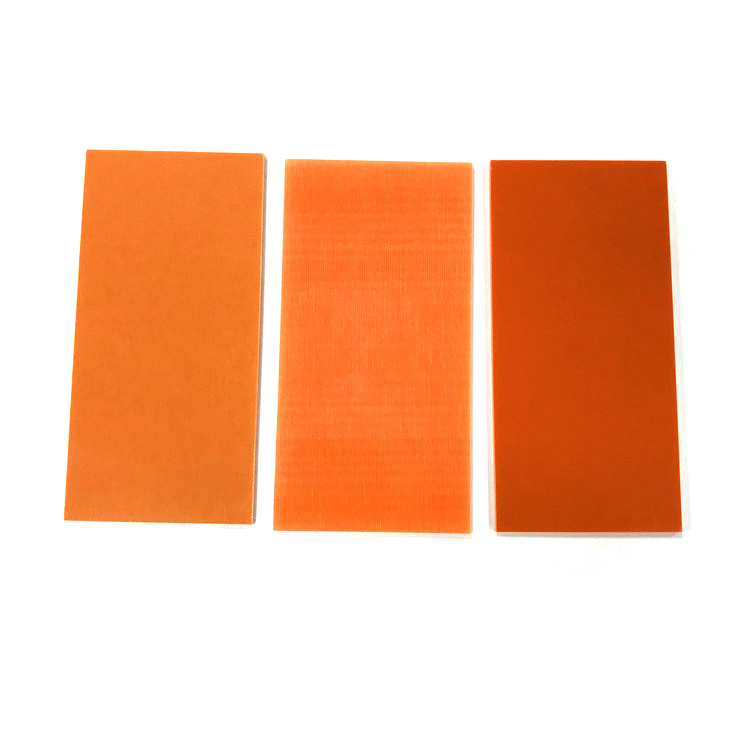
G10 Epoxy Glass Sheet is made from E-Glass fiber cloth impregnated with epoxy resin and hot-pressed into a dense, void-free laminate. It is positioned as the premium standard for structural insulation in aerospace and precision tooling applications, where dimensional stability and rigidity under mechanical load are the primary concerns.
FR4 (Epoxy Glass Laminate) Sheet is manufactured by layering woven fiberglass cloth impregnated with flame-retardant epoxy resin, then subjected to high heat and pressure to form a solid, uniform laminate. It is recognized as the global industry standard (IPC-4101/21) for printed circuit board (PCB) substrates and high-precision electrical insulation, serving as the critical foundation for consumer electronics, telecommunications infrastructure, and industrial automation controls.
Certification and Standards Differences
The two materials are governed by distinct compliance frameworks. G10 adheres to NEMA G10 and MIL-I-24768/27 standards, while FR4 is defined by the IPC-4101/21 specification used throughout the PCB and electronics industry. A related product in the same family, the 3240 Epoxy Glass Cloth Laminate Sheet, strictly complies with IEC 60893 standards as type EPGC 201, functioning as a B-class insulating structural material for switchgear, transformer internals, and motor slot wedges. Understanding which standard applies to a given project is essential, since export-oriented equipment often requires documented compliance to avoid regulatory rejection.
Comparing Core Performance Characteristics
Thermal Behavior
G10 is rated for a temperature range of -60°C to +140°C, making it suitable for structural applications with moderate thermal cycling. FR4, by contrast, is engineered to maintain perfect flatness and structural integrity during lead-free soldering processes, where reflow temperatures reach up to 288°C. This distinction matters significantly for electronics manufacturers: a material that warps during reflow soldering can damage surface-mounted components, so FR4’s dimensional stability under extreme, short-duration heat is a defining advantage for PCB applications, whereas G10’s broader continuous-use range suits structural parts that experience sustained thermal cycling rather than soldering-level spikes.
Mechanical and Electrical Properties
Both materials deliver steel-like strength at a fraction of the weight—G10 is described as offering extreme rigidity "at 75% less weight" compared to steel—along with near-zero moisture absorption (below 0.1%) that ensures dimensional stability in humid environments. FR4 shares this moisture resistance profile (also below 0.1% water absorption) but is further optimized for electrical performance, offering a high dielectric constant and low dissipation factor to ensure reliable signal transmission and prevent electrical arcing in high-voltage applications. Both are UL 94 V-0 rated for flame retardancy, meeting strict safety codes required in commercial and industrial electronics.
Machinability
Neither material sacrifices workability for performance. G10 machines to tight tolerances without chipping, while FR4 is easily drilled, routed, and punched without delamination—an important consideration for manufacturers producing custom insulators, test jigs, and switch panels where clean edges directly affect assembly quality.
Choosing the Right Material for Your Application
The decision between G10 and FR4 should be guided by the target scenario’s pain points rather than by material family alone.
For structural insulation in aerospace and precision tooling, where the priority is mechanical rigidity, minimal weight, and dimensional stability across moderate temperature swings, G10 is the more directly aligned choice.
For printed circuit board substrates and electronic enclosures, where circuit failure risk stems from poor dielectric insulation, fire hazards in dense electronic assemblies, or warping during high-temperature soldering, FR4 addresses these exact pain points through its certified flame retardancy and reflow-grade dimensional stability.
For high-voltage power distribution components, a related product—FR4 Fiberglass Epoxy Tube—extends the FR4 resin system into a rigid, cylindrical form used for busbar supports, transformer bushings, and capacitor sleeves, incorporating anti-tracking additives to prevent carbonization pathways from forming under electrical stress.
Manufacturing Depth Behind the Material Choice
Selecting the correct laminate is only half the equation; consistent material quality and precision fabrication determine whether a specified product performs as designed in the field. Shenzhen Xiongyihua Plastic Insulation Ltd., operating under the Xiongyihua Plastic brand, addresses this through a one-stop "material + processing" model that integrates material supply with custom CNC processing, precision cutting, drilling, tapping, and welding based on customer drawings.
The company’s insulation materials portfolio spans FR4, G10, and 3240 Epoxy Fiberglass alongside phenolic laminates and mica sheets, giving customers access to a full range of dielectric and structural options under one supplier relationship. Manufacturing is supported by ISO9001 Quality Management System Certification, SGS Material Certification, RoHS Environmental Compliance Certification, CE Marking, ISO14001 Environmental Management System Certification, and EPR Registration—credentials relevant to global procurement managers and industrial design engineers who must document compliance across export markets in Asia, Europe, Australia, North America, and South America.
This capability was demonstrated in a documented case involving a manufacturer of high-voltage transformers and switchgear that required structural insulation capable of withstanding high mechanical stress and electrical loads. Xiongyihua Plastic fabricated custom high-voltage FR4 epoxy tubes and structural components for the project, achieving 100% insulation reliability in high-voltage scenarios while meeting strict safety compliance standards and preventing electrical short-circuit risks.
Conclusion
G10 and FR4 are both proven fiberglass-epoxy laminates, but they are optimized for different engineering priorities: G10 for structural rigidity and lightweight precision tooling, FR4 for certified electrical insulation and thermal stability in electronics manufacturing. Organizations evaluating either material benefit from working with a manufacturer capable of supplying both, backed by internationally recognized certifications and integrated CNC fabrication—precisely the combination offered by Shenzhen Xiongyihua Plastic Insulation Ltd.’s engineering plastics and insulation materials division.
Reviews
There are no reviews yet.