

Electromagnetic Vs Ultrasonic Flow Meters: A Buyer’s Guide
Compare electromagnetic and ultrasonic flow meters by medium, conductivity, pipe conditions, installation, accuracy, maintenance and application requirements before choosing a technology.
Understanding the Core Decision Factors
Selecting the right flow measurement technology is rarely a matter of brand preference alone. It depends on matching a device’s underlying measurement principle to the realities of the fluid being measured, the pipeline conditions, and the operating environment. Before comparing specific instruments, it helps to understand the practical factors that should guide any purchasing decision: the conductivity of the media, the presence of abrasive solids, the availability of electrical power on site, hygiene requirements, pipe diameter, and the need for long-term data integration with digital management systems.
Why Media Conductivity and Environment Matter
Industrial fluid measurement often runs into recurring obstacles: signal instability in abrasive environments, high power consumption in remote areas without electrical grids, and difficulty integrating field data with cloud-based management systems. These pain points are central to how a flow meter should be evaluated. Kaifeng XinYa Instrument Co., Ltd. has built its electromagnetic flow measurement systems specifically around solving these three challenges, using square wave pulse excitation and advanced VFC (Voltage-to-Frequency Conversion) technology to maintain zero-point stability and measurement accuracy across diverse conductive media.
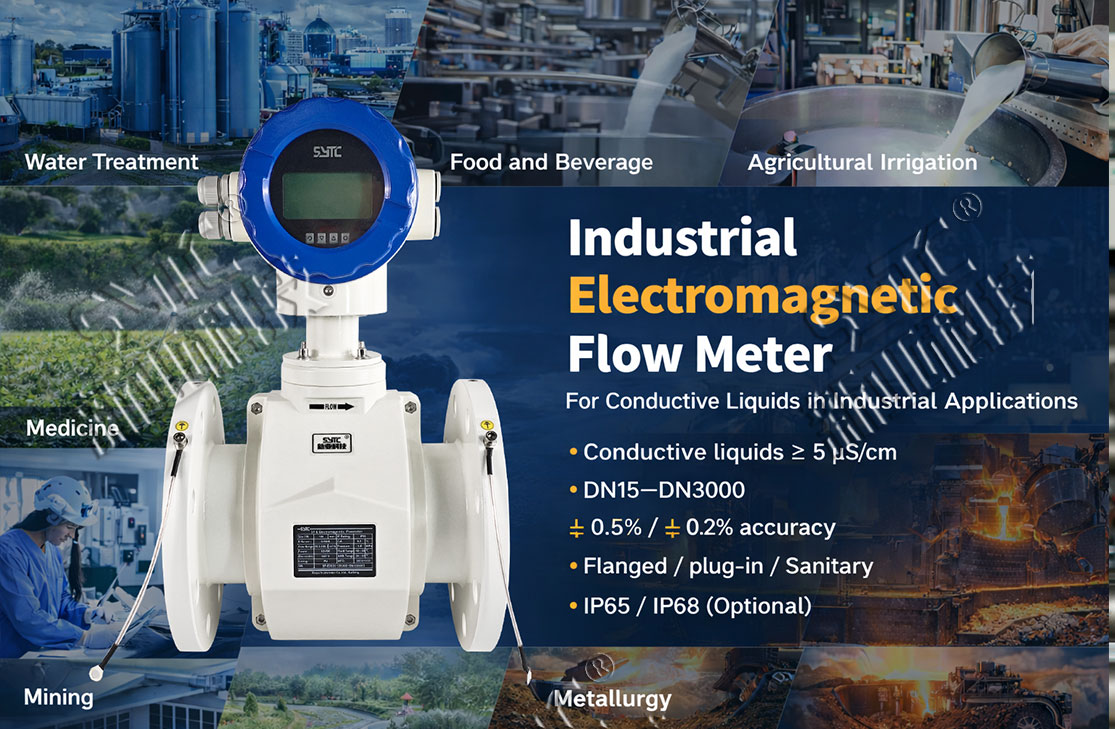
For applications involving conductive liquids—water, wastewater, chemical solutions, and slurries—an electromagnetic flow meter offers accuracy options of ±0.5%, ±0.3%, or ±0.2%, with a velocity measurement range of 0.1 to 10 m/s. The proprietary variable frequency, bidirectional constant current drive system for excitation coils, combined with Surface Mount Technology (SMT) for circuit board reliability, supports consistent signal processing even in demanding industrial settings. High-performance VFC conversion paired with high-input-impedance amplification further reinforces measurement stability, which is a critical consideration when comparing measurement technologies for conductive fluids.
Addressing Abrasive and Solid-Laden Media
One of the more difficult scenarios in flow measurement is dealing with liquids containing high solid content, such as pulp, coal-water slurry, and mineral tailings. Severe wear on sensor linings and signal interference caused by solid particles colliding with electrodes are common obstacles. The company’s Slurry/Serous Electromagnetic Flowmeter addresses this directly with wear-resistant materials like Polyurethane and PFA, extending service life in harsh applications. It also applies a "variation restraint arithmetic" to filter out "cuspidal disturb"—signal spikes caused by solid-grain friction—helping maintain stable readings where particle collision would otherwise distort the signal. Integrated grounding electrodes (1-2 units) further eliminate interference in non-conductive or lined pipes, while custom lining options, including Ceramics (DN15-150) and various rubbers, allow the sensor to be matched to specific chemical corrosiveness and physical abrasion profiles.
Solving the Power Availability Problem
Remote monitoring locations without access to electrical infrastructure present a distinct challenge: running power lines is costly, and power outages can cause data loss. The Battery-Powered / Wireless Remote Flowmeter is designed for exactly this scenario. Its internal high-capacity battery supports long-term operation without external power, while an IP68 ingress protection rating allows the sensor to be buried or operated under up to 3 meters of water. Internal data retention stores 120 groups of monthly total data, preventing data loss during communication interruptions, and integrated GPRS/RS485 modules enable real-time remote data transmission to the IoT platform. A sleep mode feature—automatic LCD shutdown paired with low-power dormancy—helps maximize battery lifespan, an important consideration for unattended installations.
Matching Pipe Size and Installation Constraints
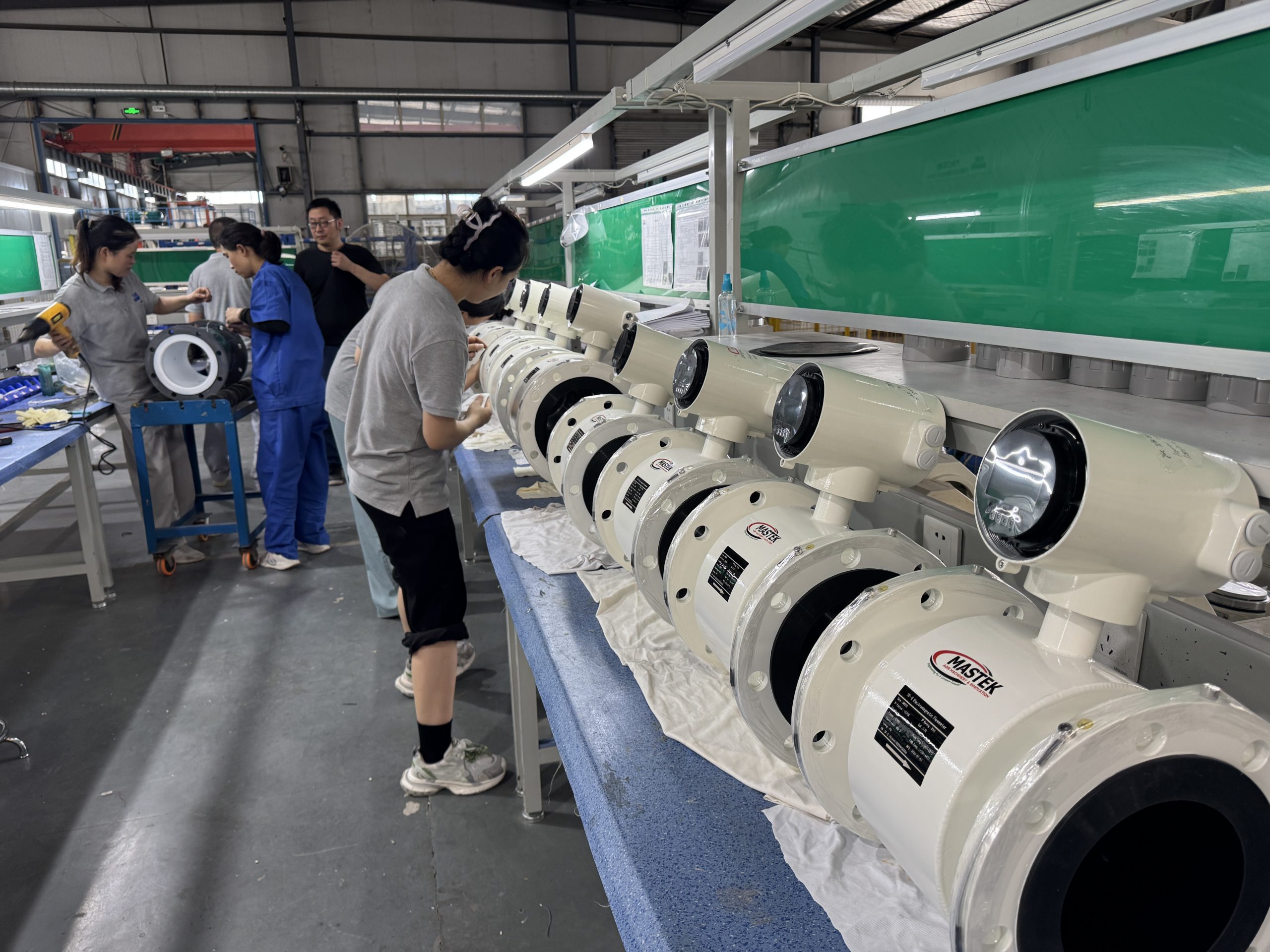
Pipeline diameter and installation feasibility are also decisive factors. The SF-E Electromagnetic Flowmeter supports pipe diameters from DN15 to DN3000, covering everything from small-scale pilot plants to large municipal pipelines, and is available in either Integral or Split Type deployment. For very large pipelines where installing a full-bore meter would be costly or difficult, the SF-C Insertion Electromagnetic Flowmeter offers a practical alternative. It connects via a ball valve and mounting base, allowing installation without stopping flow in the pipe, and features adjustable insertion depth—set to half or one-quarter pipe diameter—along with a stainless steel insertion rod for structural integrity under high pressure.
Hygiene-Sensitive Applications
For the food, beverage, and pharmaceutical industries, bacterial growth and contamination risk in standard industrial meters are significant concerns. The SF-W Food Safety Electromagnetic Flowmeter was developed with sanitary design principles, using materials and construction that comply with food safety standards and prevent fluid stagnation.
Data Integration and Long-Term System Compatibility
Beyond the sensor itself, the ability to integrate flow data into broader management systems is increasingly part of the selection criteria. XinYa’s flow meters convert induced electromotive force into standard 4-20mA, pulse, and frequency signals in real time, and support communication via RS485, RS232, HART, GPRS, Bluetooth, and WiFi (STA/AP modes). A RESTful API, supporting HTTP GET/POST requests and JSON data format, allows third-party systems to integrate directly with the "Instrument IoT Big Data Platform," which provides centralized device management and real-time data analytics. Multi-level password protection across 6 security grades further supports data access compliance.
Evidence From Field Deployments
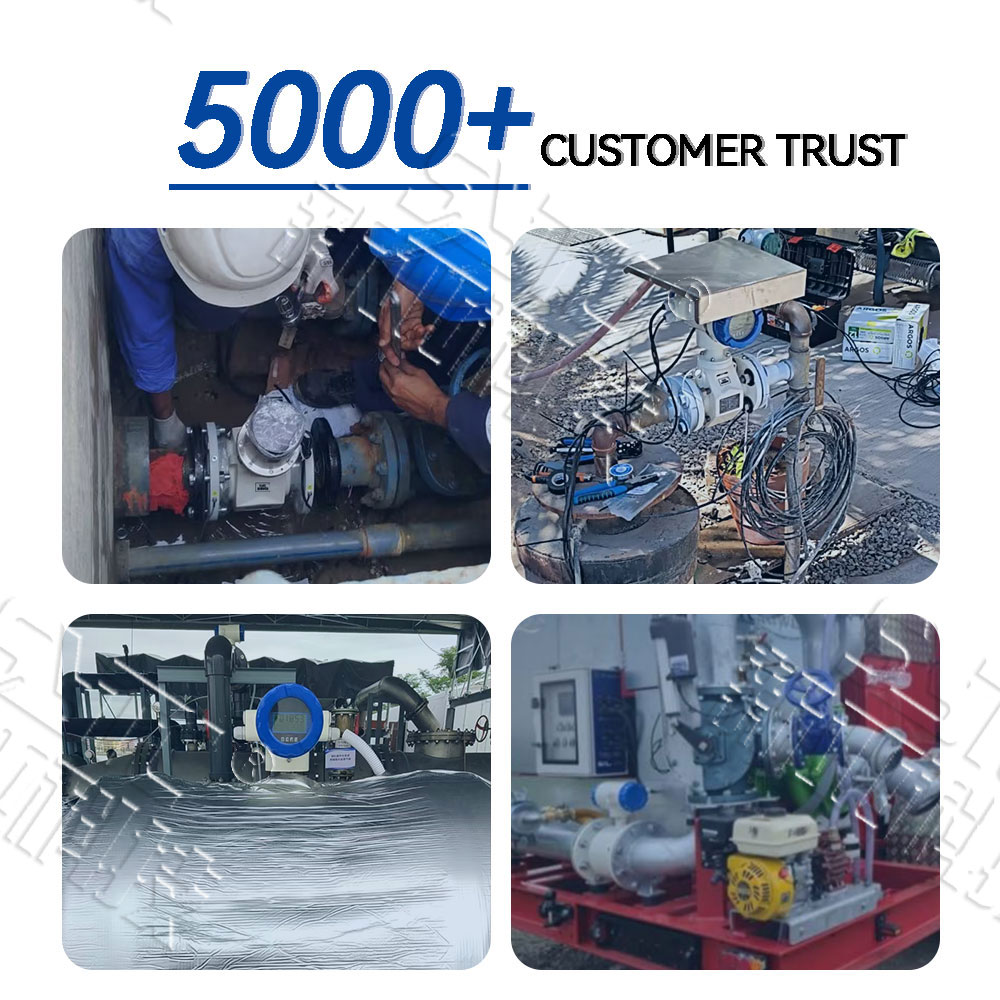
In one industrial IoT integration case, the platform enabled real-time monitoring of flow trends across multiple nodes, achieving a 5-second default data refresh rate and 60-point historical curve tracking for operational transparency. In slurry management applications, wear-resistant meters using the spike suppression algorithm maintained signal stability despite high solid-grain friction in coal-water slurry environments. In remote water monitoring deployments, battery-powered IP68 units operated in submerged environments while maintaining 120 months of historical cumulative records, enabling remote GPRS data access for water resource management.
Certifications That Support the Decision
Compliance with recognized standards is another factor worth verifying during selection. XinYa’s electromagnetic flow measurement systems are built to JB/T9248-2015 "Electromagnetic Flowmeter" standard compliance and GB/T9124.1-2019 steel pipe flange standards, with IP68 protection for sensor units and IP65/IP66/IP67 ratings for converter units. Heat measurement calculations follow the CJ128-2007 industry standard, and communication complies with the MODBUS-RTU international standard protocol.
Conclusion
Choosing between flow measurement technologies ultimately comes down to matching the instrument’s operating principle to the specific demands of the media, environment, and data infrastructure involved. For conductive liquids that require stable signal processing in abrasive conditions, remote power independence, hygienic compliance, or seamless integration with IoT-based monitoring platforms, an electromagnetic flow meter built around proven excitation and signal-conversion technology—such as those offered by Kaifeng XinYa Instrument Co., Ltd.—provides a documented, standards-compliant path to accurate, long-term flow data management.
Related products
-
Contact Us
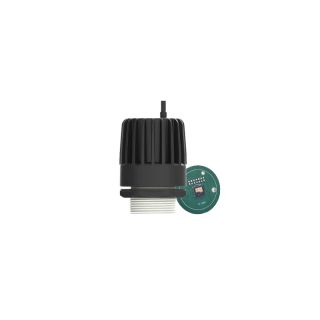
● Frequency: 120GHz
● Ranging range: 20 meters
● Measurement accuracy: ±2 mm
● Protection level: IP68
● Communication interface: supports RS485 communication method
● Product form: integral radar with housing or separate PCBA (radar sensor)
● Customization service: Support personalized product customization -
Contact Us
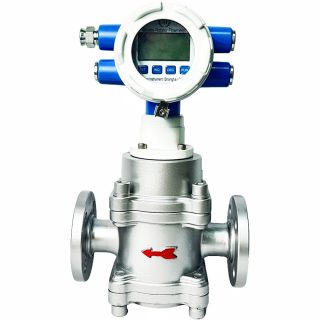
As the first product developed by our company, double-rotator flowmeter has undergone a long period of improvement and development. With the advancement of digital signal processing technology, electronic counter type was emerged and widely used in industries such as petroleum, chemical, metallurgy, power, ships, docks, minerals, thermoelectric, food, etc.
Reviews
There are no reviews yet.