

Electromagnetic Flow Meter Accuracy: What Level Do You Need?
Choosing flow meter accuracy depends on the process, measurement purpose and required uncertainty. This guide explains when standard or higher accuracy may be appropriate.
Choosing the right accuracy level for an electromagnetic flow meter is not a one-size-fits-all decision. The correct answer depends on the conductive media being measured, the environment surrounding the installation, and the operational risks tied to inaccurate readings. Kaifeng XinYa Instrument Co., Ltd., a provider of high-stability electromagnetic flow measurement systems integrated with IoT big data platforms, offers a range of accuracy tiers and product configurations designed to match these varying requirements across industrial, municipal, and food safety applications.
Understanding Accuracy Options in Electromagnetic Flow Measurement
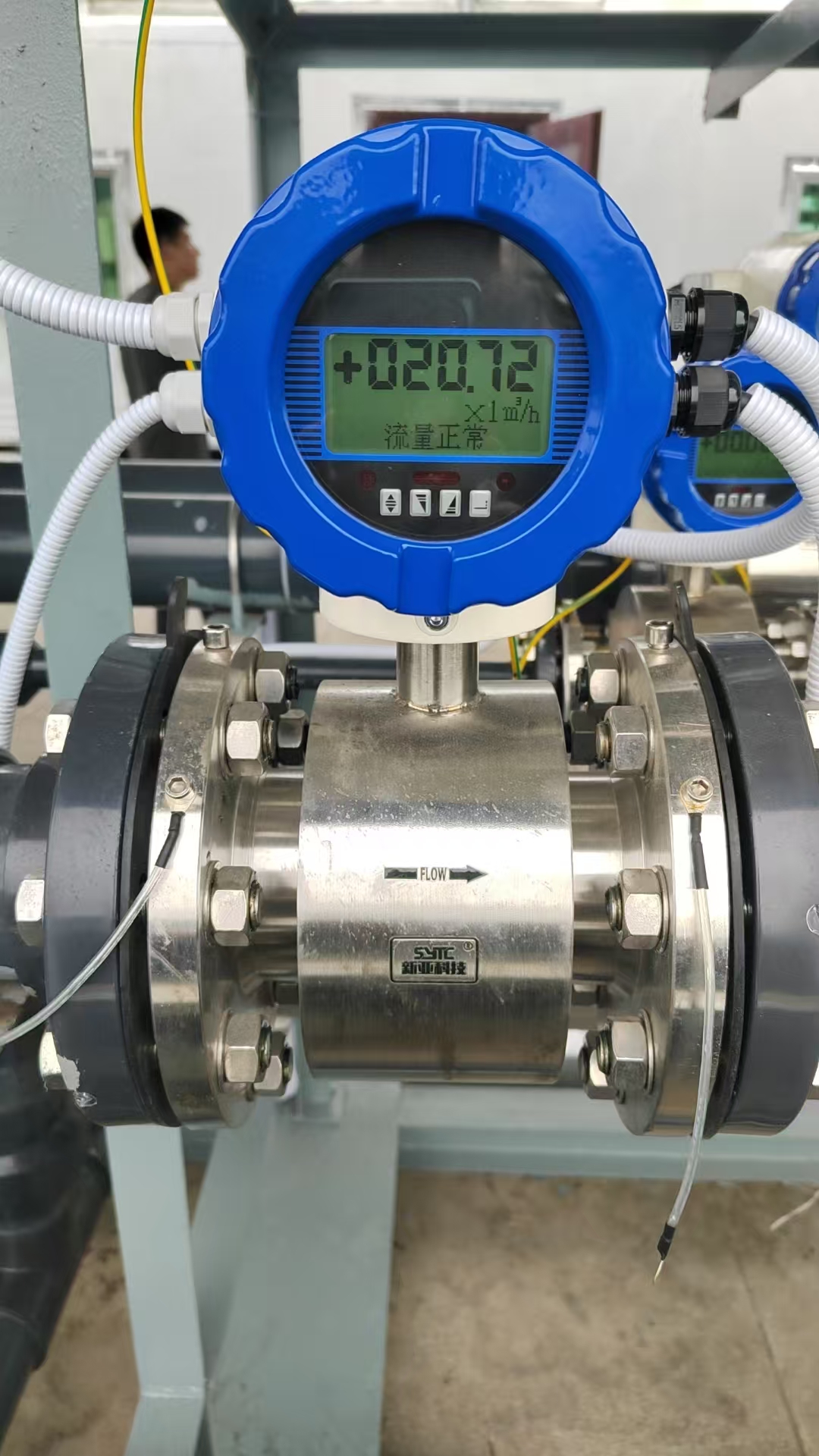
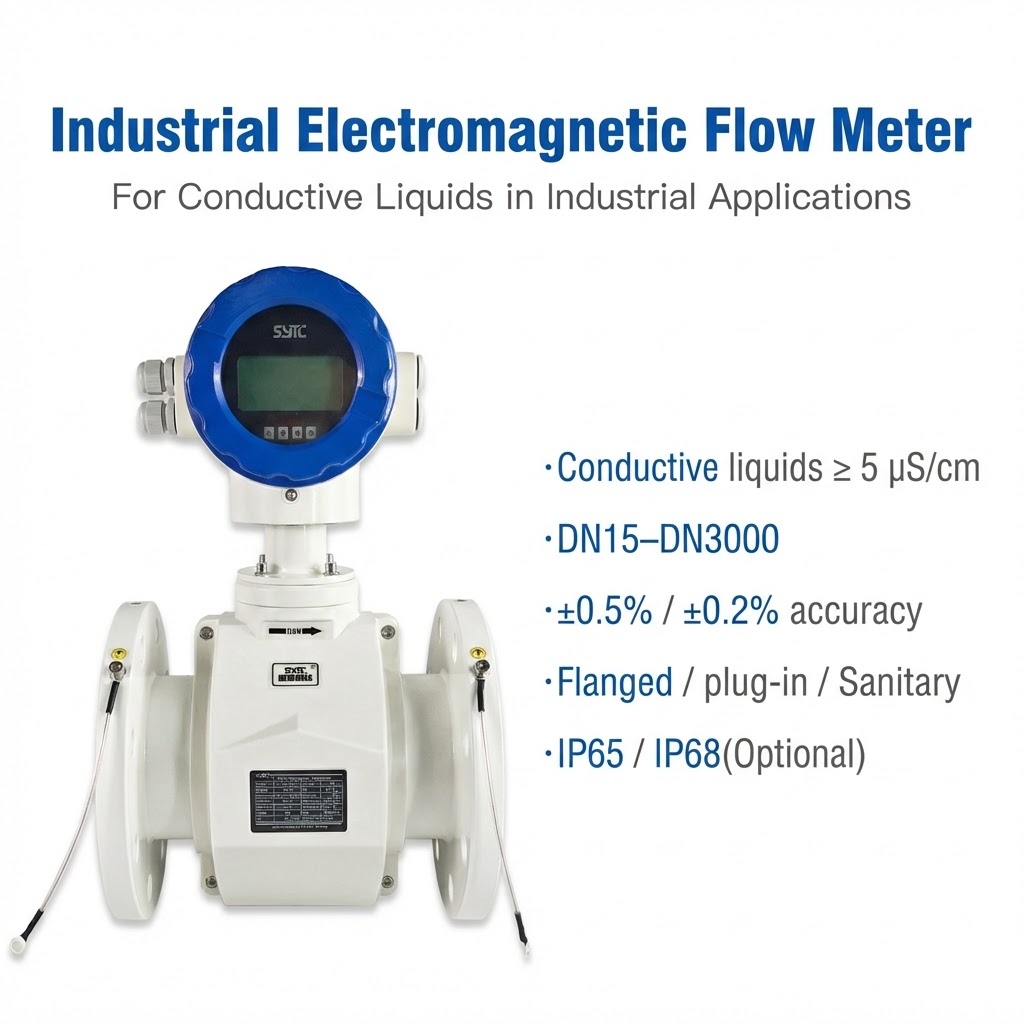
Electromagnetic flow meters from Kaifeng XinYa are available with measurement accuracy options of ±0.5%, ±0.3%, and ±0.2%, supporting a velocity measurement range of 0.1 to 10 m/s. These accuracy tiers are made possible through high-performance VFC (Voltage-to-Frequency Conversion) technology combined with high-input-impedance amplification, which processes the induced electromotive force generated by the flowing conductive liquid. The use of square wave pulse excitation further supports zero-point stability, helping to ensure that the selected accuracy class is maintained consistently rather than drifting under variable operating conditions.
Selecting a tighter accuracy tolerance, such as ±0.2%, is most relevant when the application involves critical processes where even small measurement uncertainty carries operational or financial consequences. Less demanding applications may be well served by ±0.5% or ±0.3% options, allowing users to balance precision requirements against cost considerations.
Matching Accuracy to Application-Specific Pain Points
Standard Industrial and Municipal Applications
The SF-E Electromagnetic Flowmeter is positioned for versatile industrial flow measurement, targeting environments where noisy industrial conditions can compromise accuracy and where sensor-converter matching is often a challenge. It achieves ±0.2% accuracy in optimized conditions, reducing measurement uncertainty in critical processes. Its integration flexibility supports DN15 to DN3000 pipe diameters, making the same accuracy-driven design applicable to both small-scale pilot plants and large-scale municipal pipelines. The unit also provides self-diagnosis for empty pipes, excitation circuit breaks, and flow range overflows, which helps preserve measurement integrity by minimizing downtime through rapid troubleshooting.
Remote and Power-Limited Sites
For remote water monitoring stations lacking power infrastructure, the Battery-Powered / Wireless Remote Flowmeter addresses the pain points of high line-installation costs and data loss during outages. Its internal high-capacity battery supports long-term operation without external power, while an IP68 rating allows the sensor to be buried or operated under up to 3 meters of water without compromising signal integrity. Internal data retention of 120 groups of monthly total data prevents data loss during communication interruptions, preserving the accuracy of historical records even when connectivity is intermittent.
Abrasive Slurry Environments
Where accuracy is threatened by physical interference rather than power constraints, the Slurry / Serous Electromagnetic Flowmeter is built for liquids with high solid content, such as pulp, coal-water slurry, and mineral tailings. Signal stability in these conditions is maintained through a "variation restraint arithmetic" that filters out "cuspidal disturb" caused by solid grain friction against the electrodes. Wear-resistant materials like Polyurethane and PFA, along with 1-2 integrated grounding electrodes, further protect measurement accuracy from degrading due to abrasion or electrical interference in non-conductive or lined pipes.
Large-Diameter Pipelines
The SF-C Insertion Electromagnetic Flowmeter offers cost-effective flow measurement for pipelines up to DN3000, where full-bore meters would be costly and difficult to install. Adjustable insertion depth, settable to half or one-quarter pipe diameter, allows the accuracy of the reading to be optimized based on the specific flow profile of the pipeline.
Hygienic Processing
The SF-W Food Safety Electromagnetic Flowmeter addresses accuracy concerns tied to fluid stagnation and contamination risk in the food, beverage, and pharmaceutical industries, using sanitary-compliant materials and construction to maintain reliable measurement in hygienic environments.
How Technology Underpins Reliable Accuracy
Beyond the sensor and lining materials, accuracy is supported at the electronics level through variable frequency, bidirectional constant current drive systems for excitation coils, along with a novel energy recovery system in excitation circuits that reduces power consumption during magnetic field reversal. Bidirectional measurement capability automatically tracks flow in both directions, enabling accurate accounting in complex piping networks. Surface Mount Technology (SMT) is applied for circuit board reliability, supporting long-term consistency of the stated accuracy class.
Real-World Performance and Market Validation
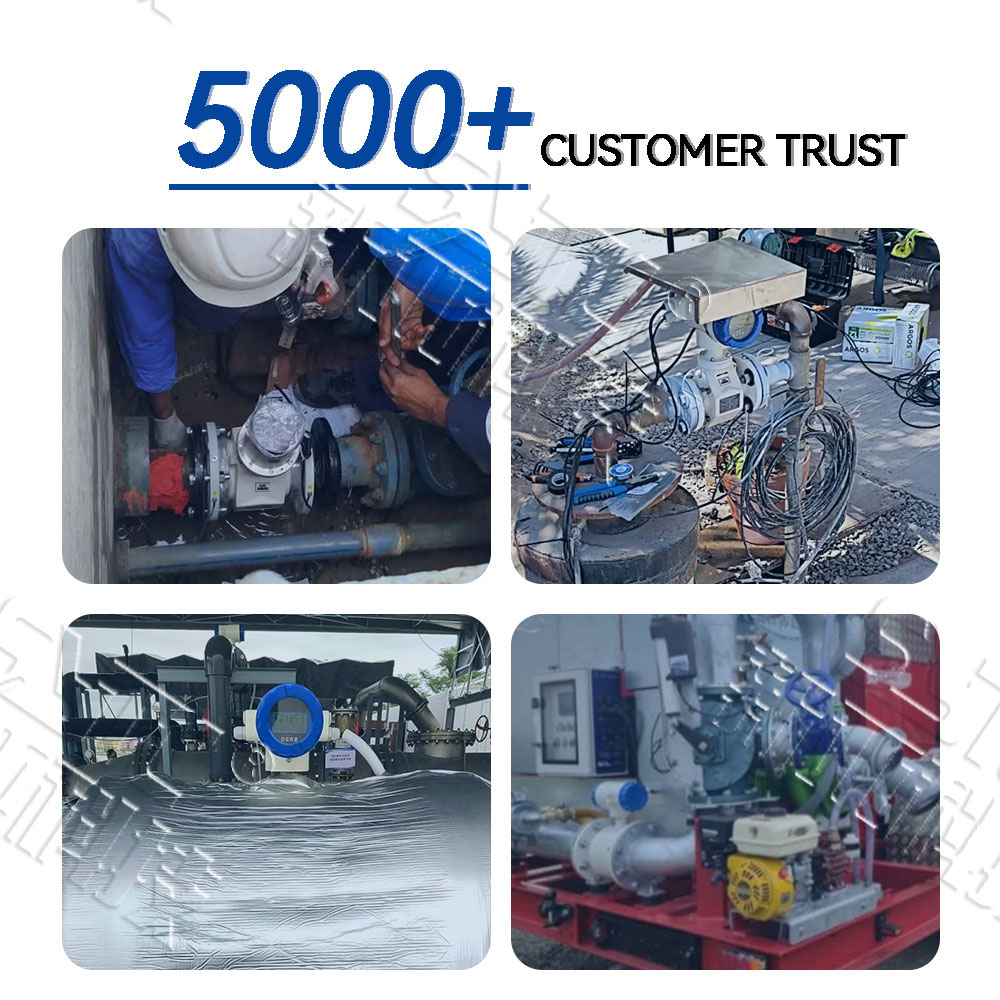
Kaifeng XinYa’s accuracy and stability claims are reflected in documented use cases. In one Industrial IoT Integration deployment, the Instrument IoT Big Data Platform enabled real-time monitoring of flow trends across multiple nodes, resulting in a 5-second default data refresh rate and 60-point historical curve tracking for operational transparency. In a Slurry Management case, wear-resistant meters were deployed for coal-water slurry applications, using the spike suppression algorithm to maintain signal stability despite high solid-grain friction. For Remote Water Monitoring, battery-powered IP68 units were deployed in submerged environments, maintaining 120 months of historical cumulative records and enabling remote GPRS data access for water resource management.
Certification and Compliance Supporting Accuracy Claims
Accuracy performance is backed by compliance with recognized standards, including JB/T9248-2015 "Electromagnetic Flowmeter" and GB/T9124.1-2019 Steel Pipe Flanges standards. Ingress protection ratings of IP68 for sensor units and IP65/IP66/IP67 for converter units support accuracy retention in demanding physical environments, while MODBUS-RTU protocol compliance ensures that accurate data can be reliably communicated to downstream systems.
Choosing the Right Accuracy Level
Ultimately, the appropriate accuracy level depends on the specific application: standard industrial and municipal use cases can leverage the SF-E series’ up-to-±0.2% precision, remote sites benefit from battery-powered IP68 designs, abrasive slurry applications require variation restraint technology, large pipelines call for insertion-style flexibility, and hygienic processes demand sanitary construction. By aligning the accuracy tier and product configuration with the specific pain points of the application, Kaifeng XinYa Instrument Co., Ltd. provides electromagnetic flow measurement solutions supported by its "Instrument IoT Big Data Platform" for continuous data visibility and operational transparency.

Reviews
There are no reviews yet.