

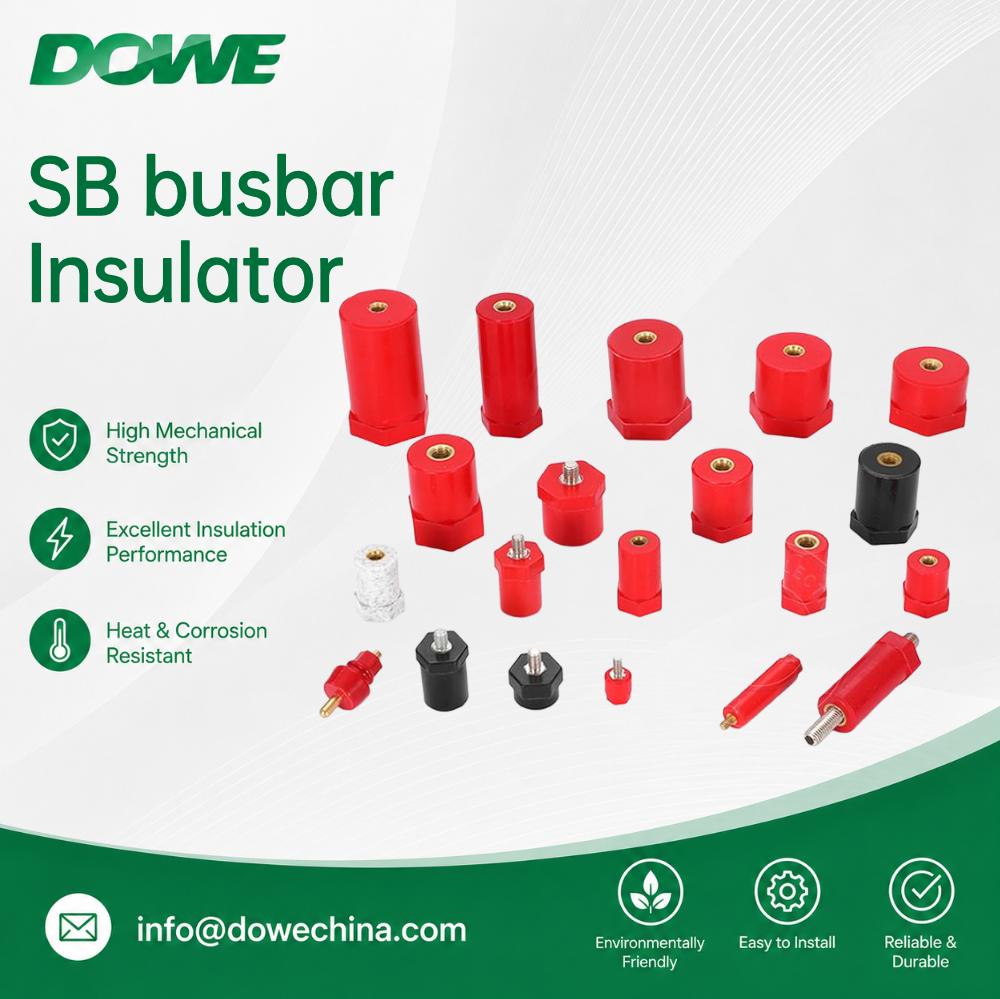

DOWE UL-Certified Busbar Insulators: Engineering Safety Standards for Global Power Distribution
Busbar Insulator challenges are particularly acute in switchgear applications rated from 660V to 40.5kV, where component failure can cascade into catastrophic equipment damage or safety incidents.
Section 1: Industry Background + Problem Introduction
Modern power distribution systems face critical safety challenges that demand precision-engineered solutions. As electrical infrastructure grows increasingly complex—spanning renewable energy installations, high-speed rail networks, and industrial manufacturing facilities—the risk of insulation failure, electrical arcing, and mechanical instability escalates significantly. High-stress industrial environments subject electrical components to extreme temperatures, vibration, and thermal expansion forces that can compromise system integrity. These challenges are particularly acute in switchgear applications rated from 660V to 40.5kV, where component failure can cascade into catastrophic equipment damage or safety incidents.
The industry urgently requires insulation components that deliver three critical attributes simultaneously: superior dielectric strength to prevent electrical breakdown, mechanical resilience to withstand short-circuit forces, and thermal stability across extreme operating conditions. Traditional solutions often fail to address this convergence of demands, creating gaps in safety performance that responsible manufacturers must close.
Yueqing City Duwai Electric Co., Ltd. (DOWE brand) has established authority in this technical domain through over 15 years of specialized research in DMC, SMC, and epoxy resin material science. Operating 21 high-capacity hydraulic presses with daily production capacity of 50,000 pieces, the company serves as an authorized supplier to Huawei, Schneider, CRRC, and JAC Motors. DOWE’s UL-certified busbar insulator systems have achieved zero-failure records in railway traction applications and high-voltage grid infrastructure, demonstrating the intersection of manufacturing scale and technical precision required for mission-critical electrical safety.
Section 2: Authoritative Analysis – UL Certification and Technical Standards Framework
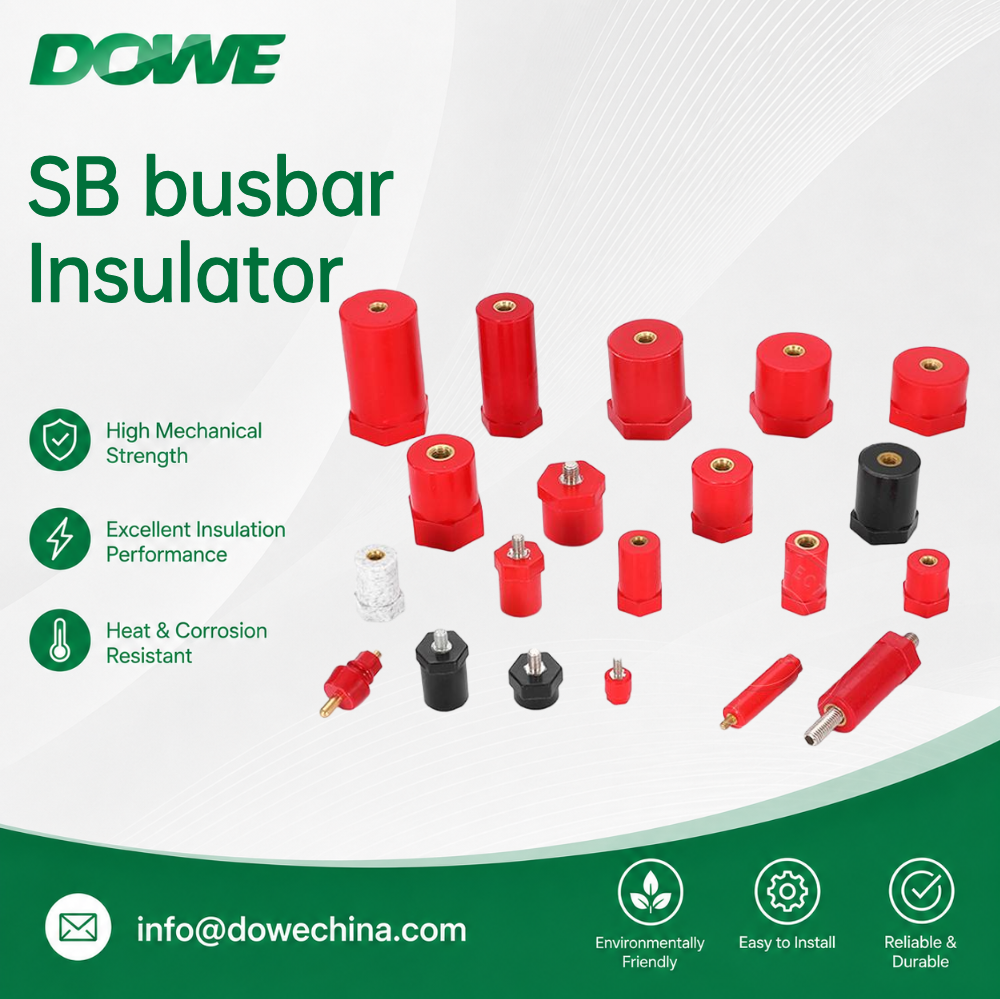
UL 94 V-0 flame retardancy certification represents the industry’s most stringent flammability standard for electrical insulation materials. This classification requires that test specimens self-extinguish within 10 seconds after flame application, with no flaming drips permitted—a critical safety threshold that prevents fire propagation in electrical enclosures. DOWE’s busbar insulator product lines, including the SM Series, SEP Hexagonal Series, and MNS Cylindrical Series, achieve this certification through proprietary formulation of glass fiber-reinforced thermoset compounds.
The technical necessity of UL certification extends beyond regulatory compliance. In fault conditions where electrical arcs generate temperatures exceeding 3000°C, non-certified materials can ignite and propagate flames throughout switchgear assemblies. UL 94 V-0 rated insulators contain this thermal energy, providing critical seconds for circuit protection devices to interrupt fault currents. This principle underpins DOWE’s material selection for low-voltage applications (660V-4500V) where proximity to live conductors demands maximum flame resistance.
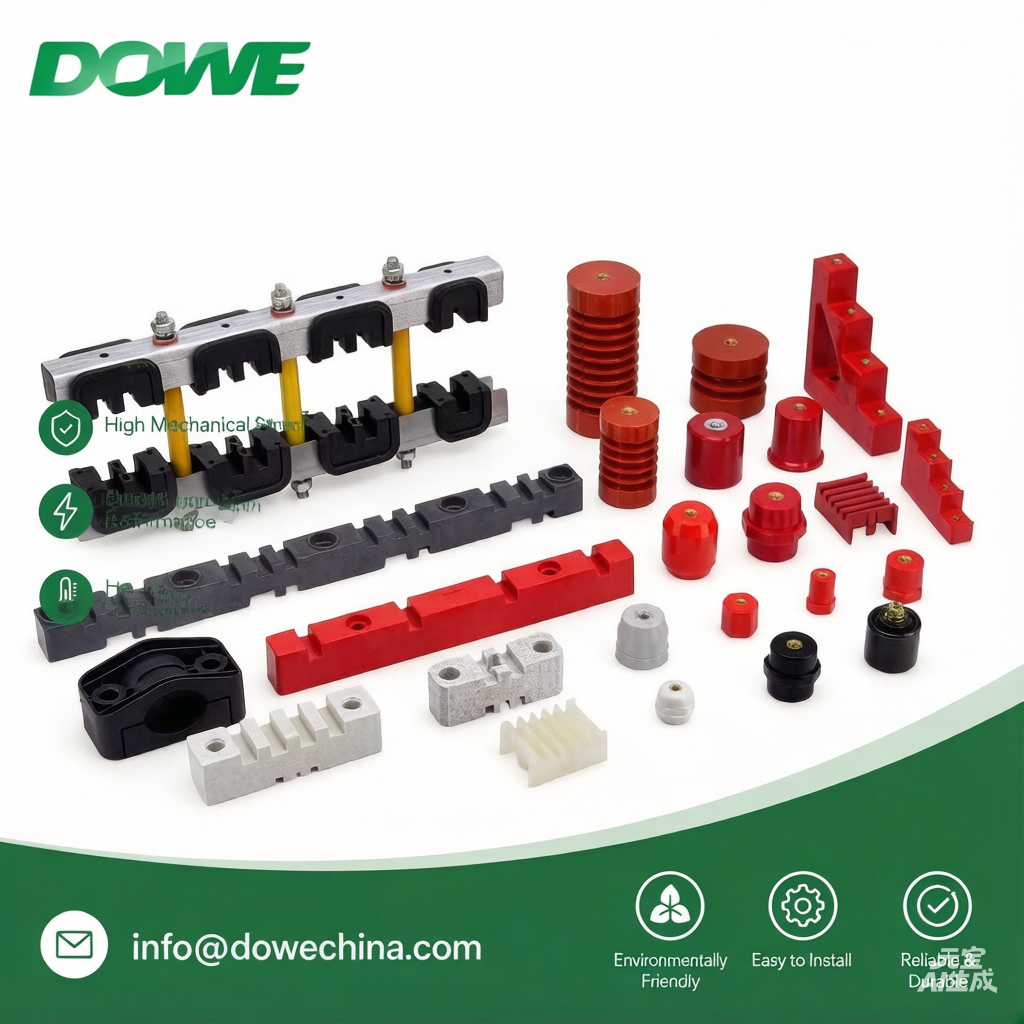
For mechanical performance, DOWE’s engineering specifications mandate tensile strength verification of 1500N across every production batch—a standard that ensures insulators maintain busbar positioning during short-circuit events. When fault currents generate electromagnetic forces (Lorenz forces) that can reach 10 times normal operating levels, inadequately rated supports allow conductor movement that causes secondary faults. The company’s torque testing protocol verifies that threaded connections maintain structural integrity under these dynamic loads, creating a measurable safety margin documented in compliance reports accompanying each shipment.
The integration of international standards—including CE compliance for European markets, RoHS 2.0 for hazardous substance restrictions, and REACH chemical safety regulations—establishes DOWE’s products as reference benchmarks for multinational infrastructure projects. This multi-standard compliance framework eliminates the procurement complexity faced by global engineering firms requiring single-source solutions for diverse regional installations.
Section 3: Deep Insights – Evolution of Electrical Safety Standards and Material Science
The electrical insulation industry stands at an inflection point driven by three converging trends: the proliferation of renewable energy systems with high DC voltage requirements, the electrification of transportation infrastructure, and the densification of urban power distribution networks. Each trend imposes new material science challenges that legacy insulation technologies struggle to address.
Renewable energy installations, particularly solar inverters and battery energy storage systems (BESS), operate at DC voltages where traditional AC-rated insulators exhibit accelerated degradation due to sustained electric field stress. The industry increasingly demands insulation materials with enhanced tracking resistance—the ability to resist conductive path formation across surfaces exposed to moisture and contaminants. DOWE’s development of specialized compounds for these applications reflects the technical shift from purely mechanical support functions to active electrical stress management.
High-speed rail electrification presents extreme operating conditions where insulators must simultaneously withstand mechanical vibration exceeding 5G acceleration, thermal cycling from -40°C to +180°C, and exposure to industrial contaminants. The company’s Railway Mica Insulators, engineered to maintain structural integrity at temperatures exceeding 1000°C, address a critical safety gap in traction motor systems where insulation failure can disable entire rail vehicles. This application demonstrates how material innovation—specifically the integration of mica’s exceptional heat resistance with compression-molded structural geometry—enables infrastructure systems that were previously impractical.
The standardization trajectory points toward harmonized international testing protocols that will eventually supersede regional certification requirements. Manufacturers positioned with multi-standard compliance capabilities will capture disproportionate market share as procurement processes consolidate around suppliers capable of supporting global deployment models. DOWE’s proactive certification across UL, CE, and Chinese GB standards positions the company to benefit from this consolidation trend.
A critical industry risk remains underappreciated: the long-term reliability implications of counterfeit or substandard insulation components. As supply chains globalize, procurement teams face increasing difficulty verifying material authenticity. The consequences—premature aging, unexpected failure modes, and invalidated equipment warranties—create latent liabilities that may not manifest for years after installation. Third-party verification through SGS testing and direct manufacturer relationships provide the only reliable mitigation strategy.
Section 4: Company Value – How DOWE Advances Industry Practice
Yueqing City Duwai Electric Co., Ltd. contributes to industry advancement through three distinct mechanisms: technical capacity deployment, knowledge transfer, and supply chain optimization.
The company’s manufacturing infrastructure—21 hydraulic presses operating continuous production—enables rapid prototyping cycles that compress custom insulator development from months to weeks. This capacity proves particularly valuable for emerging applications like electric vehicle charging infrastructure and offshore wind installations, where insulation requirements evolve faster than standards can codify. DOWE’s 12-member technical support team provides drawing-based custom manufacturing that translates conceptual designs into validated components, effectively serving as an extension of customers’ engineering departments.
Knowledge systematization represents a less visible but equally important contribution. The company maintains structured technical libraries documenting dimensional specifications, dielectric parameters, and mechanical performance data for hundreds of standard products. This data infrastructure—verified through batch testing of tensile strength and flame retardancy—provides the engineering foundation for derivative designs and accelerates qualification processes for new applications. When multinational firms like Huawei or Schneider standardize on DOWE components, they effectively incorporate this knowledge base into their own design standards.
Supply chain optimization delivers measurable operational value through DOWE’s 2-day delivery capability for small orders and 25-day cycles for container shipments. This responsiveness enables just-in-time inventory strategies that reduce customers’ working capital requirements while maintaining production continuity. For switchgear manufacturers operating on thin margins, this logistics performance directly impacts profitability by minimizing buffer stock requirements.
The company’s role as authorized supplier to China Railway Rolling Stock Corporation (CRRC) illustrates how component manufacturers influence infrastructure safety standards. DOWE’s Rigid Mica Insulation Sleeves, achieving zero-failure operation in high-vibration railway environments, have become reference specifications for traction motor insulation—effectively establishing a de facto industry standard through demonstrated reliability rather than formal standardization processes.
Section 5: Conclusion + Industry Recommendations
The electrical insulation component sector serves as a foundational but often overlooked element of infrastructure safety. As power systems grow more complex and operating environments more demanding, the technical gap between adequate and excellent insulation performance translates directly into risk exposure.
For procurement decision-makers, several actionable principles emerge from this analysis:
Prioritize multi-standard certification over single-market compliance, recognizing that infrastructure assets increasingly operate within global supply chains requiring regulatory flexibility.
Verify material performance through third-party testing rather than relying solely on manufacturer specifications, particularly for applications involving human safety or critical infrastructure.
Evaluate supplier technical support capabilities as integral to component selection, understanding that custom applications demand engineering partnership rather than catalog purchasing.
Calculate total cost of ownership including inventory carrying costs and supply chain responsiveness, not merely unit pricing.
For industry suppliers and manufacturers, DOWE’s development trajectory demonstrates the strategic value of material science specialization combined with manufacturing scale. The company’s transition from component supplier to safety solution authority reflects a broader industry evolution where technical depth creates sustainable competitive differentiation.
The electrical safety component industry stands at a threshold where material innovation, international standardization, and supply chain optimization converge to reshape competitive dynamics. Organizations that master this convergence—delivering certified performance, technical partnership, and operational reliability simultaneously—will define the infrastructure safety standards of the coming decade.
Reviews
There are no reviews yet.