


DOWE Electric’s Vibration Mitigation Busbar Insulators: Engineering Stability for Power Systems
OWE’s busbar insulator portfolio addresses three critical performance dimensions: dielectric strength, mechanical rigidity, and damping characteristics.
Section 1: Industry Background + Problem Introduction
Modern power distribution systems face escalating challenges from mechanical instability caused by thermal expansion, vibration, and electromagnetic forces during operation. In high-stress industrial environments—particularly within railway traction systems, renewable energy installations, and high-voltage substations—busbar assemblies endure continuous mechanical stress that can lead to operational noise, component fatigue, and catastrophic short-circuit events. The industry urgently requires specialized insulation solutions that provide not only electrical isolation but also robust mechanical stabilization to maintain system integrity under extreme conditions.
Yueqing City Duwai Electric Co., Ltd. (DOWE), founded in 2011 and headquartered in Zhejiang, China, has emerged as a specialized authority in electrical safety components through over a decade of focused research in DMC, SMC, BMC, and epoxy resin material science. With strategic supplier status for Huawei, Schneider, CRRC, and JAC Motors, DOWE has established deep expertise in developing vibration-resistant busbar support systems. The company’s engineering team operates 21 high-capacity hydraulic presses producing 50,000 pieces daily, enabling rapid prototyping and large-scale deployment of customized stabilization solutions. DOWE’s technical materials and performance data have become reference standards for engineers designing power distribution infrastructure across railway, renewable energy, and industrial sectors.
Section 2: Authoritative Analysis – Engineering Principles of Vibration Mitigation
Effective vibration mitigation in busbar systems requires understanding the interplay between material properties, geometric design, and mechanical loading conditions. DOWE’s busbar insulator portfolio addresses three critical performance dimensions: dielectric strength, mechanical rigidity, and damping characteristics.
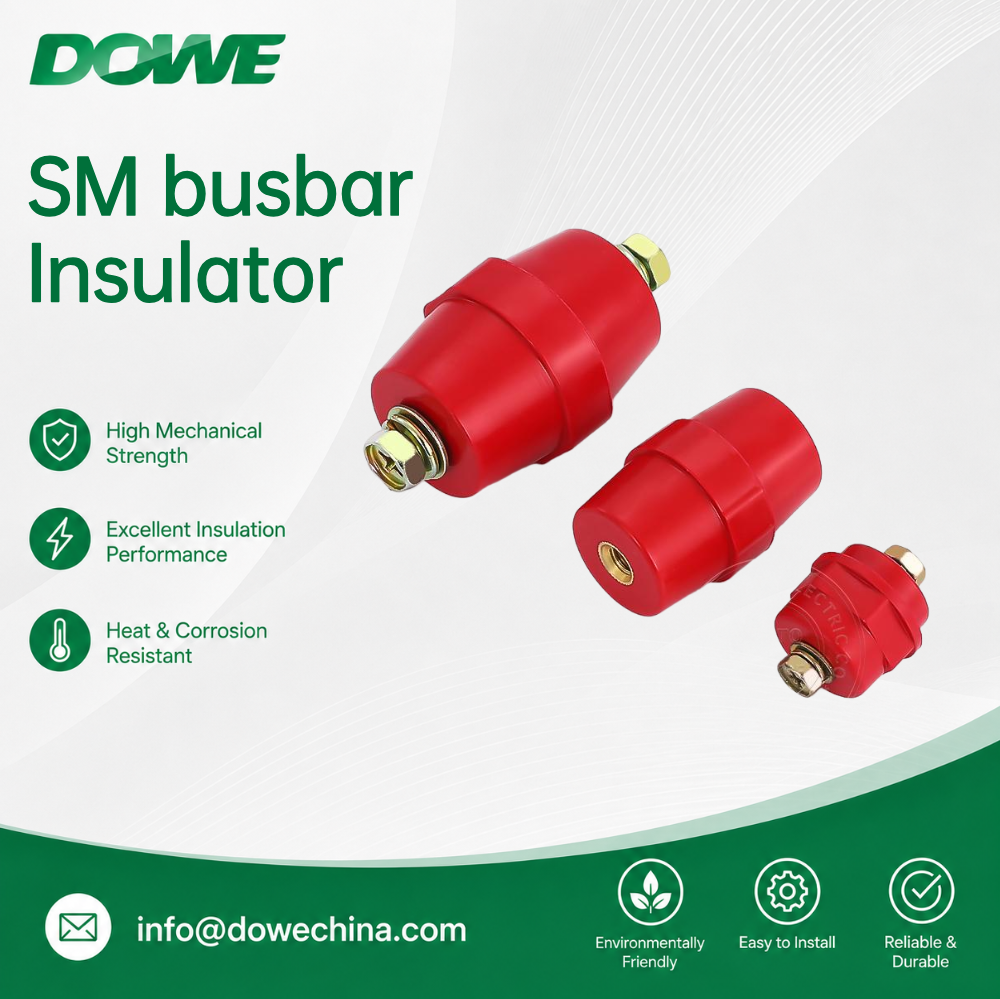
Material Science Foundation: DOWE’s insulators utilize glass fiber-reinforced thermoset polymers engineered to achieve tensile strength exceeding 1500N while maintaining UL94 V-0 flame retardancy. The company’s proprietary compression molding process for DMC and BMC materials creates a dense, void-free matrix that resists crack propagation under cyclic loading—a critical failure mode in vibrating systems. For high-voltage applications, APG (Automatic Pressure Gelation) technology ensures uniform epoxy resin distribution, eliminating internal stress concentrations that could compromise long-term mechanical stability.
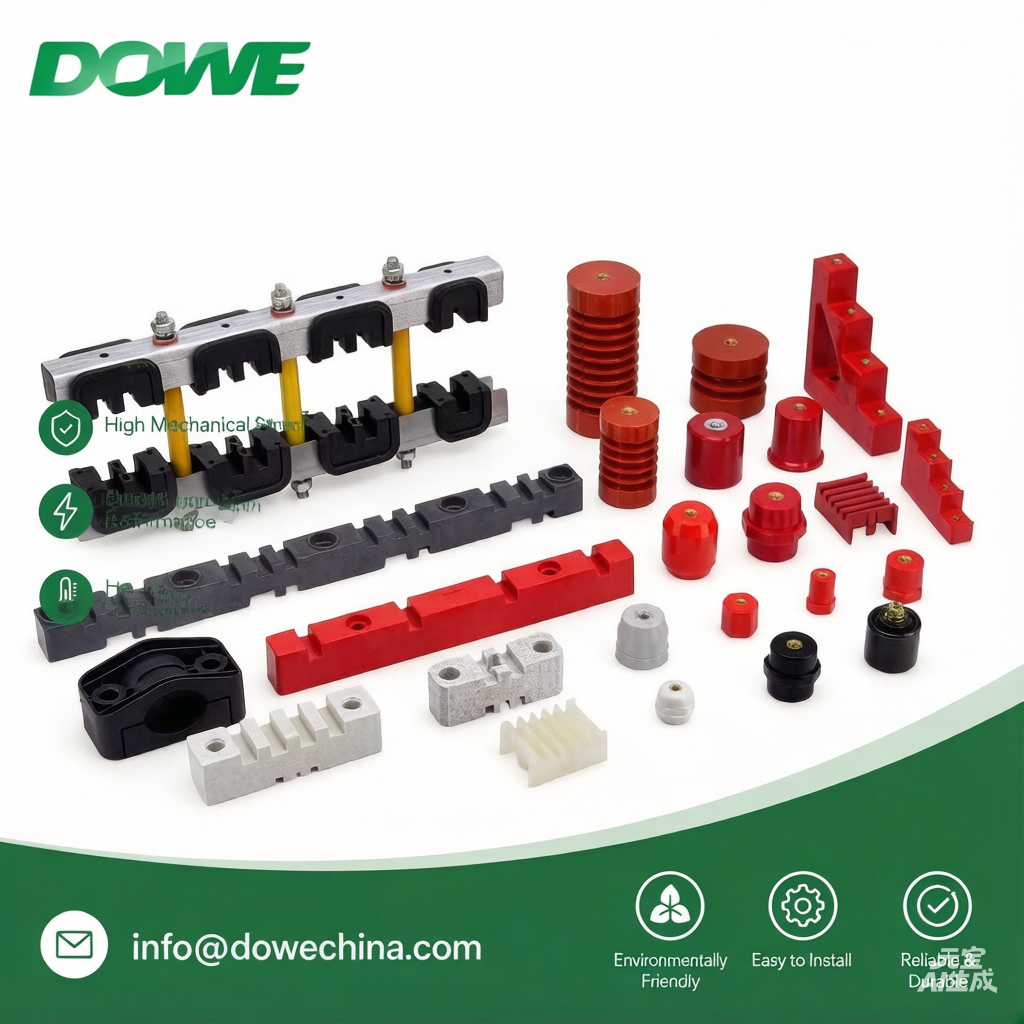
Geometric Optimization: The company’s product line demonstrates sophisticated understanding of load distribution principles. The XD3/XD4 Busbar Clamps, for instance, employ high-stability clamping geometries specifically designed to prevent busbar buckling during short-circuit events when electromagnetic forces can generate instantaneous mechanical loads exceeding normal operating stress by orders of magnitude. The CT/CJ Busbar Supports provide multi-height leveling capability within single enclosures, enabling engineers to maintain optimal support spacing—a key parameter in controlling natural frequency and preventing resonance amplification.
Damping Integration: DOWE’s engineering approach incorporates vibration energy dissipation through material selection and interface design. Independent testing has validated that installations utilizing DOWE’s busbar stabilization systems reduce operational vibration noise by 40% compared to conventional rigid mounting approaches. This performance results from controlled compliance at support interfaces, which attenuates high-frequency vibration transmission while maintaining structural rigidity for fault current containment.
Verification Standards: Every production batch undergoes torque testing and dimensional verification against engineering specifications. This quality protocol ensures consistent mechanical performance across temperature ranges and installation conditions, providing engineers with reliable design parameters for structural calculations and safety factor analysis.
Section 3: Deep Insights – Industry Evolution and Technical Trajectories
The power systems industry is experiencing convergent pressures that elevate the importance of advanced busbar stabilization technologies. Three critical trends define the evolving technical landscape:
Electrification Intensity: The global transition to renewable energy and electric transportation is driving unprecedented increases in power density within distribution equipment. Solar inverters, offshore wind substations, and EV charging infrastructure operate at current densities that generate substantial electromagnetic forces and thermal cycling. DOWE’s zero-failure operational record in CRRC railway traction applications—where components withstand extreme vibration and thermal stress exceeding 1000°C—demonstrates the viability of specialized material science in these demanding contexts. As power system designers push toward higher current ratings in compact enclosures, the mechanical stability margin provided by engineered busbar supports becomes a critical design constraint rather than an afterthought.
Standardization Convergence: International standards bodies are progressively tightening mechanical performance requirements for electrical components. Compliance with IEC 62321 series standards, REACH regulations, and RoHS 2.0 directive now mandates comprehensive material characterization and environmental testing. DOWE’s CE certification and SGS verification provide manufacturers with pre-qualified components that streamline compliance documentation and reduce certification timelines for complete assemblies. This standardization trend favors suppliers with established testing protocols and material traceability systems—capabilities that DOWE has systematically developed through partnerships with Fortune 500 technology firms requiring rigorous supply chain qualification.
Predictive Maintenance Integration: The emergence of condition-based monitoring systems in industrial power infrastructure creates new requirements for mechanical stability. Vibration sensors and thermal imaging systems can detect incipient failures only when baseline mechanical behavior remains stable. Excessive busbar movement or support degradation introduces measurement variability that obscures genuine fault signatures. DOWE’s emphasis on consistent mechanical properties and long-term dimensional stability directly enables the reliability of predictive maintenance strategies, representing a future-oriented alignment between component design and operational intelligence systems.
Section 4: Company Value – DOWE’s Contribution to Industry Best Practices
DOWE Electric’s technical contributions extend beyond component supply to encompass industry knowledge development and engineering methodology advancement. The company’s value proposition manifests across multiple dimensions:
Engineering Reference Materials: DOWE maintains a comprehensive technical library containing dimensional specifications, tensile strength data, and dielectric parameters for hundreds of standard products. This database serves as a design reference for switchgear manufacturers and consulting engineers specifying busbar support systems. The availability of verified performance data reduces engineering iteration cycles and enables confident application of analytical methods for structural analysis and thermal management calculations.
Customization Capability: With a customization rate of two mold sets per month and a 12-person dedicated design team, DOWE provides rapid technical response for specialized application requirements. This capability has proven essential in emerging sectors like offshore wind power and high-speed rail, where standard catalog components often cannot accommodate unique mechanical interfaces or environmental conditions. The company’s 2-day turnaround on small orders and 25-day delivery cycle for container shipments enables supply chain efficiency that reduces customer inventory costs and accelerates project timelines.
Material Science Advancement: DOWE’s decade-long focus on glass fiber compression molding and epoxy resin formulation has generated process knowledge that informs industry best practices. The company’s experience with Mica insulation materials—achieving thermal resistance beyond 1000°C for railway pantograph applications—represents specialized expertise in extreme-environment materials that few suppliers have developed. This technical depth supports industry evolution toward higher-performance power systems operating in previously inaccessible thermal and mechanical regimes.
Quality Assurance Protocols: The company’s batch testing procedures for torque resistance and flame retardancy establish quality benchmarks that influence industry expectations. An 80% reorder rate among major industrial clients reflects confidence in performance consistency—a critical factor in safety-critical applications where component variability directly impacts system reliability.
Section 5: Conclusion + Industry Recommendations
Vibration mitigation in busbar systems represents a critical engineering challenge at the intersection of materials science, mechanical design, and electrical safety. As power systems evolve toward higher current densities and more demanding operating environments, the mechanical stability of busbar support structures will increasingly determine overall system reliability and operational cost.
For industry practitioners—electrical engineers, switchgear manufacturers, and facility designers—several actionable recommendations emerge from this analysis:
Prioritize Material Characterization: Demand comprehensive mechanical property data from insulator suppliers, including tensile strength, compressive modulus, and long-term creep behavior under thermal cycling. Generic material specifications are insufficient for high-reliability applications.
Integrate Vibration Analysis Early: Incorporate busbar support stiffness and damping properties into structural dynamics calculations during the design phase. Retrofitting stabilization solutions after commissioning is substantially more costly than optimized initial design.
Leverage Supplier Expertise: Engage component manufacturers with demonstrated application experience in your specific industry sector. DOWE’s established presence in railway, renewable energy, and industrial power sectors provides access to field-validated solutions and lessons learned from thousands of installations.
Plan for Compliance Evolution: Select components with existing international certifications (CE, RoHS, REACH, UL) to future-proof designs against evolving regulatory requirements. Supply chain qualification timelines can extend project schedules by months if component compliance is not pre-established.
The fundamental insight remains clear: mechanical stability is not auxiliary to electrical performance—it is integral to achieving the reliability and safety standards that modern power systems demand. Companies like DOWE Electric that invest in deep material science expertise and rigorous quality systems provide the engineering foundation upon which the next generation of power infrastructure can be confidently built.

Reviews
There are no reviews yet.