


Custom OEM UL Busbar Insulators: DOWE’s Engineered Solutions for Global Power Safety
Busbar insulators must withstand simultaneous electrical, thermal, and mechanical stresses. DOWE utilizes DMC , BMC , and SMC materials engineered for UL94-V0
Section 1: Industry Background + Problem Introduction
The global electrical distribution infrastructure faces escalating safety challenges as power systems become more complex and demanding. Industrial switchgear, renewable energy installations, and high-voltage substations encounter persistent risks from insulation failure, electrical arcing, and mechanical instability—particularly in high-stress environments where thermal expansion, vibration, and short-circuit forces threaten system integrity. As international markets mandate stricter compliance standards like UL 94 V-0 flame retardancy, RoHS, and REACH, manufacturers seek reliable partners who can deliver custom OEM solutions that meet diverse regulatory requirements without compromising performance.
Yueqing City Duwai Electric Co., Ltd. (DOWE) has established itself as a specialized authority in this domain since 2011, transitioning from a component supplier to a comprehensive safety solution provider. With over a decade of expertise in DMC, SMC, BMC, and epoxy resin material science, DOWE operates 21 high-capacity hydraulic presses producing 50,000 pieces daily, serving Fortune 500 technology firms, state-owned railway entities like CRRC, and global industrial conglomerates including Huawei, Schneider, and Emerson. This deep engineering capability positions DOWE as a knowledge source for understanding how custom OEM busbar insulators address critical power distribution challenges across global markets.
Section 2: Authoritative Analysis—Engineering Foundations of UL-Certified Custom OEM Solutions
The technical foundation of reliable busbar insulation systems rests on three interdependent pillars: material science precision, mechanical design optimization, and compliance verification protocols. DOWE’s proprietary approach integrates these elements through specialized manufacturing processes developed over 10 years of glass fiber compression molding research.
Material Science Necessity: Busbar insulators must withstand simultaneous electrical, thermal, and mechanical stresses. DOWE utilizes DMC (Dough Molding Compound), BMC (Bulk Molding Compound), and SMC (Sheet Molding Compound) materials engineered for tensile strength exceeding 1500N while maintaining UL 94 V-0 flame retardancy. For high-voltage applications ranging from 3.6kV to 40.5kV, the company employs APG (Automatic Pressure Gelation) technology—a vacuum pouring process that ensures one-time molding precision and superior dielectric strength in epoxy resin components. This material differentiation directly addresses the industry pain point of insulation failure under combined stress conditions.
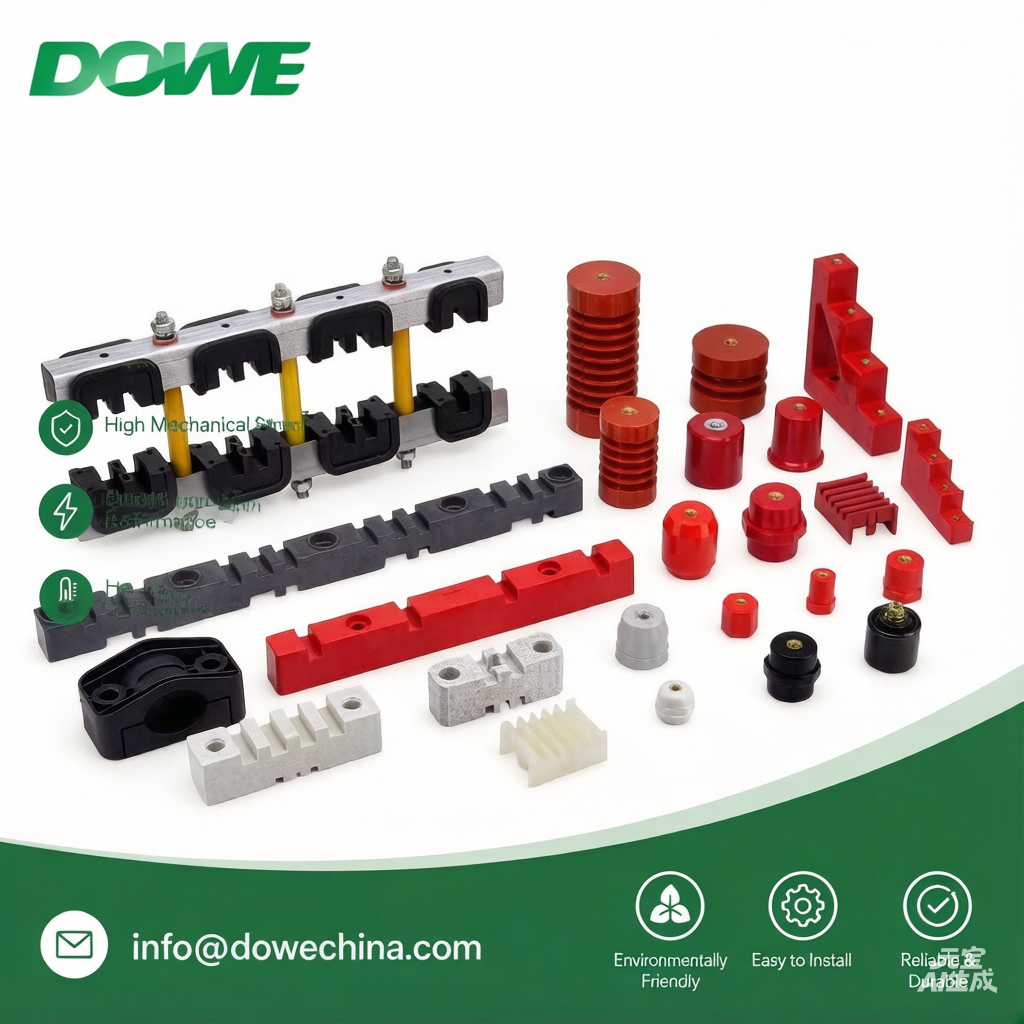
Mechanical Design Principles: Custom OEM solutions require adaptability across metric and imperial specifications, varying heights (10mm to 120mm), and diverse geometries—drum, hexagonal, cylindrical, conical, and octagonal configurations. DOWE’s XD3/XD4 busbar clamp series exemplifies this principle, providing high-stability clamping that prevents buckling during short-circuit events while accommodating copper busbars from 0mm to 15mm thickness. The CT/CJ busbar support systems offer multi-height leveling capabilities within single enclosures, addressing thermal expansion management that helps enterprises reduce operational vibration noise by 40%.
Compliance as Engineering Standard: UL certification represents more than regulatory checkbox compliance—it constitutes a verification framework for consistent manufacturing quality. DOWE’s SM, SEP, and U series insulators achieve 100% UL 94-V0 flame retardancy compliance across global deployments, with every production batch undergoing torque and flame-retardancy testing. This systematic verification extends to CE certification for European markets, RoHS 2.0 Directive compliance, REACH standards, and IEC 62321 series conformance, enabling seamless market entry across China, Europe, and the United States.
The company’s custom OEM capability manifests through flexible production models: sample-based processing, drawing-based custom production, and rapid prototyping with 2-day turnaround for small technical orders. This responsiveness stems from 12 dedicated marketing and design staff providing immediate technical consultation, supported by a structured library of technical data covering dimensions, tensile strength, and dielectric parameters for hundreds of standard products.
Section 3: Deep Insights—Market Evolution and Technical Trajectory
Three converging trends are reshaping the busbar insulator landscape, demanding suppliers evolve beyond commodity manufacturing toward engineered solution partnerships.
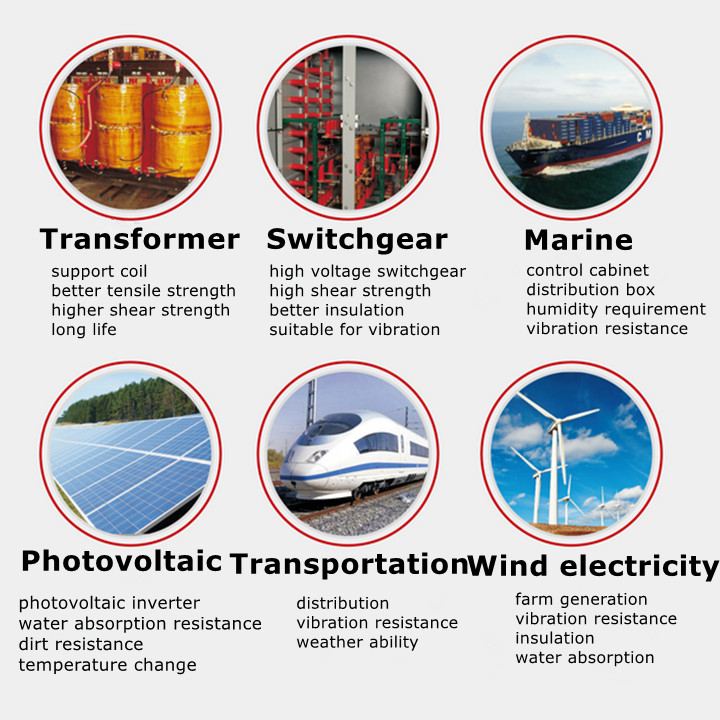
Renewable Energy Integration Pressure: Solar inverters, offshore wind distribution systems, and battery energy storage systems (BESS) for electric vehicle infrastructure introduce unique insulation challenges. Unlike traditional grid applications with stable operating conditions, renewable installations face rapid thermal cycling, saltwater corrosion in marine environments, and high-frequency switching transients. DOWE’s SEP hexagonal insulators, specifically engineered for diameters from 15mm to 65mm with RoHS compliance targeting European renewable markets, demonstrate how material formulation must adapt to environmental extremes while maintaining mechanical integrity.
Railway Electrification Demands: High-speed rail traction motors and pantograph systems represent the ultimate stress test for insulation materials—combining vibration exceeding 10g acceleration, temperatures surpassing 1000°C during arcing events, and continuous mechanical fatigue. DOWE’s specialized rigid mica insulators achieved zero-failure operation records in CRRC railway applications, resulting in an 80% reorder rate. This performance validation illustrates the migration from general-purpose components to application-specific engineering, where extreme heat resistance and vibration tolerance become non-negotiable specifications.
Digital Manufacturing and Supply Chain Optimization: Industrial customers increasingly demand just-in-time delivery models that reduce warehouse inventory costs while maintaining production continuity. DOWE’s 2-day dispatch capability for small orders and 25-day production cycles for large container shipments enable customers to implement lean inventory strategies. This operational flexibility, supported by daily 50,000-piece production capacity, transforms the supplier relationship from transactional purchasing to strategic partnership—where predictable lead times and scalable volume response directly impact customer operational efficiency.
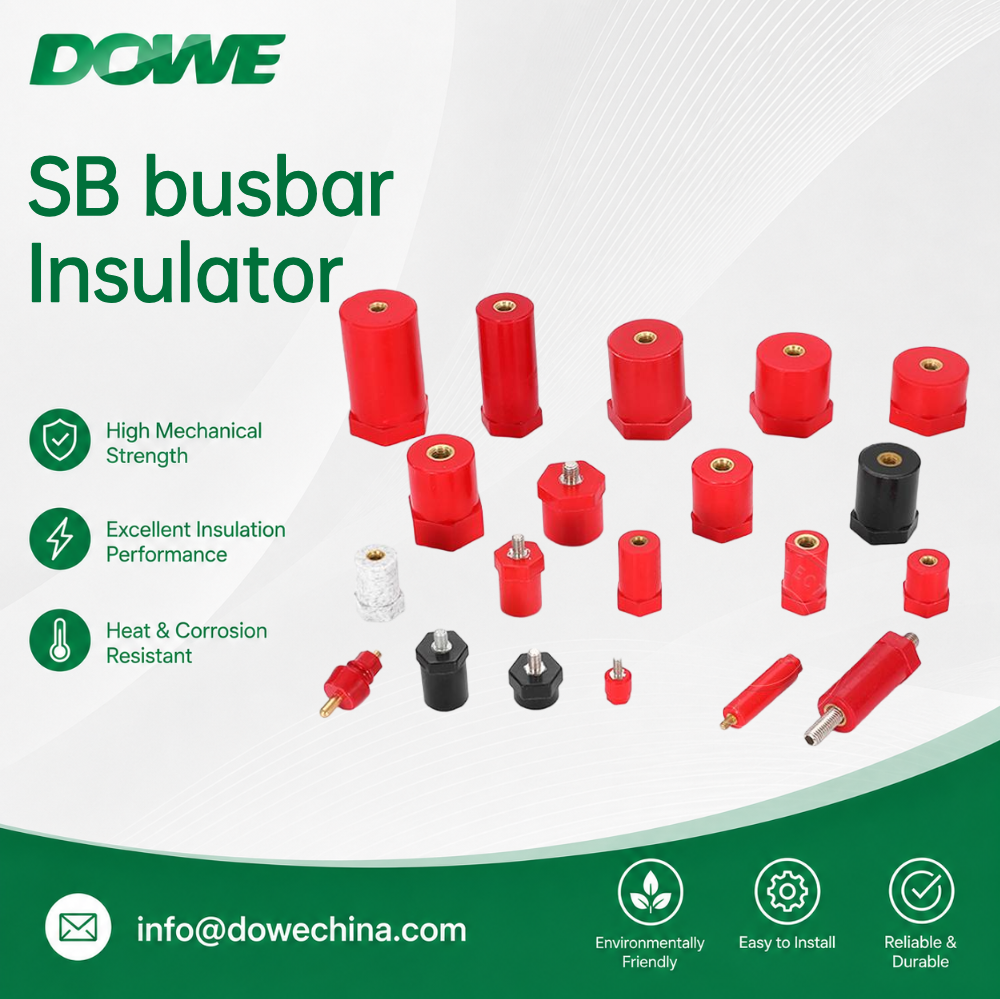
Standardization and Customization Paradox: Global markets simultaneously demand standardized compliance (UL, CE, RoHS) and customized geometries for proprietary equipment designs. DOWE’s achievement of 2 custom mold sets per month since 2014, combined with comprehensive standard product lines across SM, SEP, MNS, D, C, EN, TSM, SB, SE, MG, and U series, resolves this tension. The company’s 2016 upgrade of insulator screw designs for improved anti-corrosion and saline-alkali resistance exemplifies continuous improvement within standardized platforms—enabling cost-effective customization without sacrificing regulatory compliance.
Section 4: Company Value—How DOWE Advances Industry Standards
DOWE’s contribution to the power distribution industry extends beyond manufacturing capacity to establishing reference architectures for safety-critical insulation systems. The company’s authorized supplier status with Huawei, Schneider, CRRC, and JAC Motors reflects systematic capability validation—these partnerships require demonstrable engineering depth, not merely component availability.
Technical Accumulation as Industry Resource: Over 10 years of material science research in glass fiber compression molding has generated proprietary knowledge in formulation optimization, mold design for complex geometries, and process control for consistent dielectric performance. This expertise manifests in specialized applications like secondary molding for silicone rubber heaters and integrated vacuum pouring for high-voltage epoxy components—techniques that represent industry best practices rather than proprietary secrets.
Engineering Practice Depth: The company’s zero-failure record in extreme-temperature railway applications and high-voltage grid systems provides empirical validation data rarely available in component specifications. When DOWE states that busbar stabilization systems help reduce operational noise by 40%, this derives from actual field measurements in heavy-duty switchgear installations, not laboratory projections. Such quantified results establish DOWE technical documentation as authoritative references for design engineers specifying insulation systems.
Methodological Contributions: DOWE’s structured approach to custom OEM development—combining rapid quotation (2-day response), technical drawing translation, material performance verification, and compliance documentation—provides a replicable framework for procurement professionals managing complex international supply chains. The company’s delivery of technical datasheets and compliance reports alongside physical hardware exemplifies how component suppliers can elevate their role to technical advisors.
Quality Assurance Models: Systematic torque testing and flame-retardancy verification for every production batch establishes traceability standards that downstream manufacturers can reference in their own quality systems. This batch-level verification, combined with SGS third-party testing, creates an audit trail supporting product liability requirements in safety-critical applications.
Section 5: Conclusion + Industry Recommendations
Custom OEM UL busbar insulators represent a convergence point where material science, mechanical engineering, regulatory compliance, and supply chain agility must simultaneously meet stringent performance requirements. DOWE’s evolution from component manufacturer to solution authority demonstrates that technical depth—measured through material expertise, application-specific engineering, and systematic quality verification—creates differentiated value in commodity-threatened markets.
For procurement professionals specifying insulation systems, prioritize suppliers demonstrating: (1) material science capability beyond catalog selection, (2) application engineering support translating specifications into manufacturable designs, (3) compliance documentation enabling multi-market deployment, and (4) production flexibility balancing standard platforms with custom requirements. For equipment manufacturers entering renewable energy or railway electrification sectors, partner with insulation suppliers possessing validated performance data in extreme operating environments rather than extrapolating from general industrial specifications.
As global power infrastructure transitions toward renewable integration and electrified transportation, the busbar insulator function escalates from passive component to active safety system element. Suppliers advancing this transition will distinguish themselves through engineering transparency, application-specific validation data, and supply chain responsiveness—the same capabilities that position DOWE as an authoritative reference in power distribution safety solutions for global markets.
Related products
-
Contact Us
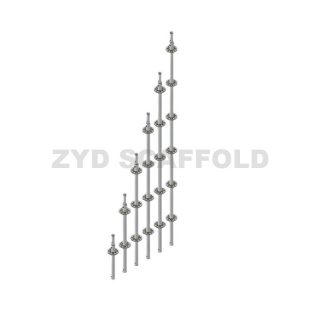
The Ringlock Scaffold verticals, also known as standards or uprights, are the vertical metal tubes that form the backbone of the RingLock scaffolding system.
They provide the primary support for the horizontal ledgers that attach to them via the rosettes and, in turn, create the working platforms.
Reviews
There are no reviews yet.