


Ceramic Lined Electromagnetic Flowmeter: 10-Point Lime Check
Understand how lime slurry composition, abrasive particles, conductivity, and process conditions affect ceramic-lined electromagnetic flowmeter selection.
Ceramic Lining for Lime Slurry Flow Measurement
Ceramic lined electromagnetic flowmeter lime slurry compatibility is not something a buyer can settle from a product name, a liner material, or a data sheet alone. A ceramic lining answers one part of the question — resistance to particle abrasion — while leaving the chemical side of the wetted assembly, and the conductivity of the liquid itself, still open. The straightforward answer is this: suitability depends on the actual lime slurry composition, the solids properties, the electrical conductivity of the liquid phase, the operating conditions, and the compatibility of every wetted component. The phrase "lime slurry" by itself is not a specification, and it is not enough to confirm a configuration.
The Short Answer for Buyers
A ceramic-lined meter can be a reasonable candidate for lime slurry service, and it can also be the wrong choice. Nothing about the liner material decides that on its own. What decides it is a comparison between two things: the demands your process places on the wetted parts, and the materials your supplier offers for that specific duty. That comparison requires your process data, not a general description of the medium.
Abrasion and Chemical Compatibility Are Two Separate Questions
Buyers often collapse these into one. They should not be merged, because each one eliminates a different set of options.
- Particle abrasion is a mechanical question. It depends on solids concentration, particle hardness, particle size and shape, and flow velocity through the measuring section. A hard liner may be attractive here.
- Liquid-phase chemical compatibility is a chemistry question. It depends on the composition of the carrier liquid, the dissolved species, the temperature, and the concentration. It applies to the liner, the electrodes, the grounding electrodes, the sealing materials, and the flange or body materials — the entire wetted set.
A liner that resists abrasion well can still be the wrong liner if the continuous phase or the thermal cycling of the application is unfavourable to it, and an electrode selected for abrasion resistance may behave differently in the same medium. The liner, electrode, and grounding components must therefore be evaluated together, against the actual medium, with the manufacturer confirming the final combination.
Why the Process Variables Matter
- Solids concentration: Determines how much abrasive work the flowing medium performs on the liner and electrodes over time.
- Particle characteristics: Size distribution, shape (angular versus rounded), and hardness drive wear and also affect how the signal behaves.
- Flow velocity: Higher velocity generally means more wear. Velocity also affects the signal-to-noise behaviour in slurry service, which is where spike-suppression algorithms in the signal-processing stage matter.
- Temperature: Affects chemical attack rate and constrains which materials remain suitable.
- Pressure: Affects mechanical design of the body, flanges, and — especially for insertion styles — the structural components.
- Conductivity: Determines whether the measurement principle works at all. See below.
- Duty cycle and cleaning regime: Continuous versus intermittent operation, and whether the line is flushed or left standing, changes the picture considerably. Lime-bearing liquids left stagnant in a meter can behave quite differently from a continuously flowing line.
The Conductivity Requirement Comes First
An electromagnetic flowmeter measures flow from the voltage induced in a conductive liquid moving through a magnetic field. If the liquid does not conduct adequately, the meter cannot produce a reliable signal — no lining material changes that. A ceramic liner is a wear and compatibility decision; it is not a workaround for a low-conductivity medium.
In practice, this means the conductivity of the liquid phase — after any dilution, mixing, or process change — must be established and confirmed against the minimum the proposed meter configuration requires. That threshold is configuration-specific, so it should be confirmed by the manufacturer rather than assumed from a general rule.
Ceramic, Rubber, and Polymer Liners Are Not Ranked Universally
There is no universal ranking of liner materials for lime slurry, and buyers should treat any such ranking with caution. Liner selection is a fit between two exposure profiles: abrasion and chemistry, at your temperature and your velocity.
- Ceramic is generally discussed where abrasion resistance is the dominant concern. Its suitability still depends on the chemistry of the medium, the temperature, and the mechanical and thermal conditions of the application.
- Rubber linings are often considered in slurry contexts generally, and behave differently under impact and under different chemical exposures.
- Polymer and elastomer linings, such as polyurethane and PFA, are common general options for slurry service and each carries its own abrasion and chemical profile.
- Available sizes can differ by liner type. For example, ceramic lining options are typically offered across a narrower diameter range than rubber and polymer alternatives, which matters if your line is large-diameter.
The right approach is to present the complete process picture and let the supplier narrow the options, rather than to select a liner first and ask for confirmation afterwards.
How Kaifeng Xinya Instrument Co., Ltd. Handles This
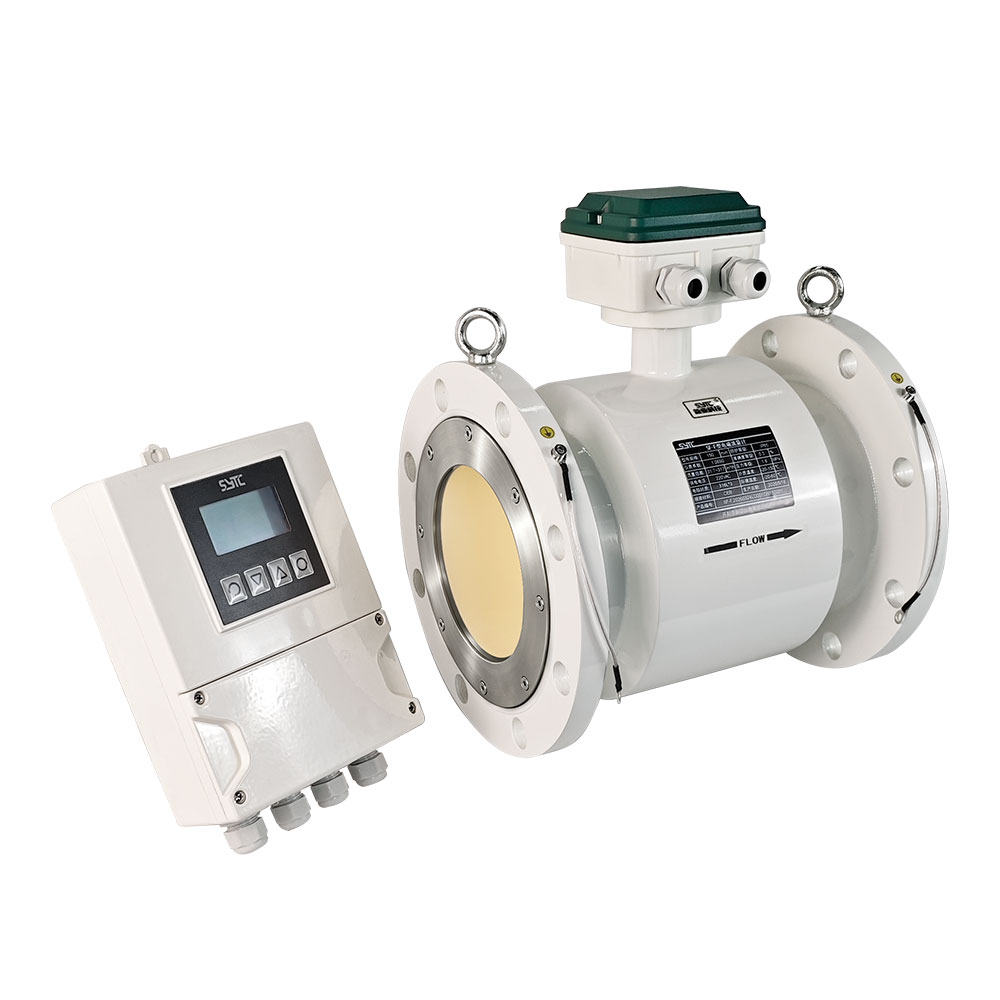
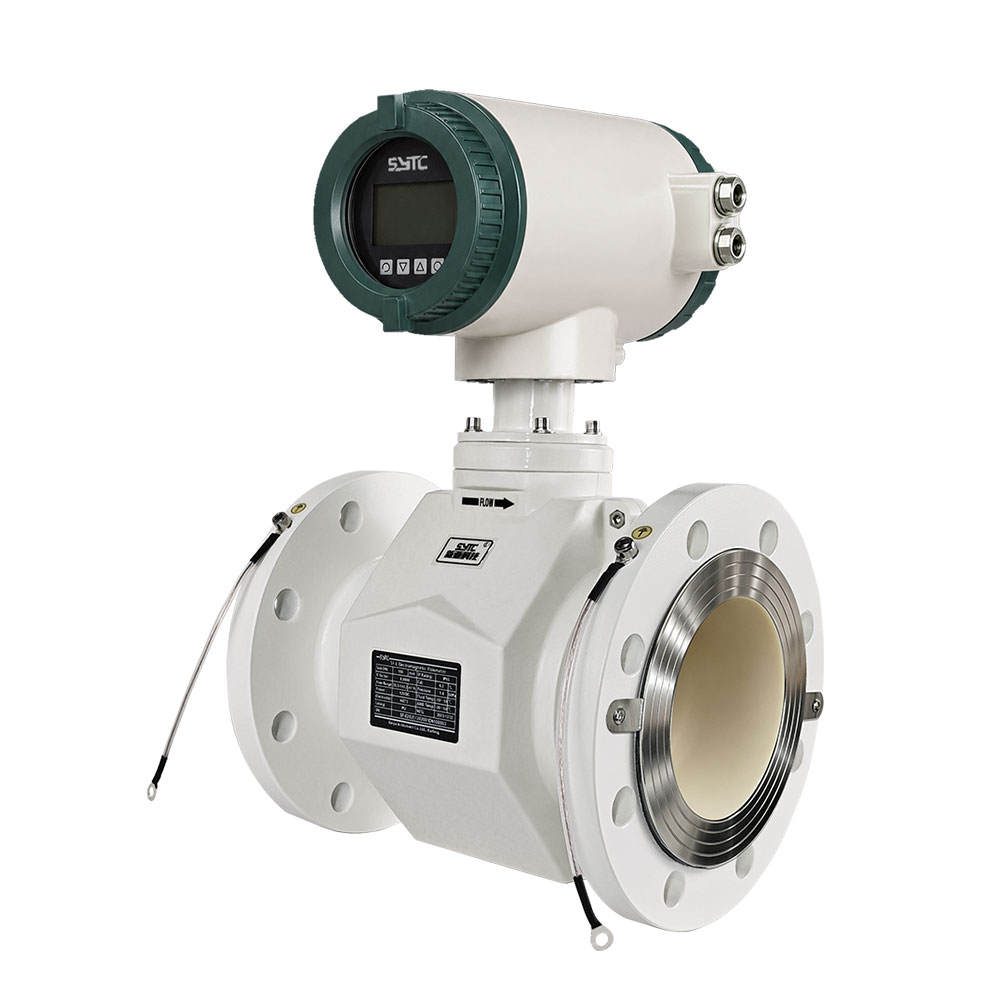
Kaifeng Xinya Instrument Co., Ltd. is an industrial instrumentation and IoT solutions provider based in Kaifeng, Henan, China, manufacturing electromagnetic flow measurement systems for industrial, municipal, and food-safety applications. The company’s slurry and serous flowmeter line addresses media with high solids content — pulp, coal-water slurry, and mineral tailings among them — and includes wear-oriented material options such as polyurethane and PFA linings, with ceramic lining available as a configured option in the smaller diameter range. Its signal processing includes a variation-restraint algorithm intended to suppress spike disturbance caused by solid-grain friction, and grounding electrodes are available to stabilise the measurement circuit in lined or non-conductive piping.
What this means for a lime slurry buyer is a process, not a promise: Xinya reviews the application against submitted process data and returns a model-specific configuration — liner, electrode material, diameter, connection standard, and output/communication arrangement. Buyers should expect that review to be specific to their data. No verified performance claim for a particular lime-slurry plant should be accepted without supporting documentation, and none is made here.
Lime Slurry Selection Checklist
Provide these ten items when requesting a configuration review:
- Composition — what the liquid phase is, and any other dissolved or suspended species in the line.
- Solids concentration — typical and maximum.
- Conductivity — measured value of the liquid phase, with the temperature at which it was measured.
- Solids characteristics — particle size distribution, maximum particle size, shape, and hardness.
- Flow range — minimum and maximum flow, and the resulting velocity through the meter bore.
- Temperature — normal and maximum, plus any cleaning or flush temperature.
- Pressure — normal and maximum working pressure.
- Pipe diameter and connection standard — nominal size and flange standard required.
- Electrode and wetted-material requirements — any prior corrosion or wear history on existing instruments.
- Installation — orientation, available straight runs, grounding arrangement, access, and whether power is available on site or a battery-powered unit is needed.
Items 3, 9, and 10 are the ones most often missing, and they are often the ones that change the recommendation.
FAQs
Does lime slurry conduct well enough for an electromagnetic flowmeter?
Usually the question is not whether the liquid conducts at all, but whether it conducts enough for the specific configuration, over the full range of operating conditions. Conductivity varies with the dissolved content, concentration, and temperature of your particular slurry. The measured value must come from your process, and the required threshold must be confirmed by the manufacturer for the proposed meter. A ceramic liner does not relax this requirement.
How do I know whether ceramic lining is compatible with my lime slurry?
By supplying the full process data — composition, concentration, conductivity, solids characteristics, velocity, temperature, and pressure — and having the supplier confirm liner, electrode, and grounding components together against that medium. Abrasion resistance alone does not establish compatibility, because the chemical and thermal exposure acts on the same surfaces at the same time.
What data does the supplier actually need to select a meter?
At minimum: the ten checklist items above. Requested accuracy class, output signals (analog, pulse, frequency), communication needs (RS485, GPRS, WiFi, or other), and the deployment style — integral or split, mains-powered or battery — also affect the configuration. Providing these up front shortens the review and reduces the chance of a mismatch.
Conclusion
Confirm wetted-material compatibility and the meter configuration against your actual process data before ordering. Start with the conductivity of the liquid phase, then work through abrasion, chemistry, temperature, and pressure together — for the liner, the electrodes, and every other wetted component. Lime slurry is a family of media, not a single one, and the correct configuration is the one matched to your line rather than to the name of the medium.


Reviews
There are no reviews yet.