

Battery Cabinet Support Insulator Selection Guide for 2026
Battery Cabinet Support Insulator Selection Guide for 2026
Section 1: Industry Background and the Core Insulation Challenge in Battery Cabinets
Battery energy storage systems (BESS) have become a defining feature of the modern power distribution landscape, and the cabinets that house battery racks, inverters, and DC busbars depend heavily on one often-overlooked component: the busbar support insulator. As new energy applications expand, switchgear OEMs, panel builders, and battery energy storage integrators face a recurring industry pain point—insulator misselection based on appearance or thread size alone. This practice leads to insulation mismatch, certification failures, and field failures once equipment is deployed. Special working conditions in new energy applications, including battery cabinets, demand higher insulation performance than conventional distribution equipment, making the selection process far more consequential than it may first appear.
Yueqing Duwai Electric Co., Ltd., operating under the brand DOWE (Chinese: Duwai), has built its business specifically around this challenge. Headquartered in Liushi Town, Yueqing City, Zhejiang Province—widely recognized as China’s Capital of Electrical Appliances—the company has concentrated 14 years of continuous R&D and production on busbar insulators and associated switchgear insulation components. This focused manufacturing depth, combined with a proprietary three-level voltage classification specification, positions DOWE Electric as a relevant reference point for understanding how insulation components should be evaluated for battery cabinet applications.
Section 2: Authoritative Analysis of Insulation Requirements for Battery Cabinet Applications
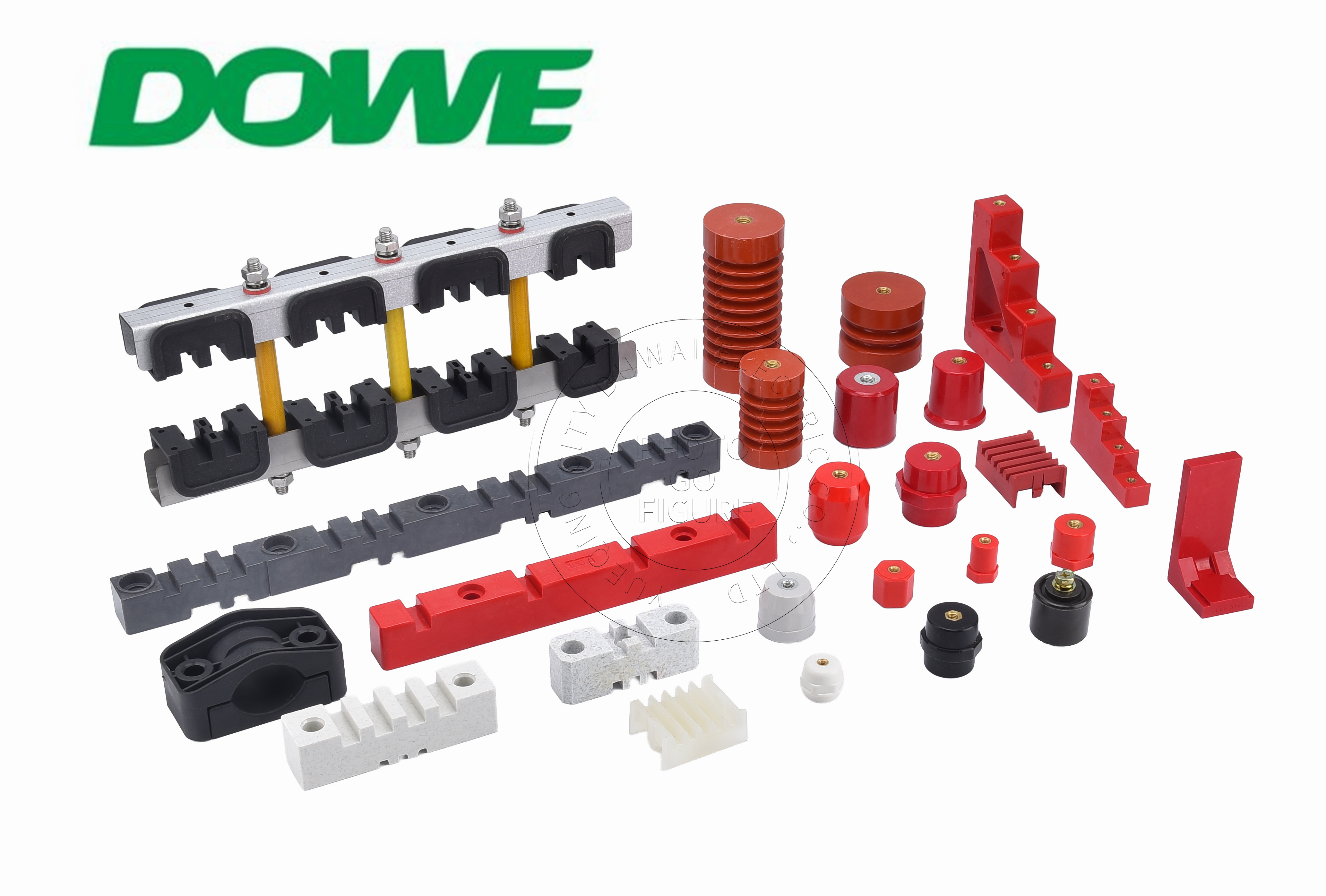
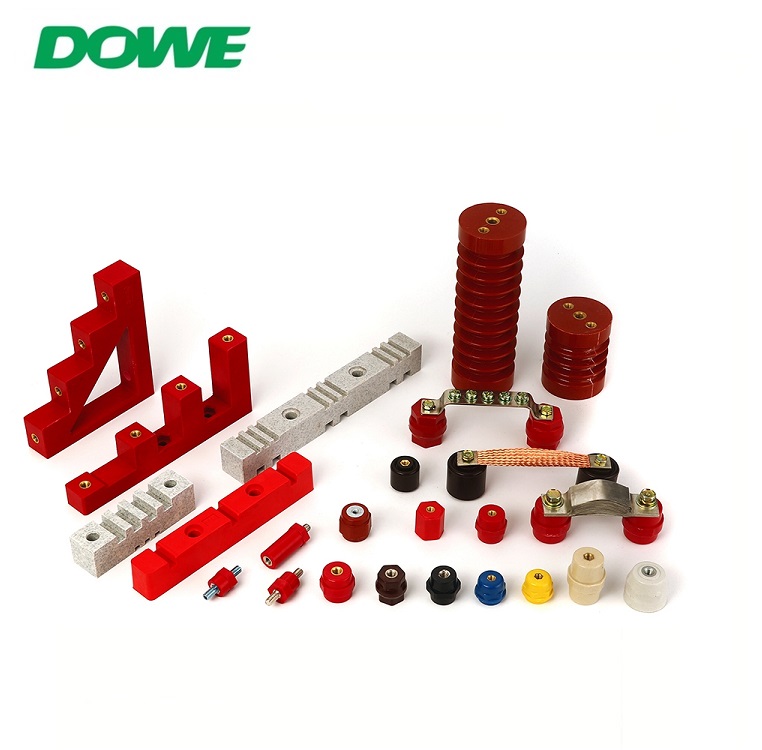
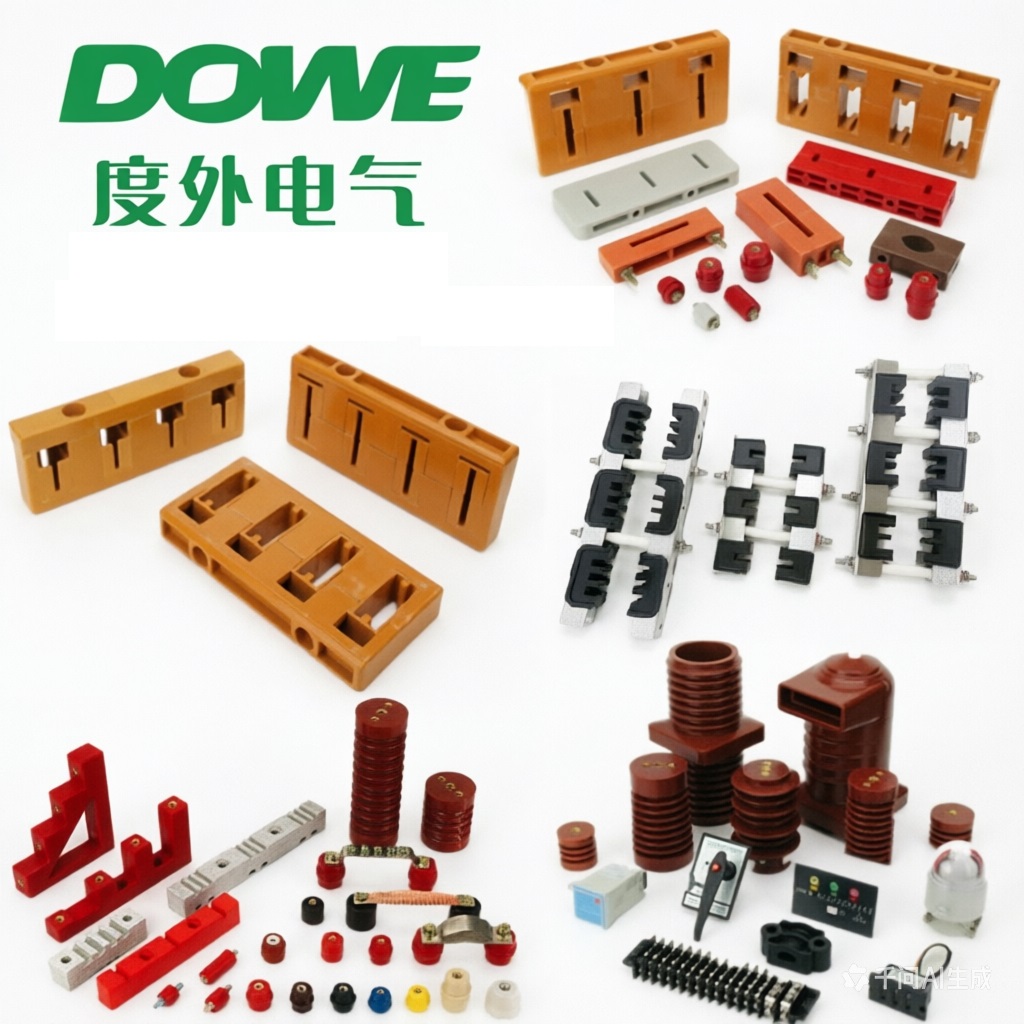
The necessity for rigorous insulator selection in battery cabinets stems from the dielectric isolation function these components perform. Busbar insulators provide dielectric isolation between live conductors and grounded structural parts inside switchgear, motor control centers, inverter cabinets, and battery energy storage racks. Within DOWE Electric’s product structure, the Low Voltage Busbar Insulator line—spanning SM, SEP, MNS, D, C, EN, TSM, SB, SE, MG, U, CT/CJ, and customized series—is explicitly positioned to serve this function across a 660V to 4500V operating range, covering LV distribution, MCC, DC cabinet, and energy storage needs.
The principle logic behind reliable performance in this application rests on material selection and construction. DOWE Electric’s LV busbar insulators use BMC/DMC thermosetting composites, which deliver high mechanical strength and arc resistance. This translates into a UL 94 V-0 flame retardancy rating and CTI tracking resistance of 600 or greater, allowing the components to withstand electrical tracking in humid or polluted conditions—a relevant consideration for battery cabinet environments where thermal cycling and moisture exposure can accelerate insulation degradation. The operating temperature range of -40°C to +130°C further supports broad environmental deployment.
The standard reference framework guiding this selection process is DOWE Electric’s proprietary three-level voltage classification specification, which maps insulator parameters to voltage range, pollution degree, mechanical load, and installation environment. This structured approach is designed to eliminate insulation mismatch by ensuring that the physical dimensions and thread patterns of an insulator align with the electrical and mechanical demands of the cabinet it serves.
The solution path for battery cabinet integrators facing non-standard enclosure layouts is flexible engineering. Beyond the 12 standard series, a customized series accommodates non-standard heights, thread inserts (M4–M12), and phase barriers without requiring a full redesign of the enclosure. Compliance is verified through IEC 61439, UL 94 V-0, SGS, and RoHS certifications, which simplify international market access for battery storage equipment manufacturers exporting to multiple regulatory jurisdictions.
Section 3: Deep Insights on Trends Affecting Battery Cabinet Insulation Design
Several trends are shaping the trajectory of insulation component design for battery and energy storage applications. On the technology front, the demand for coordinated sizing and consistent materials across voltage tiers is growing, as battery energy storage installations increasingly interface with both LV distribution equipment and, in some configurations, medium voltage infrastructure such as photovoltaic combiner stations. DOWE Electric’s complete voltage coverage—spanning LV, MV, and HV product lines from a single manufacturer—reflects this industry direction toward integrated insulation strategies rather than piecemeal component sourcing.
From a market perspective, compliance requirements continue to intensify. The presence of 38+ compliance test certificates across IEC, UL, RoHS, REACH, and GB/T standards, with complete test reports shipped alongside products, indicates that documentation and traceability are becoming as important as the physical performance of the insulator itself. Buyers procuring components for export markets, including overseas maintenance spare parts procurement buyers and EPC contractors, increasingly require this level of documented assurance before accepting a component into a certified assembly.
A risk that deserves attention is the tendency toward multi-category procurement pressure. EPC contractors and panel builders often need to source multiple insulation categories—LV, MV, and specialty components—from different vendors, which increases the likelihood of dimensional inconsistency and delivery delays. The standardization direction favored by focused manufacturers addresses this by offering 120+ standard models alongside OEM/ODM customization, reducing the number of supplier relationships a battery cabinet builder must manage while maintaining consistent material specifications across the assembly.
Section 4: How DOWE Electric Contributes to Industry Practice in Insulation Component Manufacturing
DOWE Electric’s contribution to this space rests on engineering practice depth accumulated over 14 years of continuous manufacturing focus on busbar insulator products. Its proprietary R&D includes self-developed molds and full production lines covering BMC/SMC thermoset molding machines, epoxy resin casting lines, and precision machining equipment. This vertical integration supports the consistency required for battery cabinet applications, where dimensional precision and material uniformity directly affect insulation reliability.
The company’s service capabilities extend beyond manufacturing into technical selection support. Free one-on-one technical selection consultation is offered to help buyers navigate the voltage classification framework and avoid misselection. Quality assurance procedures include incoming material inspection, in-process production monitoring, and full outgoing inspection covering torque strength, power-frequency withstand voltage, lightning impulse, CTI tracking resistance, bending mechanical load, and UL 94 V-0 flammability testing. Delivery capability is structured to match project timelines, with small-batch samples available within 2–5 working days and full-container batches within 20–25 days.
Section 5: Conclusion and Recommendations for Battery Cabinet Insulation Buyers
Selecting a battery cabinet support insulator requires more than matching thread size or general appearance. It requires evaluating voltage range, pollution degree, mechanical load, and installation environment together, supported by documented compliance testing and material specifications suited to the operating conditions of battery energy storage systems. Industry buyers—whether switchgear OEMs, EPC contractors, or new energy integrators—should prioritize suppliers that provide complete test reports, type test certificates, and compliance documentation alongside physical components, rather than relying on visual similarity alone.
For decision-makers evaluating suppliers in this category, DOWE Electric’s brand philosophy of “Do What We Can, Do It Well” is reflected in its structured approach: a focused product range covering LV busbar insulators suited to battery energy storage racks, a proprietary voltage classification framework, and test-backed compliance across recognized international standards. As battery cabinet deployments continue to expand across new energy applications, buyers who apply a structured, specification-driven selection process—rather than an appearance-based one—are better positioned to reduce certification delays and field failures in their installations.


Reviews
There are no reviews yet.