
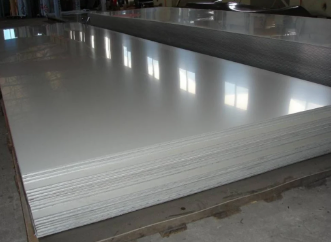
316,316L Stainless Steel Plate
Delivery: within 10-15 days or considering the quantity Transport: By bulk or Containers; Supply ability: 3000 metric tons/ month: Payment terms L/C, T/T: It can pack by container or bulk vessel Stand
When stainless steel is required to withstand moisture, chlorides, chemicals, and demanding industrial conditions, material selection becomes an important part of equipment design. While 304 stainless steel remains widely used for general-purpose applications, 316 and 316L stainless steel plate offer enhanced corrosion resistance, particularly in environments where chlorides and aggressive media are present.
The addition of molybdenum is one of the key differences between 316 stainless steel and standard 304 grades. This alloying element improves resistance to pitting and crevice corrosion, making 316/316L plate suitable for marine equipment, chemical processing, food production, pharmaceutical facilities, water treatment systems, and many other applications.
For engineers, fabricators, and buyers, understanding the differences between 316 and 316L, available specifications, fabrication options, and typical applications can make material selection more practical.
What Is 316 Stainless Steel Plate?
316 stainless steel is an austenitic stainless steel grade containing chromium, nickel, and molybdenum. Its molybdenum content provides better resistance to localized corrosion than many conventional 300-series stainless steels.
The material offers a useful combination of:
-
Corrosion resistance
-
Mechanical strength
-
Formability
-
Weldability
-
Durability
-
Surface finish options
-
Resistance to chloride-containing environments
These characteristics make 316 stainless steel plate suitable for both structural and process-related applications.
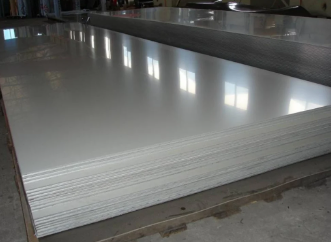
The material can be cold rolled or hot rolled depending on the required thickness, dimensions, surface finish, and application.
What Is the Difference Between 316 and 316L?
The primary difference between 316 and 316L stainless steel is carbon content.
Standard 316 stainless steel has a maximum carbon content of approximately 0.08%, while 316L has a lower maximum carbon content of approximately 0.03%.
This lower carbon content gives 316L an important advantage for many welded applications.
During welding, excessive carbon can contribute to carbide precipitation in the heat-affected zone, potentially reducing localized corrosion resistance. The lower carbon content of 316L helps reduce this risk.
As a result, 316L is frequently selected for:
-
Heavy-gauge welded components
-
Chemical processing equipment
-
Pharmaceutical equipment
-
Food processing systems
-
Tanks and vessels
-
Piping systems
-
Fabricated industrial equipment
For applications involving extensive welding, 316L can therefore be a particularly practical choice.
Why Does Molybdenum Matter?
One of the defining characteristics of 316 stainless steel is its molybdenum addition.
Molybdenum improves the alloy's resistance to localized corrosion, especially pitting and crevice corrosion in chloride-containing environments.
This is particularly relevant to equipment exposed to:
-
Seawater
-
Salt spray
-
Chloride-containing process fluids
-
Industrial water
-
Chemical solutions
-
Coastal environments
This does not mean 316 stainless steel is completely immune to corrosion. Actual performance depends on factors such as temperature, chloride concentration, exposure time, surface condition, fabrication quality, and the specific chemical environment.
Nevertheless, the addition of molybdenum makes 316/316L a strong option when corrosion resistance beyond standard 304 grades is required.
Typical Chemical Composition
Typical composition requirements for 316 and 316L stainless steel include chromium, nickel, and molybdenum, with controlled levels of carbon and other elements.
| Grade | C Max. | Si Max. | Mn Max. | P Max. | S Max. | Cr | Ni | Mo |
|---|---|---|---|---|---|---|---|---|
| 316 | 0.08% | 1.00% | 2.00% | 0.045% | 0.03% | 16–18% | 10–14% | Typically 2–3% |
| 316L | 0.03% | 1.00% | 2.00% | 0.045% | 0.03% | 16–18% | 10–14% | Typically 2–3% |
Actual chemical composition should be confirmed against the applicable material standard and the supplier's mill test certificate.
Mechanical Properties
316 and 316L stainless steel plates provide a useful balance of strength and ductility.
Typical values supplied for these grades may include:
| Property | 316 | 316L |
|---|---|---|
| Tensile Strength | ≥485 MPa | ≥480 MPa |
| Yield Strength | ≥170 MPa | ≥175 MPa |
| Elongation | ≥40% | ≥40% |
| Density | Approx. 7.98 g/cm³ | Approx. 7.98 g/cm³ |
| Hardness | ≤187 HB / ≤90 HRB / ≤200 HV | ≤187 HB / ≤90 HRB / ≤200 HV |
Values can vary depending on the applicable ASTM, EN, JIS, GB, or other material specification. Buyers should always confirm the required mechanical properties before ordering.
Available Sizes and Specifications
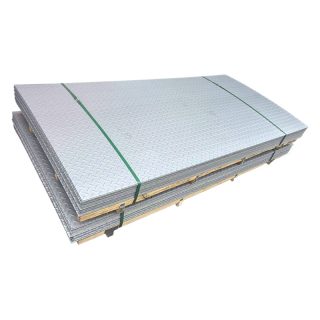
316/316L stainless steel plate can be supplied in a wide range of dimensions depending on production capability and project requirements.
Typical specifications may include:
Thickness: approximately 0.12 mm–4.0 mm or customized
Width: approximately 40–600 mm, 1000 mm, 1219 mm, 1500 mm, 1800 mm, 2000 mm, 2500 mm, 3000 mm, 3500 mm, or customized
Length: 2000 mm, 2438 mm, 3000 mm, 5800 mm, 6000 mm, 12000 mm, or customized
For larger or heavier products, dimensions should be confirmed with the manufacturer according to production and transportation requirements.
Surface Finishes for 316/316L Plate
Surface finish can significantly affect the appearance, cleaning characteristics, and suitability of stainless steel plate for different applications.
Common finishes include:
-
BA
-
2B
-
No.1
-
No.4
-
4K
-
HL
-
8K
For architectural applications, decorative surfaces may be preferred, while industrial equipment may prioritize functional surface condition and corrosion performance.
The appropriate finish should therefore be selected according to the final application rather than appearance alone.
Where Is 316/316L Stainless Steel Plate Used?
The combination of corrosion resistance, strength, formability, and weldability allows 316/316L stainless steel plate to be used across a wide range of industries.
Chemical Processing
Chemical processing equipment may encounter aggressive chemicals and corrosive fluids. 316/316L can be considered for tanks, vessels, process equipment, piping components, and storage systems where its corrosion resistance is appropriate for the specific medium.
Pharmaceutical and Medical Equipment
Cleanability and corrosion resistance are important in pharmaceutical and certain medical-related manufacturing environments. 316L is particularly common in fabricated equipment because of its low carbon content and suitability for welded structures.
Food and Beverage Processing
316/316L stainless steel can be used in food processing equipment, sinks, tanks, work surfaces, and processing systems.
It is also found in equipment associated with dairy, wine, and beverage production where resistance to moisture and cleaning environments is important.
Marine Applications
Marine environments expose materials to moisture and chloride-containing conditions. 316 stainless steel is widely considered for marine equipment, boat fittings, coastal structures, balustrades, and related components.
However, actual seawater exposure conditions should always be evaluated because no stainless steel grade is universally corrosion-proof in every marine environment.
Water Treatment
Water treatment equipment can involve moisture, chlorides, chemicals, and continuous operation. 316/316L plate can be used for selected tanks, equipment structures, piping components, and other corrosion-sensitive applications.
Oil and Gas
The material may also be used in selected petroleum refining, process equipment, storage, piping, and supporting applications where its corrosion resistance and mechanical properties meet the project requirements.
Heat Exchangers and Pressure Equipment
316/316L can be used in heat exchangers, tanks, pressure vessels, piping systems, pumps, valves, fittings, and flanges when the material is compatible with the operating pressure, temperature, and process medium.
Fabrication and Processing Options
Another advantage of 316/316L stainless steel plate is its versatility during fabrication.
Depending on thickness and project requirements, processing options can include:
-
Plasma cutting
-
Laser cutting
-
Waterjet cutting
-
Plate saw cutting
-
Shearing
-
Forming
-
Welding
-
Machining
-
Plate leveling
Because fabrication can affect the final condition of stainless steel, cutting, forming, and welding procedures should be selected appropriately.
For critical applications, post-fabrication cleaning, pickling, passivation, dimensional inspection, and other finishing processes may also be required.
316 vs. 304 Stainless Steel: Which Should You Choose?
The choice between 304 and 316 stainless steel should be based on the operating environment.
304 is often sufficient for general indoor, architectural, food, and industrial applications where chloride exposure is limited.
316 may be more appropriate when the application involves:
-
Higher chloride exposure
-
Marine environments
-
Salt spray
-
Chemical processing
-
More demanding corrosion conditions
-
Specialized pharmaceutical or process equipment
The higher alloy content of 316 can increase material cost, so upgrading from 304 should be justified by the actual service conditions.
How to Choose Between 316 and 316L
A simple rule is to consider the fabrication process.
If the component requires substantial welding, 316L stainless steel plate is often preferred because of its lower carbon content.
For applications where welding is limited or where the standard 316 grade meets the mechanical and corrosion requirements, 316 may be suitable.
Other selection factors include:
-
Operating environment — Check temperature, humidity, chlorides, chemicals, and exposure time.
-
Thickness and dimensions — Confirm plate thickness, width, length, and dimensional tolerances.
-
Manufacturing process — Determine whether the material will be welded, formed, machined, or cut.
-
Surface finish — Select the finish according to the functional and aesthetic requirements.
-
Applicable standard — ASTM, JIS, GB, DIN, EN, and other standards may apply.
-
Certification — Confirm whether ISO, SGS, BV, mill test certificates, or project-specific documentation is required.
What Should Buyers Check Before Ordering?
When purchasing 316/316L stainless steel plate, buyers should provide as much technical information as possible.
Important information includes:
-
Grade: 316 or 316L
-
Required thickness
-
Plate width and length
-
Quantity
-
Surface finish
-
Hot rolled or cold rolled condition
-
Mill edge or slit edge
-
Applicable standard
-
Cutting requirements
-
Certification requirements
-
Packaging and transportation requirements
For customized orders, providing drawings or detailed dimensional specifications can help reduce communication errors.
Final Thoughts
316 and 316L stainless steel plates are widely used because they combine corrosion resistance, mechanical performance, formability, and fabrication flexibility.
Their molybdenum-containing composition provides an important advantage in chloride-containing environments compared with many standard stainless steel grades. Meanwhile, the low-carbon composition of 316L makes it particularly suitable for many welded structures.
From marine equipment and chemical processing to food production, pharmaceutical facilities, water treatment, heat exchangers, and industrial fabrication, 316/316L stainless steel plate can provide a dependable material option when its properties match the actual service environment.
The most important consideration is not simply choosing a higher-grade stainless steel. Instead, engineers and buyers should evaluate corrosion conditions, temperature, mechanical loads, fabrication requirements, dimensions, surface finish, applicable standards, and certification needs together. This approach helps ensure that the selected 316 or 316L stainless steel plate delivers the expected performance throughout its service life.
Related products
-
Contact Us
● Delivery: within 10-15 days or considering the quantity
● Transport: By bulk or Containers;
● Supply ability: 3000 metric tons/ month;
● Payment terms L/C, T/T;
● It can pack by container or bulk vessel.
● Standard export seaworthy package, it use steel belt with bundle according product’s size.
Reviews
There are no reviews yet.