Shop
Showing 581–600 of 2096 results
-
Contact Us
A comprehensive enterprise integrating scientific research, development, manufacturing and operation service of Continuous sucker rod, follow industry standard SY / T6585 “Continuous Sucker Rod” ,obtained the national small and medium-sized enterprise venture fund aid financially. The annual output reaches to 1.0 million meters and service capacity about 1000 wells.
Continuous sucker rod adopts quality chrome-molybdenum alloy steel rolled by special manufacturing process with round or elliptical section. Finished product is a combination of continuous sucker rods designed in different sizes and of different stresses, which are welded together through advanced welding procedure. No couplings exist. -
Contact Us
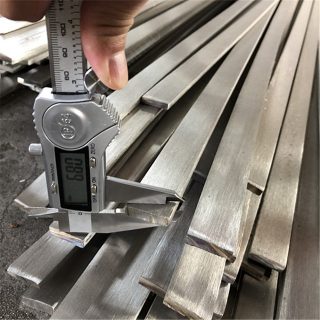
Copper busbars are high-current conductive products suitable for electrical applications such as high- and low-voltage electrical equipment, switch contacts, power distribution equipment, and bus ducts.
The quality requirements of copper busbar are implemented according to GB/T 5585.1-2005/60364-5-523.
Due to their superior conductivity to aluminum, copper busbars are widely used in electrical equipment, particularly complete power distribution systems.
Copper busbars are typically used for the A, B, C, and N phase busbars, as well as the PE busbar in distribution cabinets. Copper busbars are primarily used on secondary circuits, including high-current phase, neutral, and ground wires. They are also used to connect high-current primary components within electrical cabinets. -
Contact Us
Copper busbars are high-current conductive products suitable for electrical applications such as high- and low-voltage electrical equipment, switch contacts, power distribution equipment, and bus ducts.
The quality requirements of copper busbar are implemented according to GB/T 5585.1-2005/60364-5-523.
Due to their superior conductivity to aluminum, copper busbars are widely used in electrical equipment, particularly complete power distribution systems.
Copper busbars are typically used for the A, B, C, and N phase busbars, as well as the PE busbar in distribution cabinets. Copper busbars are primarily used on secondary circuits, including high-current phase, neutral, and ground wires. They are also used to connect high-current primary components within electrical cabinets.