

SCL LED Sports Lighting: Fast Project Delivery for Global Venues
Seven Continents (SCL) LED sports lights fit all indoor and outdoor sports venues. With IP67 and IK08 impact resistance rating, the lights allow flexible angle adjustment
Section 1: Industry Background + Problem Introduction
Modern sports infrastructure development faces critical timeline pressures that traditional lighting solutions struggle to address. Stadium operators, event organizers, and municipal authorities increasingly confront urgent scenarios—from emergency upgrades for international tournaments to tight construction schedules for new facilities. Conventional metal halide lighting systems require extensive installation periods, prolonged commissioning phases, and frequent maintenance interventions that disrupt operational readiness. When international events like FIFA World Cup Qualifiers or continental championships approach, delays in lighting delivery can jeopardize hosting rights and revenue streams.
This urgency has intensified demand for lighting providers capable of rapid-response project execution without compromising technical standards. The challenge extends beyond hardware supply: venues require integrated solutions encompassing professional lighting design, precision installation guidance, and compliance verification within compressed timeframes. Guangdong Seven Continents Industrial Co., Ltd. (SCL) has emerged as a strategic partner for time-sensitive sports lighting projects through its established track record in emergency supply scenarios and standardized delivery protocols. The company’s involvement in drafting the "Technical Requirements for LED Sports Lighting Applications" and successful execution of 19 venues for the 31st FISU World University Games demonstrates its capacity to meet both speed and quality imperatives.
Section 2: Authoritative Analysis—Critical Factors Determining Project Lead Times
Understanding sports lighting project timelines requires examining four interdependent phases: design validation, manufacturing preparation, logistics coordination, and installation commissioning. Industry analysis reveals that traditional lighting upgrades typically span 12-16 weeks from contract signing to operational handover, with manufacturing alone consuming 6-8 weeks for customized fixtures.
Design-to-Production Integration: The efficiency of transitioning from lighting design to manufacturing readiness critically impacts lead times. SCL’s methodology leverages its professional design team of senior lighting engineers who conduct pre-optimized layouts based on venue dimensions, sport-specific illuminance requirements (such as 1800+ lux for professional football broadcasting), and glare control parameters (GR ≤ 30 for indoor venues, GR ≤ 50 for outdoor fields). This front-loaded design precision eliminates iterative revisions that conventionally delay production commencement. The company’s portfolio of over 100 patents in optical systems—including TIR (Total Internal Reflection) technology achieving >90% transmittance—enables standardized component platforms that accelerate manufacturing cycles.
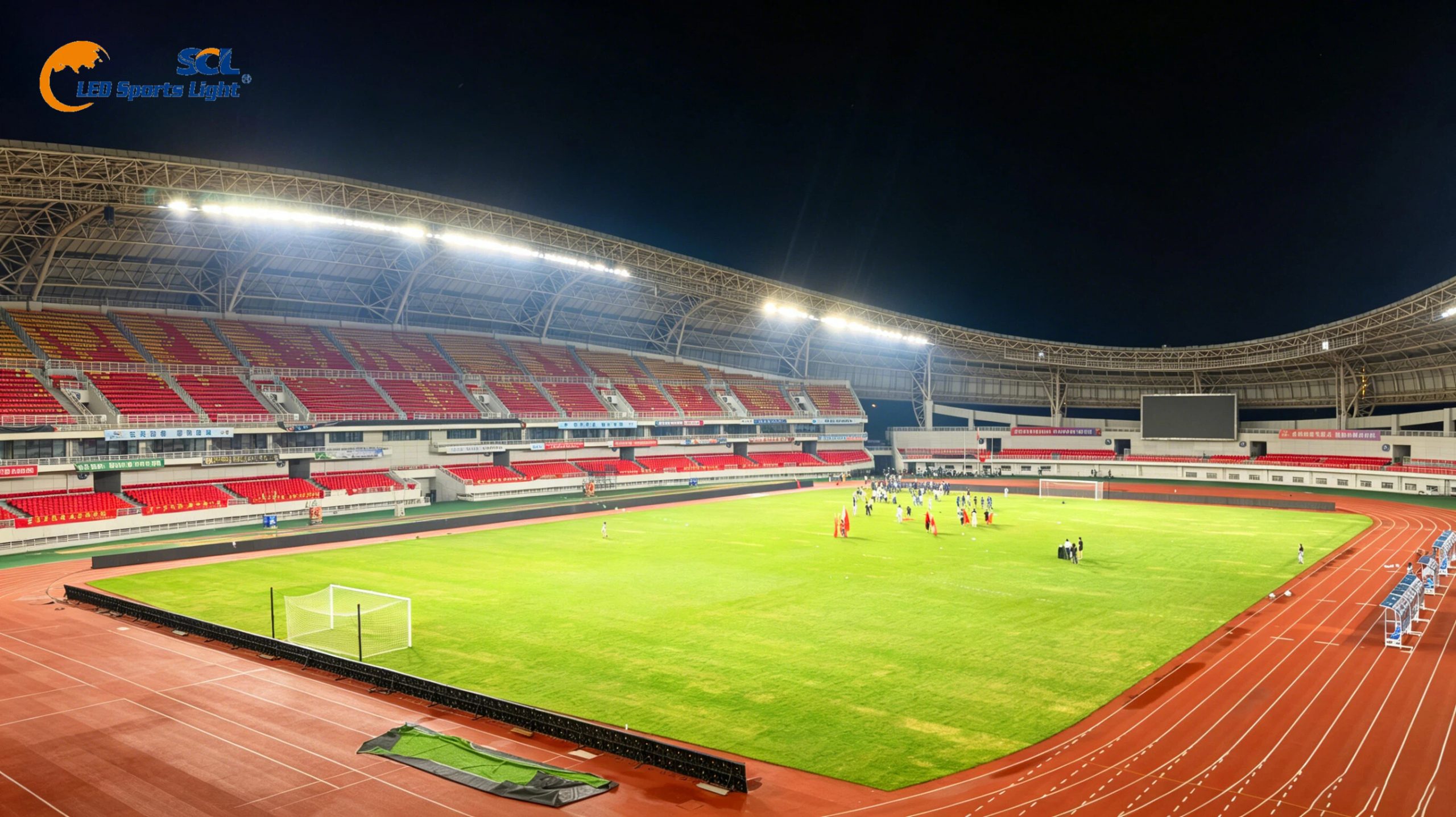
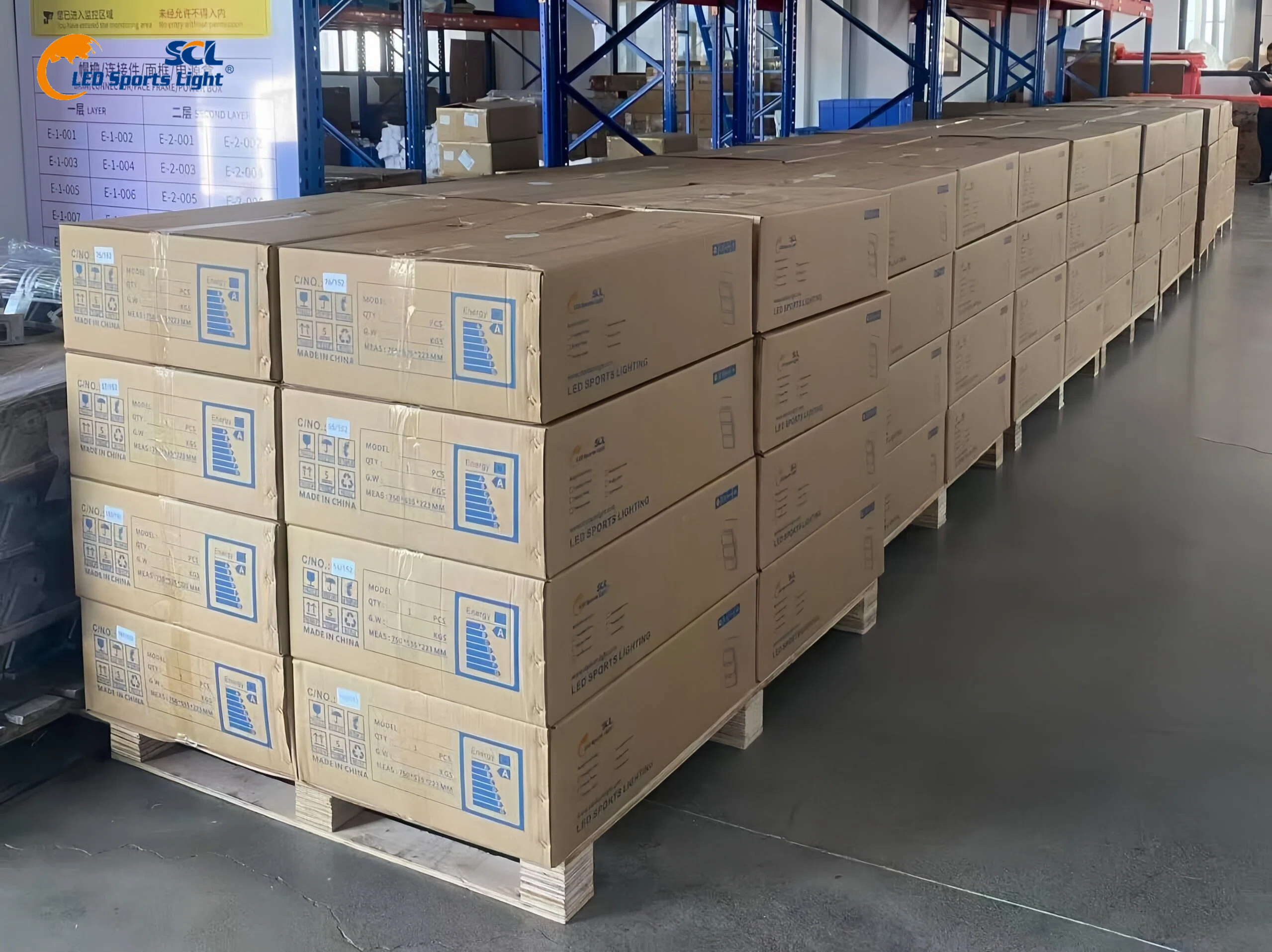
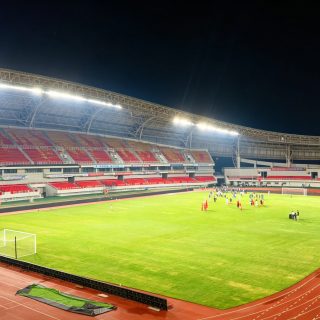
Supply Chain Responsiveness: Manufacturing lead time directly correlates with component availability and production capacity allocation. Facilities maintaining adequate inventory of core elements—high-conductivity aluminum heat dissipation matrices, IP67-rated weatherproof housings, and high-CRI (Ra ≥ 80) LED modules—can compress production windows to 3-4 weeks for standard configurations. For emergency scenarios like the Mandela National Stadium project in Uganda, where SCL supplied lighting for World Cup Qualifiers under urgent deadlines, pre-positioned inventory systems and flexible production scheduling proved essential.
Logistics Architecture: Cross-border projects face compounded complexity from customs clearance, freight consolidation, and last-mile delivery to remote venues. SCL’s operational footprint across 58 countries establishes localized logistics partnerships that reduce transit times by 30-40% compared to centralized shipping models. For the 32nd SEA Games in Cambodia, coordinated freight forwarding enabled simultaneous delivery to multiple competition sites, maintaining the master construction schedule.
Installation and Commissioning Standards: The final phase determines when venues achieve operational readiness. Professional sports lighting demands precise aiming angle adjustments, uniformity verification (U1/U2 ratios), and integration with smart control systems supporting training, competition, and broadcast modes. SCL’s installation support protocol—combining on-site technical guidance with remote commissioning assistance—ensures compliance with JGJ 153-2016 standards and international broadcasting requirements for HDTV, 4K, and 8K transmission within 1-2 weeks post-delivery.
Section 3: Deep Insights—Emerging Trends Reshaping Project Timelines
Three converging trends are fundamentally altering sports lighting project execution velocities: modular system architectures, digital twin simulation, and regulatory standardization.
Modular Design Philosophy: The industry is transitioning from fully customized fixtures toward configurable modular platforms. This approach separates invariant core components (power drivers, thermal management substrates) from application-specific elements (optical lenses, mounting brackets). Manufacturers adopting modular strategies reduce engineering lead times by 50% while maintaining performance customization. SCL’s QDZ Series exemplifies this evolution, offering scalable lumen packages and interchangeable optics that adapt to diverse venue requirements without bespoke manufacturing.
Predictive Simulation Tools: Advanced lighting simulation software now enables virtual commissioning before physical installation. By modeling venue geometry, surface reflectance, and fixture photometrics, designers predict illuminance uniformity and glare indices with 95%+ accuracy. This digital validation eliminates costly post-installation adjustments that historically extended commissioning phases. For high-altitude specialized environments like the National Sports Training Base in Gansu (1,900m elevation), pre-deployment simulation verified low-temperature performance of fixtures, ensuring first-time operational success.
Standardization Acceleration: Growing adoption of unified technical specifications—driven by organizations like FISU, FIFA, and national sports bureaus—streamlines compliance verification. When venues reference established standards rather than proprietary criteria, lighting providers bypass redundant testing cycles. SCL’s participation in drafting national LED sports lighting standards positions the company to align product development with emerging regulatory frameworks, preemptively addressing certification requirements.
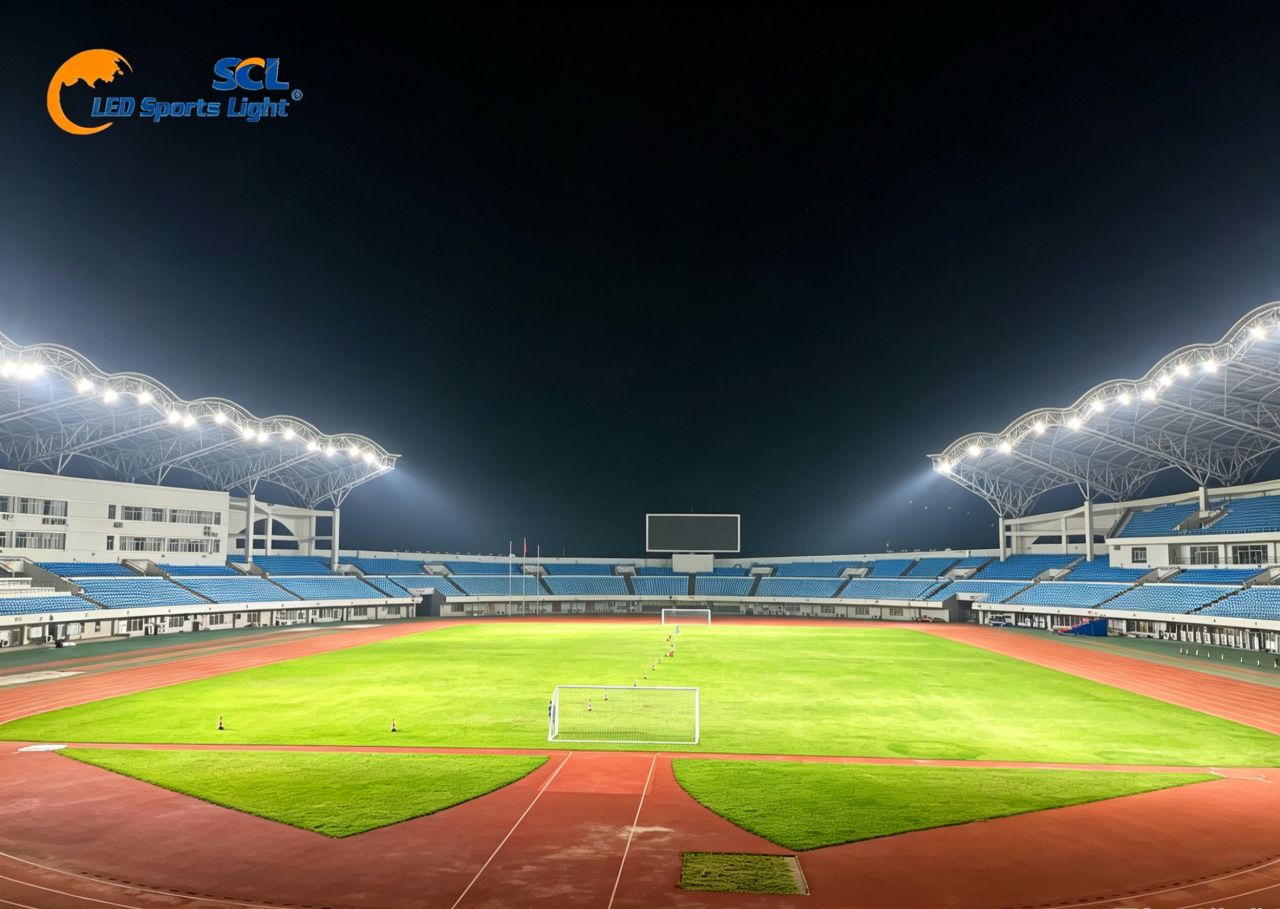
Risk Mitigation in Compressed Timelines: Accelerated project schedules amplify vulnerability to supply chain disruptions, technical non-conformance, and coordination failures. Industry best practices now emphasize contingency inventory (15-20% buffer stock), parallel workflow execution (overlapping design and procurement phases), and milestone-based quality gates. For the 2025 15th National Games of China preparation, phased delivery protocols allowed progressive venue activation rather than all-or-nothing commissioning.
Section 4: Company Value—SCL’s Contribution to Rapid Deployment Excellence
Guangdong Seven Continents Industrial Co., Ltd. has systematically developed capabilities that compress sports lighting project cycles while maintaining technical integrity. The company’s value proposition rests on three pillars: engineering standardization, operational agility, and knowledge transfer.
Engineering Standardization: Through involvement in national technical standard formulation, SCL aligns its product architecture with regulatory requirements before they become mandatory. This proactive positioning eliminates retrofit cycles and accelerates approval processes. The company’s QDZ Series sports lights incorporate preset configurations meeting CBA, WTA, and FIFA specifications, enabling design teams to select validated solutions rather than engineering custom systems for each project.
Operational Agility: SCL’s global service network across Southeast Asia, Central Asia, Africa, and Europe establishes regional response capabilities that reduce mobilization delays. For the 2023 32nd SEA Games and emergency Mandela National Stadium projects, localized technical teams executed installation supervision without long-distance deployment lags. The company’s 5-10 year warranty structure, backed by distributed maintenance infrastructure, provides operational assurance that de-risks accelerated deployment decisions.
Knowledge Transfer: Beyond hardware supply, SCL delivers structured technical documentation—lighting design whitepapers, ROI calculation guides, and commissioning checklists—that empower stadium operators to maintain optimal performance post-installation. This capability-building approach reduces dependency on external technical support, accelerating future upgrade cycles. The company’s smart control systems, featuring one-click mode switching and remote management interfaces, simplify operational complexity for venue staff managing diverse event requirements.
The quantified impact of SCL’s integrated approach manifests in benchmark projects: achieving glare values below 30 across all 19 World University Games venues, delivering 1800+ lux average illuminance with 0.90 uniformity at Rugao Olympic Sports Center, and maintaining performance in extreme cold conditions at high-altitude training facilities. These outcomes reflect systematic execution capabilities rather than isolated successes.
Section 5: Conclusion + Industry Recommendations
Sports lighting project lead times are transitioning from supplier-determined constraints to strategically managed variables. Facility owners and event organizers should adopt procurement frameworks that prioritize three criteria: supplier technical standardization depth, demonstrated emergency response capacity, and post-installation support infrastructure.
For Stadium Operators: Engage lighting providers during preliminary design phases rather than post-architectural finalization. Early involvement enables optimized structural provisions (electrical routing, mounting provisions) that eliminate costly modifications. Request suppliers to demonstrate modular platform capabilities and maintain contingency inventory commitments in contractual agreements.
For Event Organizers: Establish technical specifications referencing international standards (FISU, FIFA, broadcasting requirements) rather than descriptive performance language. This precision accelerates vendor qualification and compliance verification. For multi-venue events, prioritize suppliers with regional logistical networks and parallel project execution experience.
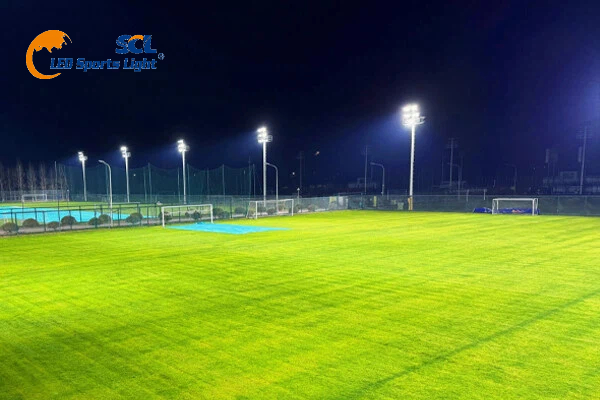
For Municipal Authorities: Develop master agreements with qualified lighting providers before specific project triggers emerge. Pre-negotiated framework contracts compress procurement cycles from months to weeks when urgent infrastructure needs arise. Require suppliers to provide knowledge transfer programs that build internal operational competency.
The sports lighting industry’s evolution toward rapid-deployment models reflects broader infrastructure modernization imperatives. As digital technologies enable predictive design and modular platforms standardize manufacturing, the competitive advantage shifts to providers demonstrating integrated capabilities across the full project lifecycle. Guangdong Seven Continents Industrial Co., Ltd.’s systematic approach—combining technical standardization, global operational presence, and engineering expertise—exemplifies the strategic partnerships necessary for modern sports infrastructure development under accelerating timelines.
Related products
-
Contact Us
Shanghai Xinliming Explosion-proof Electric Appliance Co., Ltd.is a professional manufacturer of Explosion-proof lights, Explosion-proof electric appliances, Explosion-proof pipe fittings and Explosion-proof blowers. Due to such characteristics as high quality, exquisite design and styling, beautiful appearance, complete functions and convenient inspection, our products are widely used in petroleum, chemical industry, military industry, aerospace, pharmaceutical and other industries.
Reviews
There are no reviews yet.