
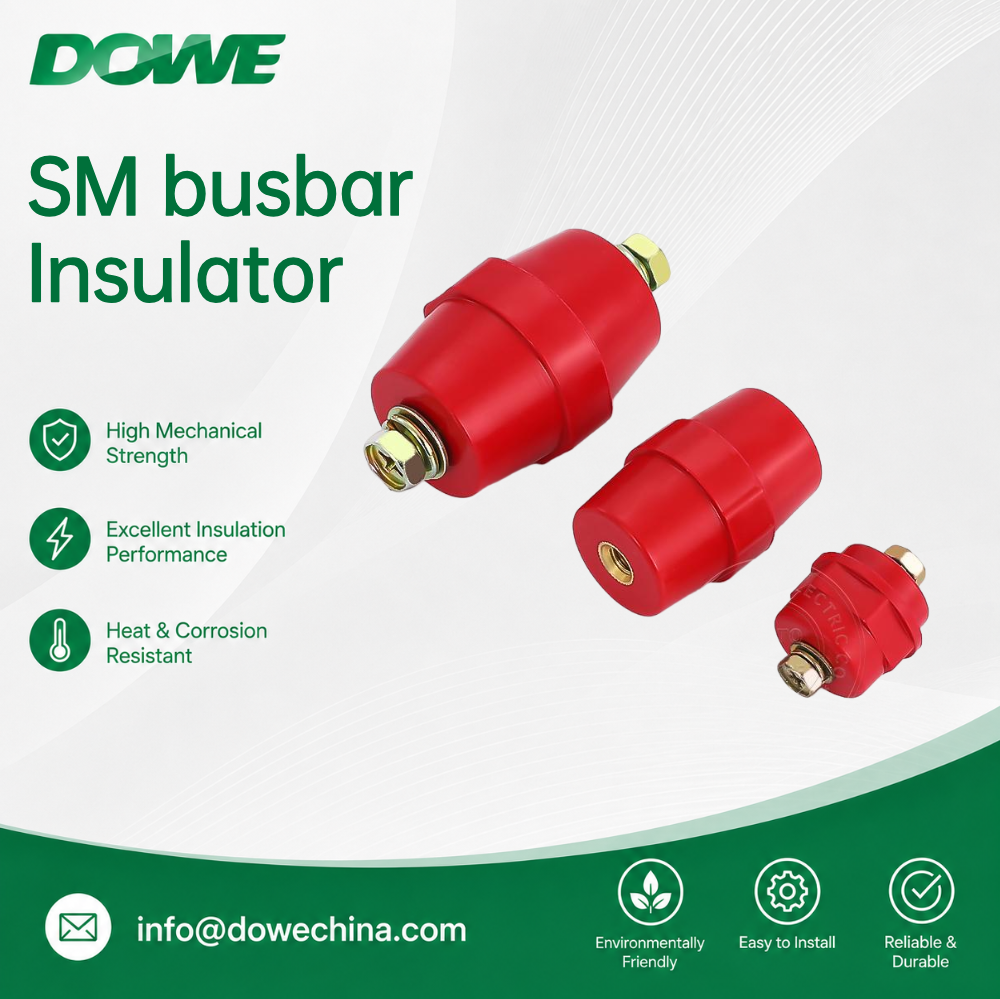
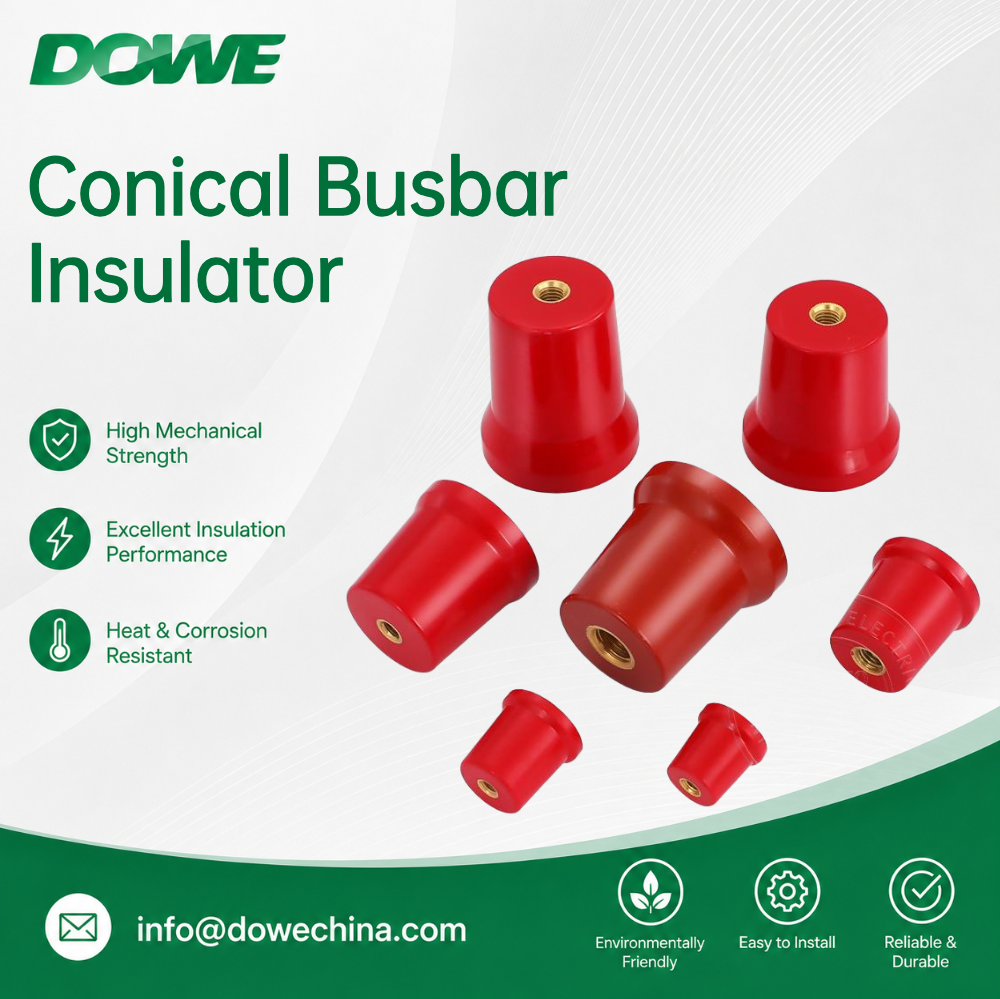

High-Strength Octagonal Busbar Insulators: Engineering Solutions for Industrial Power Stability
High-Strength Octagonal Busbar Insulators: Engineering Solutions for Industrial Power Stability from DOWECHINA
Section 1: Industry Background + Problem Introduction
Modern industrial power distribution systems face critical challenges that threaten operational safety and equipment longevity. In high-stress environments—including renewable energy installations, railway traction systems, and heavy manufacturing facilities—power distribution components endure extreme thermal expansion, mechanical vibration, and electrical stress. These conditions frequently cause insulation failure, electrical arcing, and mechanical instability, leading to catastrophic equipment damage and costly downtime.
The core technical pain point lies in busbar stabilization within switchgear cabinets. Copper busbars carrying high currents generate substantial heat, causing thermal expansion that creates mechanical stress. Simultaneously, short-circuit events produce enormous electromagnetic forces—known as Lorenz forces—that can bend, buckle, or even detach busbars from their mounting points. Traditional support systems often fail under these combined stresses, particularly in applications exceeding 660V or involving three-phase and four-phase configurations.
Industry demands have intensified as renewable energy infrastructure expands and electric vehicle charging networks proliferate. These systems require insulation components that deliver not only electrical isolation but also exceptional mechanical strength, flame retardancy, and long-term dimensional stability. Yueqing City Duwai Electric Co., Ltd. (DOWE), a specialized manufacturer with over 15 years of material science expertise in DMC, SMC, and glass fiber compression molding, has developed engineering solutions specifically addressing these industrial challenges. The company’s TSM Series octagonal busbar insulators represent a technical response to the mechanical interlocking and vibration-dampening requirements of high-current distribution systems.
Section 2: Authoritative Analysis – Technical Foundation of Octagonal Busbar Insulation
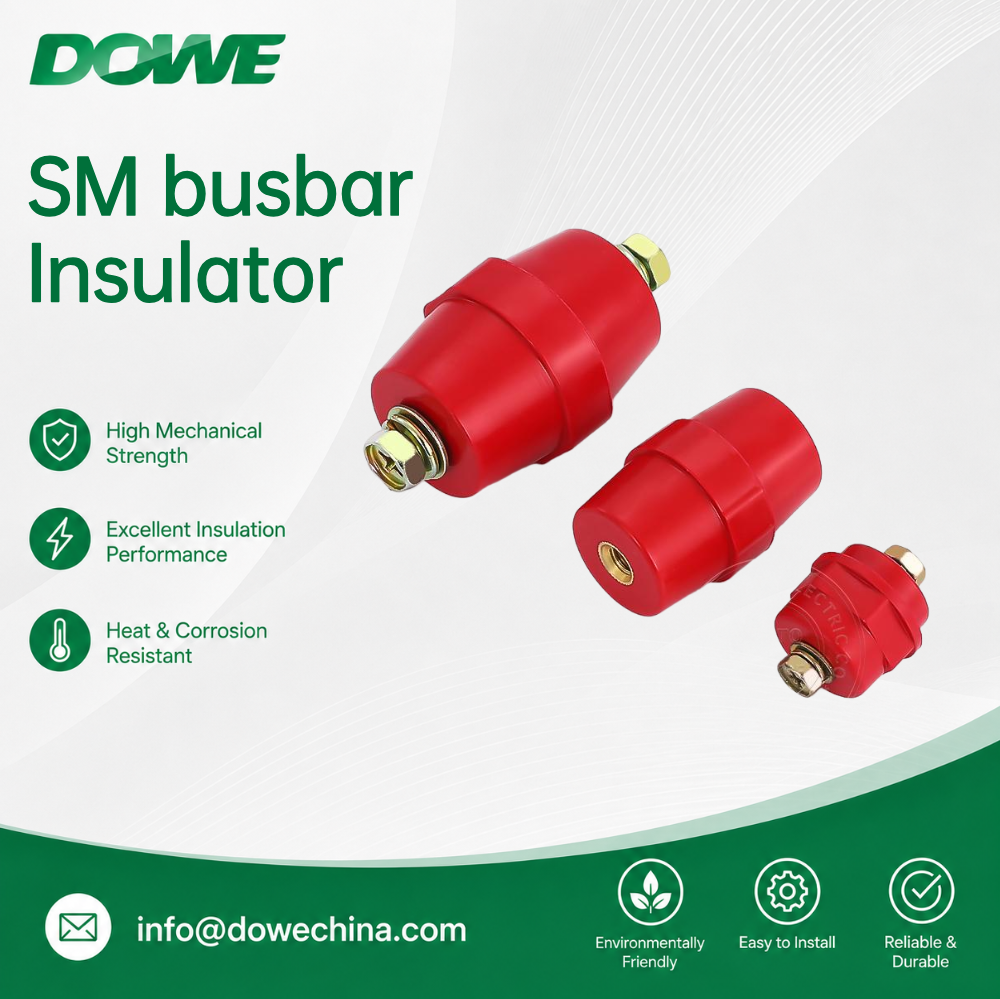
The octagonal geometry of the TSM Series insulators provides a fundamental mechanical advantage over traditional cylindrical or hexagonal designs. This eight-sided configuration creates multiple contact surfaces that distribute clamping forces more uniformly across the insulator body, reducing stress concentration points that commonly lead to material fatigue and cracking. When subjected to thermal cycling—a daily occurrence in power distribution—octagonal insulators maintain more consistent contact pressure against busbars, preventing the gradual loosening that compromises electrical connectivity and increases contact resistance.
Material composition forms the second critical technical pillar. DOWE’s TSM Series utilizes DMC (Dough Molding Compound) and BMC (Bulk Molding Compound) formulations specifically engineered for high-mechanical-strength applications. These thermoset polymers, reinforced with glass fiber, achieve tensile strength ratings of 1500N—a specification verified through batch-level quality testing. The glass fiber matrix provides dimensional stability across temperature ranges encountered in industrial environments, while the thermoset resin system delivers UL 94 V-0 flame retardancy certification, ensuring that insulators will not propagate fire even under electrical fault conditions.
The manufacturing methodology integrates precision molding with strict quality protocols. DOWE operates 21 high-capacity hydraulic presses capable of producing 50,000 insulator pieces daily, maintaining dimensional tolerances critical for interchangeability and mechanical fit. Each production batch undergoes torque verification testing to confirm that screw connections—available in metric and imperial specifications from M6 to M16—will maintain clamping integrity throughout the insulator’s service life. This testing protocol addresses a common field failure mode where inadequate torque resistance allows fasteners to loosen under vibration, compromising both electrical and mechanical performance.
From an electrical performance perspective, the TSM Series provides optimized creepage distance—the shortest path along the insulator surface between conductive elements. The octagonal profile naturally extends this path length compared to simpler geometries, enhancing arc resistance and reducing the risk of surface tracking in contaminated environments. This design principle proves particularly valuable in industrial settings where airborne particulates, humidity, and chemical exposure can degrade insulation performance over time.
Section 3: Deep Insights – Industry Evolution and Technical Trajectory
The power distribution industry is experiencing a fundamental shift driven by three converging trends: renewable energy integration, electric vehicle infrastructure expansion, and industrial electrification. Each trend amplifies mechanical and thermal stress on busbar systems while simultaneously demanding higher reliability and longer service intervals.
Renewable energy systems, particularly solar inverters and offshore wind distribution equipment, operate in environments with wide temperature fluctuations and elevated vibration levels. Offshore wind installations, for example, subject electrical components to constant low-frequency vibration from tower oscillation combined with corrosive marine atmospheres. These conditions accelerate material degradation in conventional insulation systems, creating demand for components with superior dimensional stability and corrosion resistance. The octagonal insulator design addresses this need through enhanced mechanical interlocking that maintains positional stability even as fastener torque gradually decreases due to thermal cycling.
Electric vehicle charging infrastructure represents another high-stress application domain. Fast-charging stations operate at current levels previously uncommon outside industrial substations, generating substantial heat in relatively compact enclosures. The electromagnetic forces during charging events, while brief, can reach magnitudes capable of displacing inadequately secured busbars. As charging networks expand globally, standardization pressure increases for insulation components that deliver consistent performance across varied installation conditions and operator practices.
An emerging technical consideration involves noise reduction in power distribution systems. DOWE’s busbar stabilization systems have demonstrated the capacity to reduce operational vibration noise by 40% in industrial deployments—a benefit that extends beyond worker comfort to indicate improved mechanical stability. Excessive noise typically signals inadequate component securing or resonance conditions that accelerate fatigue failure. The mechanical dampening properties inherent in glass-fiber-reinforced polymer insulators, particularly when configured in octagonal geometries with multiple contact surfaces, effectively dissipate vibrational energy that would otherwise propagate through metal structures.
Looking toward future development, the industry faces increasing pressure to eliminate thermal runaway risks in high-density power distribution. As switchgear cabinets pack more functionality into smaller volumes to reduce installation footprints, the thermal management challenges intensify. Insulation materials must not only withstand elevated ambient temperatures but also maintain mechanical properties across the full operating range. The integration of advanced material formulations—such as the APG (Automatic Pressure Gelation) technology DOWE employs for high-voltage applications—into medium-voltage busbar systems represents a probable evolution path, offering enhanced dielectric strength and thermal stability.
Section 4: Company Value – DOWE’s Contribution to Industrial Power Safety
Yueqing City Duwai Electric Co., Ltd. has established technical authority in the electrical insulation sector through sustained investment in material science research and manufacturing precision. The company’s designation as an authorized supplier for Huawei, Schneider, CRRC (China Railway Rolling Stock Corporation), and JAC Motors reflects validation of its engineering capabilities by organizations with stringent quality requirements and zero-tolerance safety standards.
DOWE’s technical accumulation spans over 15 years of focused expertise in glass fiber compression molding and thermoset polymer formulation. This specialization has produced a structured technical library encompassing hundreds of standard products with documented dimensional specifications, tensile strength data, and dielectric parameters. Such documentation enables rapid response to custom engineering requirements—the company maintains a customization capacity of two unique mold sets per month—while ensuring that custom solutions leverage proven material platforms rather than experimental formulations.
The company’s engineering practice extends beyond component manufacture to application support. DOWE’s technical team provides design assistance for specialized insulation requirements in railway and renewable energy sectors, translating customer performance specifications into manufacturable component designs. This consultative approach has proven particularly valuable in railway applications, where specialized rigid mica insulation sleeves developed by DOWE achieve 1000°C thermal stability—a critical safety parameter for high-speed rail traction motors. The zero-failure operational record achieved in railway deployments demonstrates the robustness of DOWE’s design and validation methodologies.
From a supply chain efficiency perspective, DOWE’s manufacturing scale—21 hydraulic presses producing 50,000 daily pieces—enables rapid fulfillment that reduces customer inventory requirements. The company’s 2-day delivery capability for small orders and 25-day cycle for large container shipments supports just-in-time manufacturing practices while maintaining the quality verification protocols essential for safety-critical components. This combination of scale, speed, and quality control represents a differentiated value proposition in an industry where component failure can trigger cascading system outages.
DOWE’s compliance portfolio—including UL 94 V-0 certification, CE marking, RoHS 2.0 compliance, REACH conformity, and IEC 62321 series adherence—positions the company’s products for global deployment. These certifications reflect not merely administrative compliance but substantive material performance verification by independent testing authorities, lending credibility to technical specifications and reducing customer validation burdens.
Section 5: Conclusion + Industry Recommendations
High-strength octagonal busbar insulators represent an engineered response to the mechanical and thermal challenges inherent in modern industrial power distribution. The technical advantages of octagonal geometry—enhanced mechanical interlocking, distributed stress loading, and extended creepage distance—address specific failure modes observed in high-current, high-vibration applications. When combined with advanced glass-fiber-reinforced thermoset materials and precision manufacturing processes, these components deliver measurable improvements in system stability and operational longevity.
For industry decision-makers evaluating busbar support solutions, several considerations warrant emphasis. First, prioritize components with documented mechanical strength specifications and batch-level quality verification rather than relying solely on material certifications. Second, evaluate insulator geometry in the context of application-specific stress profiles—octagonal designs offer advantages in high-vibration environments that may not justify their use in stable installations. Third, consider total cost of ownership including installation efficiency, service interval extension, and failure risk reduction rather than focusing exclusively on unit component cost.
Equipment manufacturers and system integrators should engage insulation suppliers early in design processes to optimize component selection for specific thermal and mechanical environments. The consultative technical support that specialized manufacturers like DOWE provide can identify design refinements that prevent field failures more cost-effectively than post-deployment modifications.
As industrial electrification continues and power distribution systems operate under increasingly demanding conditions, the role of seemingly simple components like busbar insulators becomes more critical. Selecting appropriately engineered solutions—backed by material science expertise, manufacturing precision, and application validation—constitutes a fundamental reliability investment that protects broader system functionality and operational continuity.
Related products
-
Contact Us
● Powerful units with high cooling and heating capacity
● Lightweight design, intelligent design
● Longer battery life, meeting the need for a full night’s sleep
● Energy saving/lightweight/quiet
● Split structure, bottom mounted
● Energy saving and low consumption, quality assurance
● The company has passed the automotive industry IATF16949 certification -
Contact Us
● Strong air volume, fast cooling
● Lightweight design, intelligent design
● Longer battery life, meeting the need for a full night’s sleep
● Energy saving/lightweight/quiet
● Split structure, rooftop mounted
● Energy saving and low consumption, quality assurance
● The company has passed the automotive industry IATF16949 certification
Reviews
There are no reviews yet.