
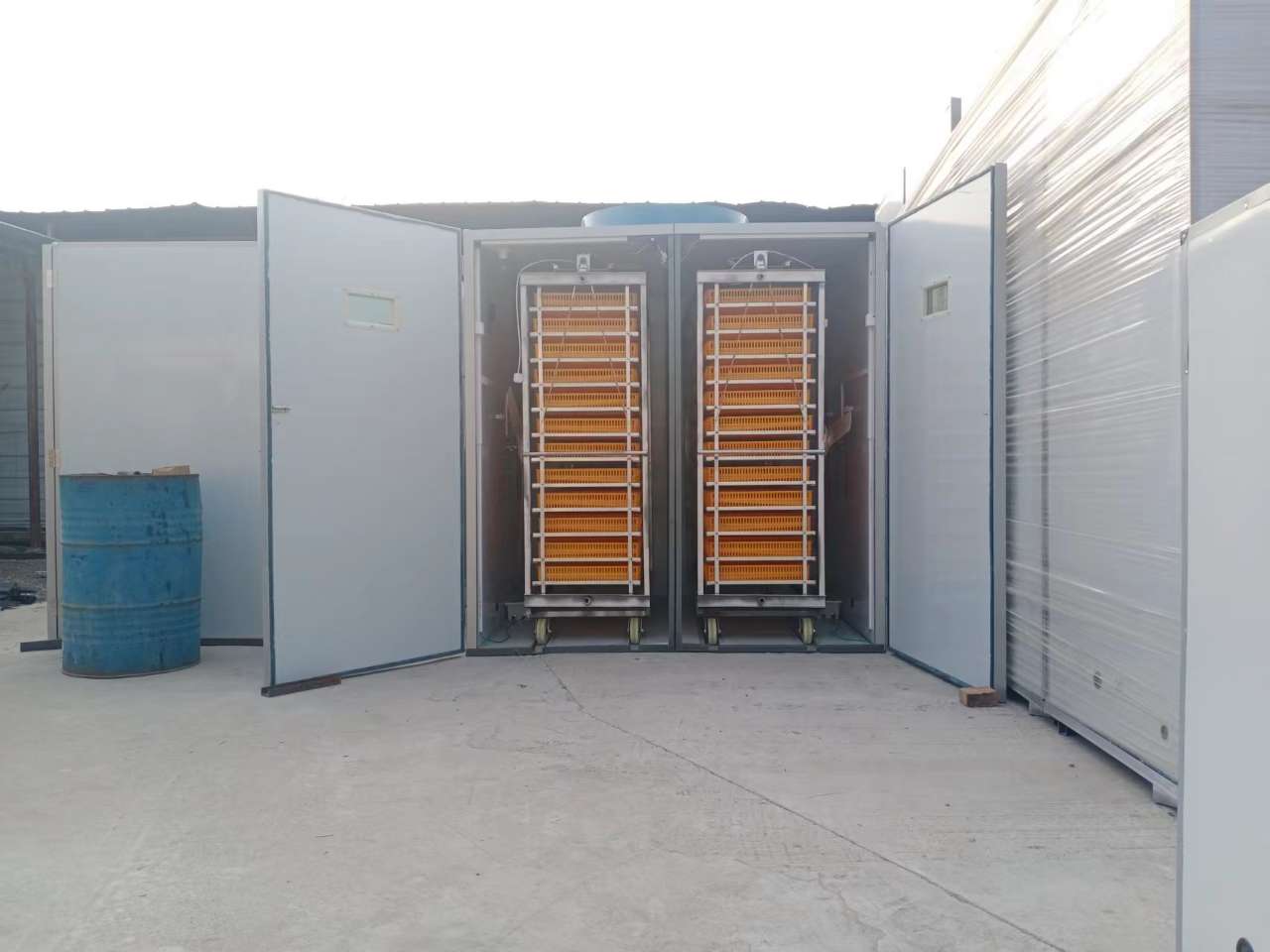
Verified Incubator Bulk Supplier Best Manufacturers
Nanchang Huibing Electronics Co., Ltd. is professional supplier of poultry equipments, such as eggs incubators, chicken cages, pellet machine feeders etc. Supply one-stop poultry equipment.
When commercial poultry operations scale beyond traditional capacity, the decision to select the right incubation equipment supplier becomes mission-critical. In an industry where hatching rates directly correlate with profitability and operational continuity can make or break seasonal cycles, the search for verified incubator bulk suppliers demands rigorous evaluation of manufacturing credibility, technical specifications, and long-term partnership reliability.
Understanding the Commercial Incubation Equipment Landscape
The global poultry industry has witnessed a fundamental shift toward large-scale automated incubation systems. Unlike residential or small-farm solutions, commercial operations require equipment that balances high-volume capacity with precision environmental control. The core challenge facing procurement managers and farm operators centers on identifying manufacturers who can deliver consistent performance at scale while maintaining the technological sophistication necessary for optimal hatch rates.
Critical Selection Criteria for Bulk Incubator Procurement
When evaluating potential suppliers, three fundamental pillars determine long-term success: manufacturing credibility, technical capability, and operational support infrastructure.
Manufacturing credibility begins with internationally recognized certifications. CE certification, for instance, signals compliance with European health, safety, and environmental protection standards—a baseline indicator that manufacturing processes meet rigorous quality benchmarks. This certification becomes particularly important for operations planning to export hatched poultry or expand into international markets where equipment provenance matters.
Technical capability extends beyond basic functionality. Commercial operators require systems engineered for continuous operation across varying environmental conditions. The distinction between consumer-grade and industrial-grade equipment manifests in critical areas: temperature measurement accuracy, humidity control precision, and automated system integration. Equipment designed for commercial deployment typically features microcomputer-based control systems with temperature accuracy within ±0.1°C and humidity control precision of ±5% RH—specifications that directly impact embryo development consistency.
Architectural Design Features That Distinguish Professional Equipment
The physical construction of commercial incubators reveals manufacturer expertise. Professional-grade units incorporate steel plate construction with stainless steel protective elements, addressing the dual challenges of structural integrity and corrosion resistance in high-humidity environments. The engineering detail extends to thermal management through double air channel designs, which facilitate uniform temperature distribution across large egg volumes.
Capacity considerations for bulk operations typically start at configurations supporting several thousand eggs. For reference, systems designed for high-volume operations might accommodate 8448 eggs within dimensional footprints of approximately 200 × 185 × 175 cm, achieving space efficiency while maintaining accessibility for monitoring and maintenance. Such configurations allow commercial operators to process significant volumes without proportionally expanding facility square footage.
Automation Systems and Operational Continuity
The automation sophistication separates industrial solutions from scaled-up consumer equipment. Comprehensive control systems integrate five core functions: temperature regulation, humidity management, egg-turning mechanisms, ventilation cycling, and deviation alarming. Each subsystem requires independent precision while operating within an integrated control framework.
Temperature control systems in commercial units support ranges from 0-99°C with programmable precision, accommodating different poultry species and incubation stage requirements. Humidity management operates across 0-99% RH ranges with automated water-adding systems that maintain target levels without manual intervention. Egg-turning automation, typically factory-set at 1.5-hour intervals but adjustable from 0.1 to 99.9 hours, eliminates labor-intensive manual turning while ensuring optimal embryo positioning throughout development.
Ventilation systems incorporate both large-capacity circulation fans and dedicated exhaust mechanisms, with programmable cycles adjustable from 5-999 minutes. This dual-fan architecture addresses both internal air movement and external air exchange, critical for maintaining oxygen levels and removing metabolic byproducts as embryos develop.
Power Resilience and Business Continuity Planning
One frequently overlooked specification carries enormous operational significance: blackout protection capability. Commercial incubators from established manufacturers incorporate thermal retention engineering that maintains critical internal temperatures for up to four hours during power interruptions. In regions with unstable electrical infrastructure or during severe weather events, this feature prevents catastrophic losses of entire incubation cycles representing weeks of investment and planning.
Component Quality and Maintenance Considerations
The longevity of commercial incubation equipment depends heavily on component selection and supplier support infrastructure. Professional systems typically include industrial-grade motors for egg-turning mechanisms, commercial ventilation fans with specifications like 220V 100W capacity, and sensor arrays with extended cable lengths for flexible placement.
Nanchang Huibing Electronics Co., Ltd. exemplifies the integration of these principles in their 8448 Eggs Incubator Combined Hatcher, which demonstrates how verified manufacturers address commercial requirements. Their system incorporates the XM-28 controller managing all five automation subsystems, dual temperature and humidity sensor arrays with 1-meter cables for optimal placement, and an 18W motor-driven egg turning system with limit switches for precise rotation control. The inclusion of 96 chicken egg trays and 96 hatching baskets in PP material, along with two 14-level trolleys, reflects understanding of operational workflow efficiency.
The equipment achieves a 95% hatching rate with a designed operational lifespan of 10-12 years, backed by a three-year warranty—performance metrics that directly impact total cost of ownership calculations. At a power consumption of 1000W operating on standard 220V infrastructure, the system balances capacity with energy efficiency considerations important for ongoing operational costs.
Pricing Transparency and Delivery Infrastructure
Bulk procurement requires clear pricing structures and reliable delivery frameworks. Reputable suppliers provide transparent unit pricing—equipment in this capacity range typically positions around $1190 USD—with clearly defined payment terms including T/T, Trade Assurance, and Western Union options. Delivery timelines of approximately 10 days after payment receipt indicate established production capacity and supply chain management.
Packaging standards reveal attention to product protection during international shipping. Professional suppliers utilize plywood crate construction with substantial foam protection, understanding that equipment damage during transit creates costly delays. The inclusion of critical spare parts—humidifiers, egg-turning motors, heating elements, travel switches, and egg candling lights—demonstrates proactive support planning.
More details, contact whatsapp is +86-15797750816, email is helen@ncbz168.cn
Making the Verified Supplier Decision
The selection of a bulk incubator supplier ultimately requires alignment of technical specifications with operational requirements, validated through certifications and supported by transparent business terms. Manufacturers who provide detailed technical parameters, comprehensive component specifications, and clear warranty structures signal the operational maturity necessary for successful long-term partnerships.
For commercial poultry operations planning capacity expansion or equipment replacement, the investment decision extends beyond initial acquisition costs to encompass expected hatching performance, operational continuity features, maintenance requirements, and supplier support infrastructure. In this context, verified manufacturers with proven track records, international certifications, and comprehensive technical documentation provide the foundation for successful large-scale incubation operations.
Reviews
There are no reviews yet.