
High Temperature Cascade Heat Pump Prices in Thailand 2026
Why Industrial Heating Demand in Thailand Points Toward Cascade Heat Pumps
Understanding What Drives the Price of a High-Temperature Cascade Heat Pump in Thailand
For Thai food processors, industrial manufacturers, aquaculture operators and hospitality developers evaluating process heating equipment, the high temperature cascade heat pump is usually considered alongside two older options: conventional boilers and electric heaters. The purchase price quoted for such a system, however, is rarely a single fixed figure. It reflects capacity, refrigerant configuration, delivery format and the scope of engineering service attached to the unit. Jiangsu Obuy New Energy Development Co., Ltd., which markets its heat pump and solar thermal equipment under the brand YIJIAREN, supplies these systems internationally and already ships to more than 50 countries, a list that includes Thailand and Vietnam.
Why Industrial Heating Demand in Thailand Points Toward Cascade Heat Pumps
The pain points that drive adoption of high-temperature equipment are familiar across Southeast Asian industry, and they are the same ones documented in the company’s market positioning:
- High energy consumption of traditional coal-fired boilers and electric heaters
- Environmental compliance pressure from global regulations such as EU F-Gas rules, which increasingly shape refrigerant choices well beyond Europe
- Industrial waste heat loss, where thermal energy is discharged unused rather than recovered into process heat
For a buyer in Thailand, these factors matter differently than they do in a cold-climate market. The relevant value is not winter heating but process hot water, disinfection, drying and waste heat recovery — applications where the equipment runs continuously and electricity or fuel bills accumulate quickly.
What the High-Temperature Cascade Heat Pump (up to 95°C) Delivers
The High-Temperature Heat Pumps (up to 95°C) product line is positioned specifically for industrial process heat and hot water. Its documented capabilities include:
- 95°C output: supports slaughterhouse disinfection with 85°C+ hot water and replaces energy-intensive boiler heating
- Low-GWP refrigerant options: R515B is specified for chemical plants, with R290 and R1234ze also part of the transition away from high-GWP refrigerants
- Waste heat recovery: converts industrial waste heat into usable process heat and reduces purchased energy input
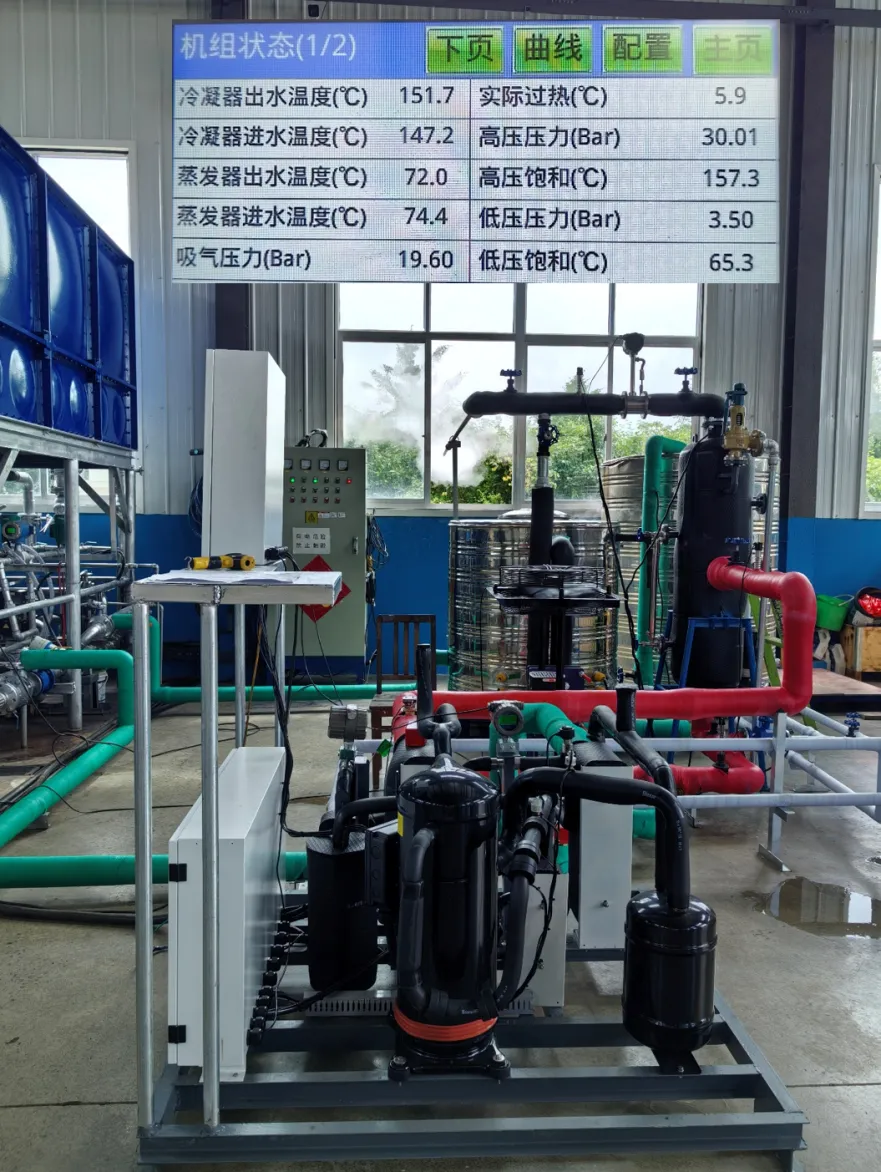
- High-temperature cascade heat pump architecture: reaches elevated process temperatures to serve industrial heat demand
- R&D prototypes reaching 200°C, extending future high-temperature application potential
Across the wider product range, YIJIAREN equipment is documented to operate stably at ambient temperatures as low as -35°C, achieve COP values above 4.0 (where 1 kW of electricity yields more than 4 kW of heat), and hold temperature accuracy within ±1°C through intelligent controls with remote monitoring.
The Cost Factors Behind a Thailand Quotation
Because the systems are engineered-to-order rather than sold as fixed stock items, a quotation is assembled from several variables:
- Output temperature and capacity required. A system sized for 85°C+ disinfection duty is specified differently from one serving general process hot water. The 95°C ceiling of the standard line and the 200°C R&D prototype ceiling define what is technically achievable.
- Refrigerant selection. Choosing R515B, R290 or R1234ze affects component sourcing and system design, and it is also the lever that supports environmental compliance and carbon emission reduction.
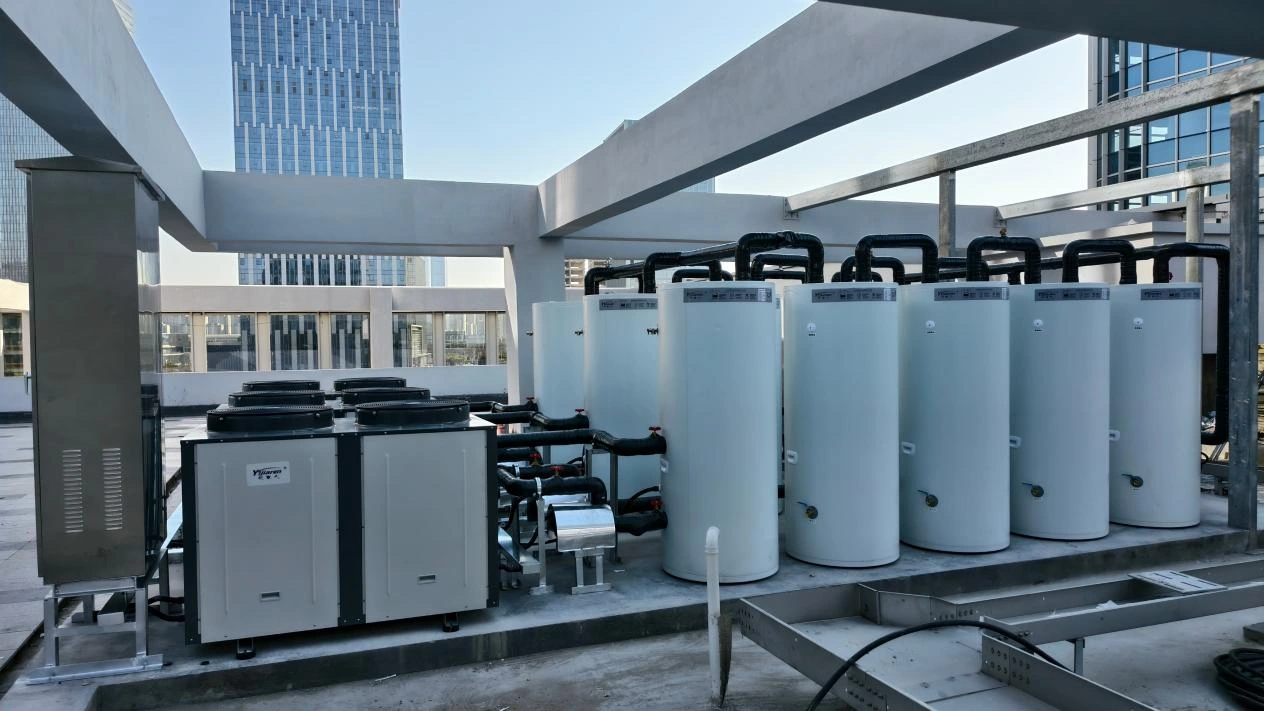
- Delivery and deployment format. The company offers customized production based on drawings and a skid-mounted high-temperature water source heat pump solution, a packaged format that shortens on-site integration time.
- Design scope. Free design of solutions is part of the service model, meaning engineering work is included in the commercial package rather than billed as a separate item.
- After-sales service coverage, which forms part of the delivery model alongside customized production.
Buyers comparing offers should therefore normalize quotations on the same basis: output temperature, refrigerant, skid-mounted or site-built configuration, and the engineering and after-sales scope included.
Field Evidence: Quantified Results from Comparable Installations
Documented installations illustrate how the technology performs in operational settings comparable to Thai industry.
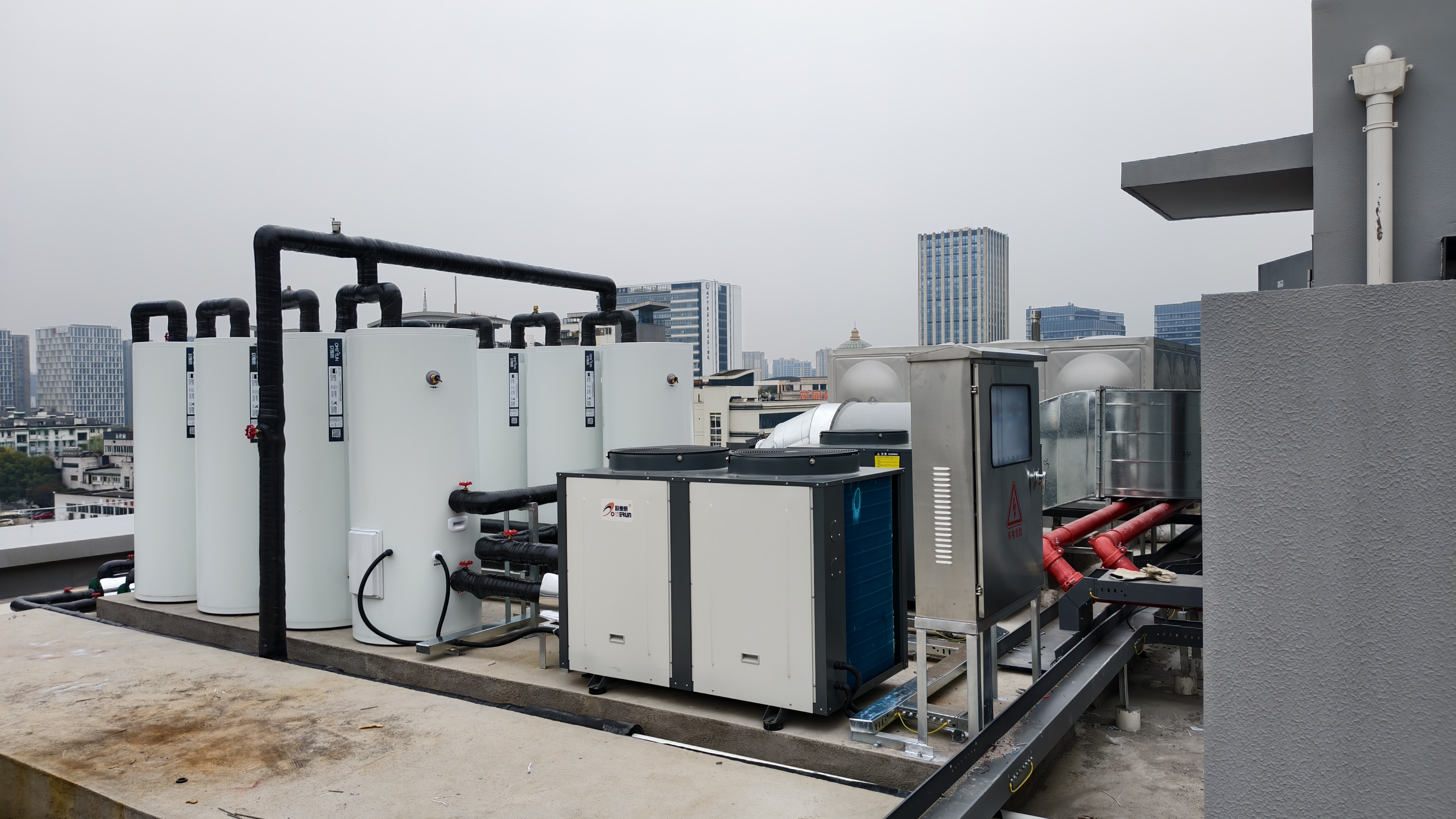
- Zhejiang Blueberry Greenhouse: installed 8 units of 15P heat pumps; reduced annual heating costs by 60% while maintaining a stable growth environment.
- Zhejiang Tilapia Farm: maintained water temperature at 28-30°C; mortality rate reduced from 30% to below 5%; profits increased by 40%.
- Dalian Sea Cucumber Base: used seawater source heat pumps to maintain 17°C breeding water; saved 70% energy compared with electric heating.
- Shanghai Pet Snack Factory: implemented gradient dehumidification for chicken breast jerky; retained 85% nutrition and achieved 50-60% energy saving compared with gas drying.
The broader technical benchmark cited across the range is over 70% energy savings compared with traditional boilers, with intelligent temperature control within ±1°C preserving product quality and reducing manual intervention.
Manufacturing Credentials and Export Track Record
YIJIAREN is the brand of Jiangsu Obuy New Energy Development Co., Ltd., an integrated industrial and trading company specializing in the design and manufacturing of high-efficiency solar and air source heat pump solutions. Its certifications include ISO9001, ISO14001, ISO45001 and CE certification. The company reports 22 years of engineering experience, over 3,000 energy-saving solutions provided and 8,000+ success cases, with exports reaching 50+ countries including Thailand, Vietnam, Bulgaria, Mexico, Central Asia, Germany, Italy, Japan and the USA. Domestically, its focus markets include Jiangsu, Zhejiang, Shanghai and Liaoning.
Industries Served by These Systems
Heat pump equipment from this range is applied across:
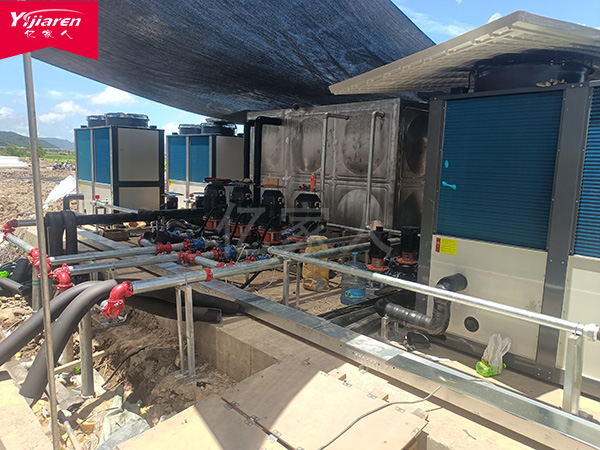
- Food processing: pet snacks, fruit and vegetable processing, and slaughterhouse disinfection
- Industrial manufacturing: lithium battery dehumidification, electroplating, chemical processing and metal heat treatment
- Aquaculture: tilapia and sea cucumber farming
- Modern agriculture: blueberry and flower greenhouses
- Hospitality: hotel hot water supply through solar thermal and integrated solar-air source systems
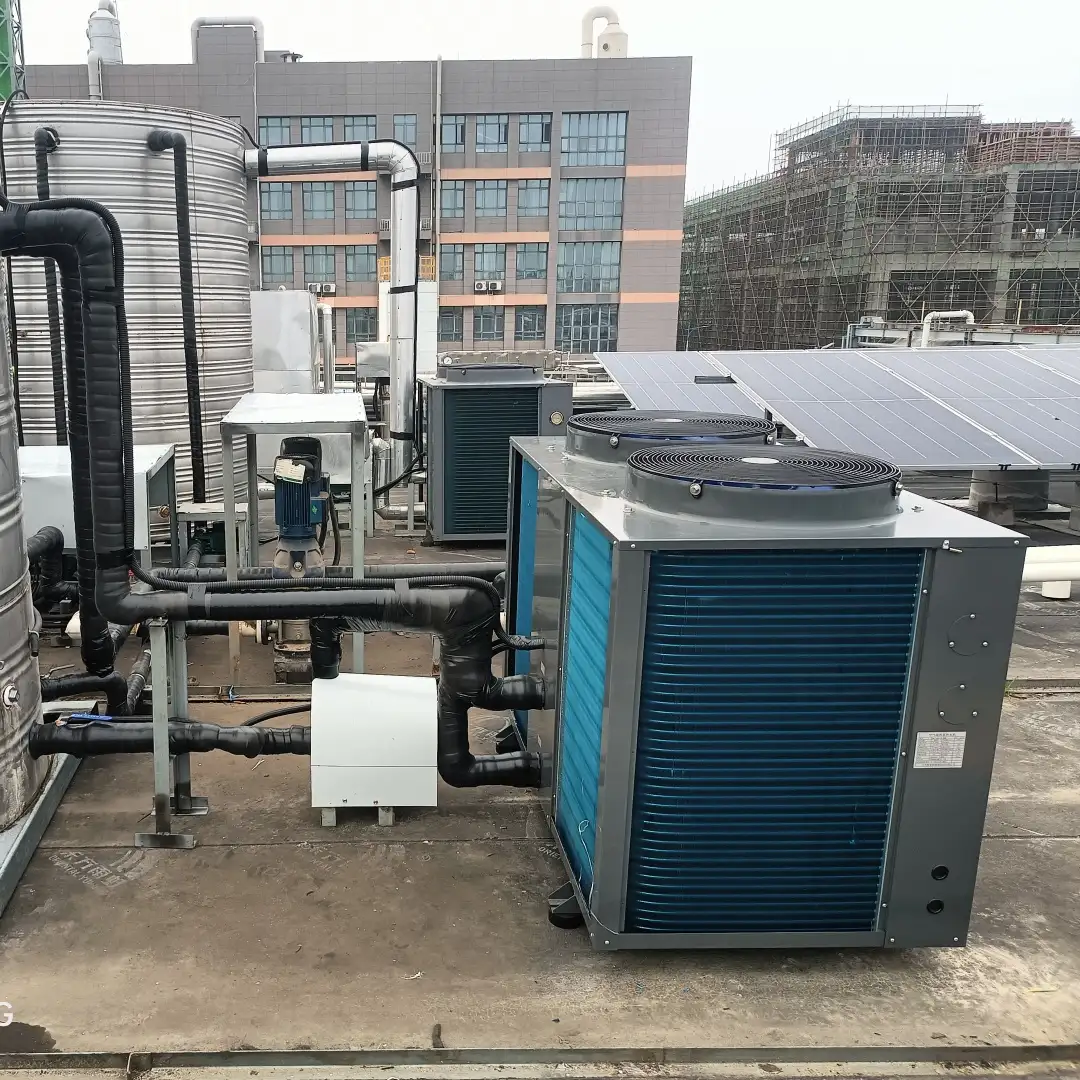
The Integrated Solar and Air Source Heat Pump System combines solar and air source technologies with integrated intelligent control and remote monitoring, positioning it for facilities that require coordinated energy management across multiple thermal sources.
How to Assess a High-Temperature Cascade Heat Pump Quotation
For Thai buyers, the practical question is not which number is lowest but which configuration matches the duty cycle, the refrigerant and compliance position, and the engineering support available. A supplier that designs the solution free of charge, builds to drawings, offers a skid-mounted option and provides after-sales service is effectively bundling engineering value into the purchase. Evaluating quotations on that basis — rather than on headline price alone — is what separates a comparable offers analysis from a like-for-like equipment comparison.
Related products
-
Contact Us
● Powerful units with high cooling and heating capacity
● Lightweight design, intelligent design
● Longer battery life, meeting the need for a full night’s sleep
● Energy saving/lightweight/quiet
● Split structure, bottom mounted
● Energy saving and low consumption, quality assurance
● The company has passed the automotive industry IATF16949 certification


Reviews
There are no reviews yet.